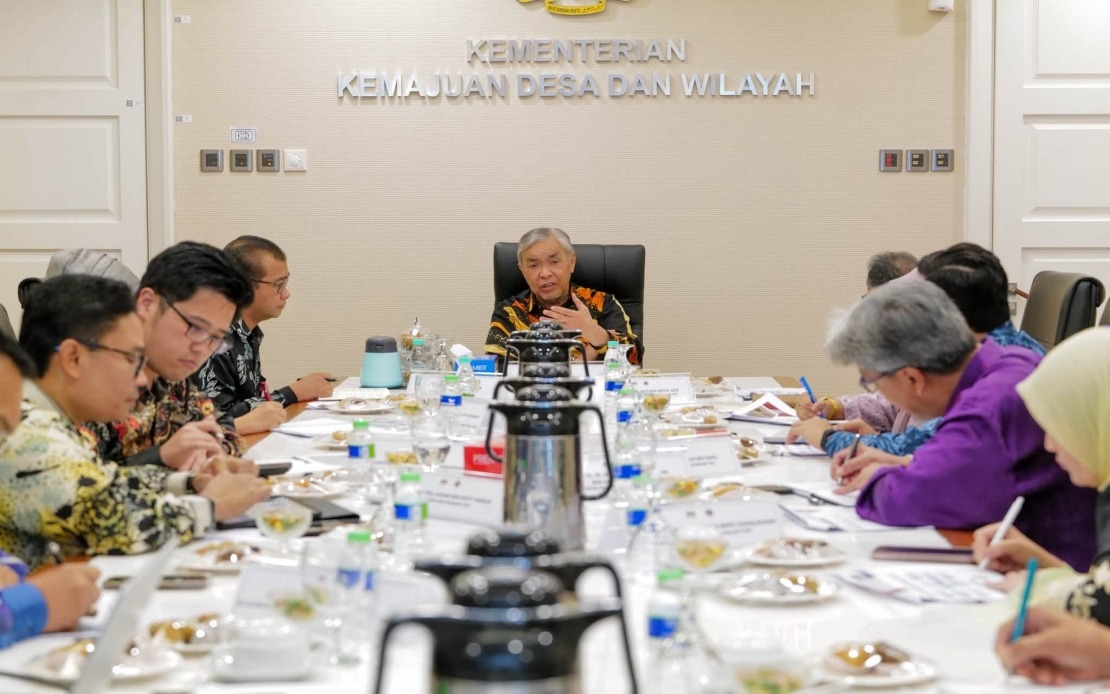
Malaysia is embarking on an ambitious decade-long overhaul of its technical and vocational education system, with Deputy Prime Minister Datuk Seri Dr Ahmad Zahid Hamidi announcing the creation of the Strategic TVET 2.0 Task Force 2026-2035 and 10 supporting strategic committees designed to reshape how the nation develops its skilled workforce. The restructured governance framework signals a pivotal shift in how Malaysia approaches TVET policy coordination, moving away from fragmented initiatives toward a more integrated and results-focused architecture that aims to position skills training as a cornerstone of economic competitiveness.
As chairman of the National TVET Council, Ahmad Zahid emphasised that the newly formed task force and committees will operate with heightened coordination and strategic intent, embedding industry responsiveness into the very foundation of Malaysia's vocational training ecosystem. This represents a deliberate pivot toward what policymakers term an "outcome-oriented" approach, reflecting growing recognition that traditional TVET structures have struggled to keep pace with the speed of technological disruption and shifting employer demands across manufacturing, services, and emerging sectors. The establishment of dedicated committees addressing specific dimensions—from governance reform to industry partnerships to financing models—suggests that the government has identified systemic gaps requiring targeted institutional remedies rather than incremental adjustments.
Leading the Strategic TVET 2.0 Task Force is Emeritus Professor Datuk Dr Siti Hamisah Tapsir, president and vice-chancellor emeritus of UCSI University, whose appointment brings academic and institutional expertise to an initiative that bridges government policy, educational institutions, and industry stakeholders. Her leadership signals an intention to ground the task force's work in evidence-based practice and long-term strategic thinking, departing from approaches that might prioritise short-term political deliverables over sustainable systemic change. The composition of task force leadership reflects deliberate cross-sector representation, with committee chairs drawn from regulatory bodies, industry associations, and educational institutions.
Among the 10 specialist committees is the TVET Governance and Institutional Reform Committee, chaired by Datuk Dr Asyraf Wajdi Dusuki, which will address structural inefficiencies and coordination failures that have historically fragmented Malaysia's TVET delivery across multiple government agencies and institutions. The TVET Industry and Employers Committee, under Datuk Khairul Azwan Harun's leadership, acknowledges that skill development divorced from employer input produces graduates misaligned with labour market realities—a chronic challenge in developing economies where curriculum lags considerably behind sectoral evolution. This committee structure implicitly recognises that Malaysian employers have long complained about graduate unpreparedness, particularly in technical competencies and soft skills essential for industrial operations.
Financing represents another critical dimension, with the TVET Financing and Sustainability Committee chaired by Ramelle Ashram Ramli tasked with developing mechanisms to ensure the ecosystem remains adequately resourced beyond political cycles. Malaysia's historical reliance on government funding for TVET, combined with budgetary constraints and competing priorities, has constrained programme expansion and quality improvement. A dedicated financing committee suggests policymakers are exploring diversified funding models—potentially involving private-sector contributions, international partnerships, or innovative financing instruments—to reduce fiscal dependency and create revenue streams supporting continuous modernisation.
The establishment of a Women Empowerment in TVET Committee under Datuk Dr Masilla Kamalrudin's direction addresses a critical gap in Malaysia's skills development agenda. Historically, TVET has attracted disproportionately fewer female participants compared to academic pathways, particularly in high-demand technical fields. This gendered participation pattern constrains the available talent pool and perpetuates occupational segregation, limiting women's access to higher-earning technical careers. Formalising women's empowerment as a committee focus signals commitment to expanding female participation, though success will depend on addressing underlying barriers including social perceptions about technical careers, workplace discrimination risks, and accessibility of programmes.
The ten-year timeframe extending to 2035 aligns Malaysia's TVET strategy with broader national development frameworks and international skills forecasting horizons. This extended timeline permits multi-cohort transformation, allowing sustained curriculum redesign, institutional capacity building, and educator retraining without the compressed urgency that often undermines implementation. However, the lengthy timeline also creates risks: external disruptions—economic downturns, technological acceleration, pandemic-like emergencies—may render portions of the strategy obsolete before completion, necessitating built-in flexibility mechanisms and periodic strategic review cycles.
Ahmad Zahid situated the TVET initiative within the MADANI government's broader human capital development objectives, positioning skills training as integral to Malaysia's economic transformation and competitiveness in the context of regional competition and technological change. This framing acknowledges that Malaysia cannot compete with advanced economies on labour costs, requiring instead a pivot toward high-skill, high-value economic activities. TVET modernisation becomes, in this logic, not a social welfare programme or remedial pathway for academically weaker students, but rather a strategic investment in productive capacity essential for economic survival and prosperity.
For Malaysian readers and regional observers, the initiative carries several implications. Domestically, the restructured TVET governance may gradually improve alignment between educational provision and labour market needs, particularly benefiting rural and urban youth seeking alternatives to academic pathways. Regionally, Malaysia's TVET transformation occurs alongside similar upgrades in neighbouring countries including Thailand and Vietnam, creating comparative dynamics where workforce quality becomes a competitive variable attracting multinational manufacturing and service operations. The success or failure of TVET 2.0 will substantially influence whether Malaysia maintains its traditional role as a regional manufacturing hub or transitions toward higher-value production requiring more sophisticated technical skills.
Implementation challenges will test the task force's effectiveness. Coordinating across 10 committees while maintaining coherent strategic direction requires robust governance protocols and leadership alignment. Engaging industry consistently, particularly SMEs lacking dedicated HR capacity, demands structured participation mechanisms. Retraining educators accustomed to traditional pedagogies toward industry-responsive, innovation-focused teaching methods involves substantial professional development investment. Securing sustainable financing beyond government appropriations will likely prove contentious given competing fiscal priorities. These implementation realities suggest that while institutional architecture has been established, the actual transformation of Malaysia's TVET ecosystem remains contingent on sustained political commitment, adequate resourcing, and effective execution across numerous stakeholders with divergent interests and incentives.

