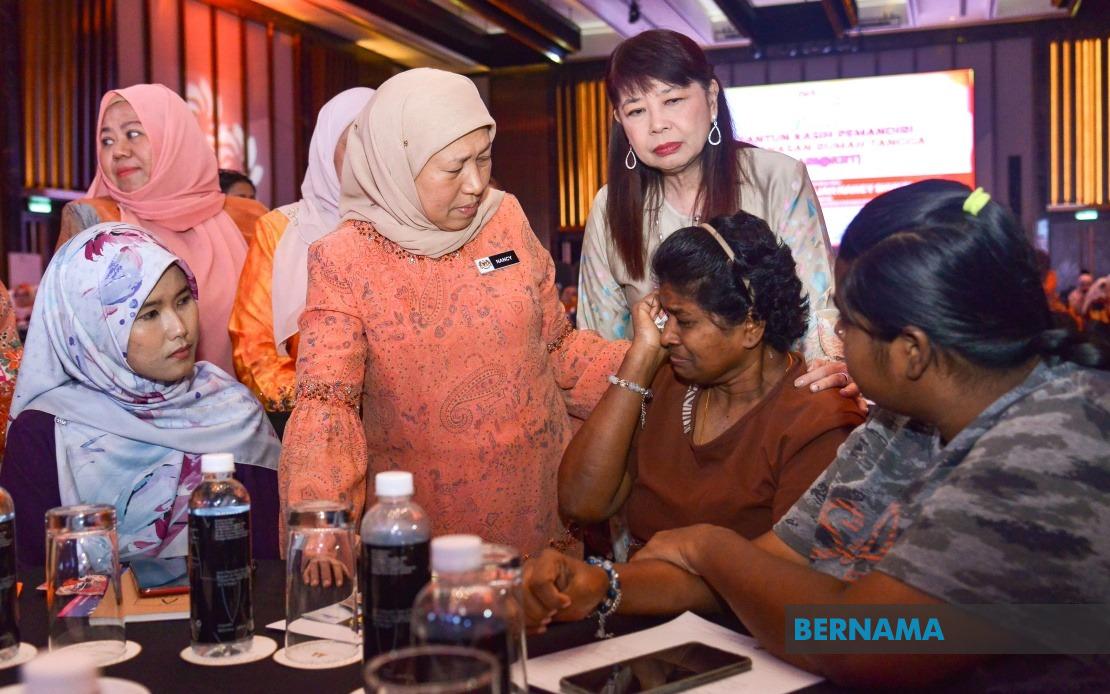
Malaysia's Ministry of Women, Family and Community Development has launched a comprehensive national programme aimed at helping 1,400 domestic violence survivors rebuild their lives with improved psychosocial support, legal assistance, and economic empowerment. The SARI@KRT initiative, formally titled Road to Eliminate Violence Against Women (EVAW) 2026, was officially unveiled in Kuala Lumpur by the ministry's head, Datuk Seri Nancy Shukri, signalling the government's determination to move beyond awareness campaigns toward tangible victim restoration and rehabilitation.
The programme represents a strategic escalation in Malaysia's approach to tackling one of the nation's most persistent social challenges. Rather than limiting efforts to public education, the initiative seeks to rebuild survivor confidence and guide affected individuals toward genuine self-reliance. Each state will receive at least 100 participants through the scheme, ensuring geographically distributed support that acknowledges the varied circumstances facing women across Malaysia's diverse regions. This structured allocation reflects recognition that domestic violence affects communities nationwide and requires coordinated intervention across all jurisdictions.
Minister Shukri's articulation of the programme's philosophy emphasises that survivors need more than sympathy—they require concrete pathways forward. By combining psychosocial interventions with legal representation and economic support, the initiative addresses the multifaceted nature of recovery from domestic abuse. Survivors often face emotional trauma, legal complications regarding child custody and maintenance, and financial vulnerability following separation from abusive partners. This holistic approach acknowledges that genuine rehabilitation demands simultaneous attention to mental health, legal rights protection, and economic independence.
The timing of the launch follows concerning trend data released by the Royal Malaysia Police. Domestic violence cases increased to 4,014 incidents during the first six months of 2024, compared with 3,678 cases during the equivalent period in 2023—representing a 9.1 percent year-on-year rise. Johor emerged as the state with the highest caseload, recording 721 incidents, while Selangor followed with 614 cases and Perak with 405. These figures underscore the urgency driving the government's expanded intervention strategy and the need for victim-centred solutions that extend beyond law enforcement responses.
Understanding the root causes of domestic violence remains crucial for developing effective prevention and intervention strategies. Ministry analysis reveals that miscommunication and relationship misunderstandings constitute the largest category of contributing factors, accounting for 1,967 cases during the first half of 2024. This finding suggests that numerous violent incidents might be preventable through early conflict resolution support and relationship counselling services. However, substance abuse emerged as a significant secondary driver, with 444 cases linked to drug-related factors, while financial stress triggered 378 documented incidents. These patterns indicate that socioeconomic vulnerabilities, particularly in households facing economic pressure, create environments conducive to violence.
Minister Shukri's emphasis on financial abuse as a distinct and underrecognised form of domestic violence reveals evolving understanding of how violence operates within Malaysian households. The phenomenon where a financially capable husband deliberately withholds family support, leaving wives to bear all household expenses, constitutes economic control and abuse despite not involving physical violence. By highlighting this dimension, the ministry broadens societal understanding of what constitutes domestic violence beyond physical assault or sexual abuse. Recognition of financial abuse is particularly significant in Malaysian contexts where traditional gender roles and male breadwinner expectations persist in many communities, potentially normalising economic control within intimate relationships.
The programme's inclusion of court attendance allowances for survivors pursuing child maintenance claims represents practical recognition that accessing justice often requires financial resources beyond the reach of economically vulnerable women. This provision removes a concrete barrier to legal protection and ensures that poverty does not prevent survivors from securing financial security for their children. Such measures demonstrate that victim support requires not merely moral support but material assistance that addresses the real costs of exiting abusive situations and pursuing legal remedies.
Minister Shukri's interpretation of rising case numbers warrants careful consideration within broader context. While the nine percent increase in reported cases presents an alarming trend, she notes that this may partially reflect heightened public awareness and growing victim willingness to report violence to authorities. Increased reporting, while indicating improved survivor empowerment in seeking help, should not be mistaken for necessarily indicating violent incidents themselves have increased proportionally. However, given Malaysia's historically low reporting rates for domestic violence, even expanded reporting likely masks the true prevalence of intimate partner abuse within the population.
The SARI@KRT programme's integration of multiple support dimensions addresses a critical gap in Malaysia's victim services landscape. Many survivors struggle not with accessing individual services—counselling, legal aid, or economic support—but with coordinating fragmented assistance from disparate agencies. Consolidating psychosocial, legal, and economic support within a single programme reduces bureaucratic barriers and allows survivors to access comprehensive assistance through unified pathways. This integration particularly benefits women from lower-income backgrounds who may lack resources to navigate complex service systems independently.
For Malaysian policymakers and society broadly, the programme signals important recognition that ending violence against women requires investment in survivor recovery, not merely perpetrator accountability. While criminal justice responses matter, research consistently demonstrates that comprehensive victim support services prove essential for breaking cycles of violence and enabling survivors to construct stable, violence-free futures. The SARI@KRT initiative's focus on rebuilding survivor confidence suggests understanding that recovery from domestic violence involves restoring belief in one's capacity to author a safer life.
The programme's success will depend significantly on survivor awareness and accessibility. Media campaigns, coordination with police and healthcare providers, and community education will prove essential for ensuring eligible survivors learn of and access available support. Additionally, adequate funding and trained service providers across all states will determine whether the programme achieves its 1,400-survivor target and delivers quality services meeting survivors' complex needs. For regional Southeast Asian observers, Malaysia's approach offers a model for victim-centred, multidisciplinary responses to domestic violence that could inform policy development across the region.
As Malaysia advances toward the 2026 targets embedded in the EVAW framework, the SARI@KRT programme represents a measurable commitment to transforming how the nation supports those attempting to escape violence and rebuild their lives. Success requires sustained investment, effective interagency coordination, and community engagement to ensure survivors are not merely informed of available support but actively connected to services capable of restoring their autonomy and safety.

