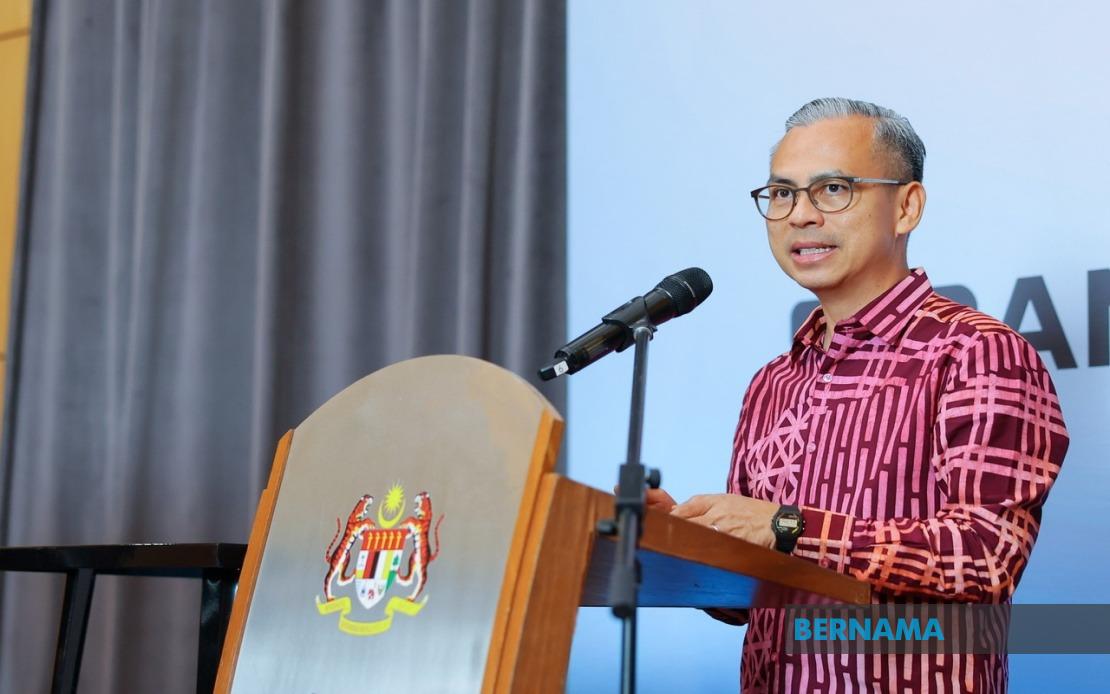
Malaysia's government has taken decisive action against the burgeoning threat of online fraud by establishing a dedicated cross-agency working committee tasked with tackling the rapidly proliferating scam problem. Communications Minister Datuk Fahmi Fadzil announced the formation of this special task force on July 2, revealing that the Cabinet had approved the initiative following a retreat where officials discussed the alarming trajectory of cybercriminal activity affecting the nation's digital users.
The decision to create this coordinated enforcement mechanism represents a significant shift in how Malaysia intends to approach one of the most pressing challenges facing its digital economy. Rather than relying on isolated efforts from individual agencies, the government has opted for a holistic strategy that recognizes the interconnected nature of modern online crimes and the necessity for institutions to share intelligence and coordinate response efforts. The inaugural meeting of the working committee is expected to commence shortly, bringing together representatives from multiple ministries, government agencies, and departmental offices with a unified mandate to reduce the vulnerability of Malaysian citizens to digital deception.
What distinguishes this initiative from previous government responses is the explicit inclusion of the private sector in a structured partnership framework. For the first time, Malaysia's banking industry, telecommunications companies, and major digital platforms—including prominent social media networks—are being formally incorporated into the government's crime-fighting apparatus. This tripartite approach acknowledges that financial institutions serve as crucial detection points for fraudulent transactions, telecommunications providers control the infrastructure through which scammers operate, and technology platforms host the digital spaces where many schemes originate and develop.
The primary objective of this coordinated effort is to fortify Malaysia's defensive and offensive capabilities against online criminal enterprise. By integrating enforcement mechanisms, legislative frameworks, and investigative methodologies, the government aims to create a more robust ecosystem for digital safety. Datuk Fahmi emphasized that the initiative reflects a proactive governance posture, with authorities seeking to identify emerging threat patterns and address them before they metastasize into more widespread problems. The strategy encompasses strengthening how law enforcement agencies pursue perpetrators, reviewing and updating legal tools available to prosecutors, and enhancing the investigative sophistication required to dismantle sophisticated fraud networks.
The government has signaled that concrete outcomes should materialize in the near term, though officials have deliberately refrained from disclosing the complete tactical details of their anti-scam strategy. This measured approach to information management reflects awareness that detailed operational procedures could be exploited by criminal syndicates to circumvent detection and enforcement mechanisms. The balance between public transparency and operational security remains delicate, particularly given the resourcefulness and adaptability of organized cybercriminal groups operating across regional boundaries.
This cross-agency model draws inspiration from Malaysia's previous success in deploying similar coordinated approaches against other serious crimes. The government has utilized comparable multi-sector collaboration to combat child sexual exploitation and abuse, where such integrated operations have demonstrably yielded measurable results in identifying offenders and disrupting networks. The template proved sufficiently effective that policymakers determined it warranted application to the growing scam crisis, which now poses significant economic and social consequences for affected Malaysians.
The involvement of Malaysia's banking sector introduces particular significance, as financial institutions occupy a critical junction in the scam ecosystem. Banks can monitor unusual transaction patterns, flag suspicious movements of funds, freeze accounts implicated in fraud schemes, and provide investigators with transaction records that trace stolen money through multiple accounts and jurisdictions. Similarly, telecommunications providers maintain detailed logs of communications, device identifications, and network usage patterns that can establish connections between suspected perpetrators and their victims.
Social media platforms represent another vital node in this enforcement network. These companies possess user data, device fingerprinting information, communication records, and the capacity to remove fraudulent accounts and disable infrastructure used by scammers. Their cooperation enables law enforcement to obtain evidence that would otherwise require lengthy legal proceedings and international cooperation to acquire. The formalization of such arrangements into an official government committee transforms what might previously have been ad hoc, inconsistent collaboration into a systematic, institutionalized partnership.
For Malaysian consumers and businesses engaged in digital transactions, this institutional response carries significant implications. The establishment of the committee signals that government authorities recognize the severity of the problem and are mobilizing resources commensurate with the threat level. It also suggests that enhanced enforcement and faster action against scammers should become increasingly evident in coming months, potentially creating a deterrent effect on criminal activity. However, the effectiveness of such measures ultimately depends on sustained commitment from all participating institutions, adequate resource allocation, and the ability of the bureaucratic apparatus to outpace the innovation and adaptation of criminal networks.
The timing of this initiative reflects growing public concern about online fraud across Southeast Asia. Malaysia has experienced a documented surge in scam reports, with victims reporting losses extending into hundreds of millions of ringgit annually. The psychological and financial trauma inflicted on victims, compounded by the difficulty of recovering stolen funds, has elevated public pressure on the government to demonstrate tangible progress in combating the problem. This committee represents the government's attempt to convert that political pressure into concrete institutional change.
Looking forward, the success of this mechanism will likely influence how Malaysia approaches other emerging digital-age challenges. Should the committee effectively reduce scam victimization rates and successfully prosecute major fraud networks, it could establish a template for addressing related cybersecurity threats. Conversely, if coordination difficulties, resource constraints, or competing institutional priorities undermine the initiative's impact, it would highlight the structural challenges of maintaining effective inter-agency collaboration in Malaysia's government apparatus.
The private sector's participation also suggests broader recognition that cybersecurity and digital safety cannot be achieved through government action alone. Financial institutions, technology companies, and telecommunications providers operate at the frontlines of digital commerce and communication, making them essential partners in any credible anti-scam strategy. Whether this formal committee can translate goodwill and stated cooperation into sustained, effective joint operations remains a critical question for the months ahead.

