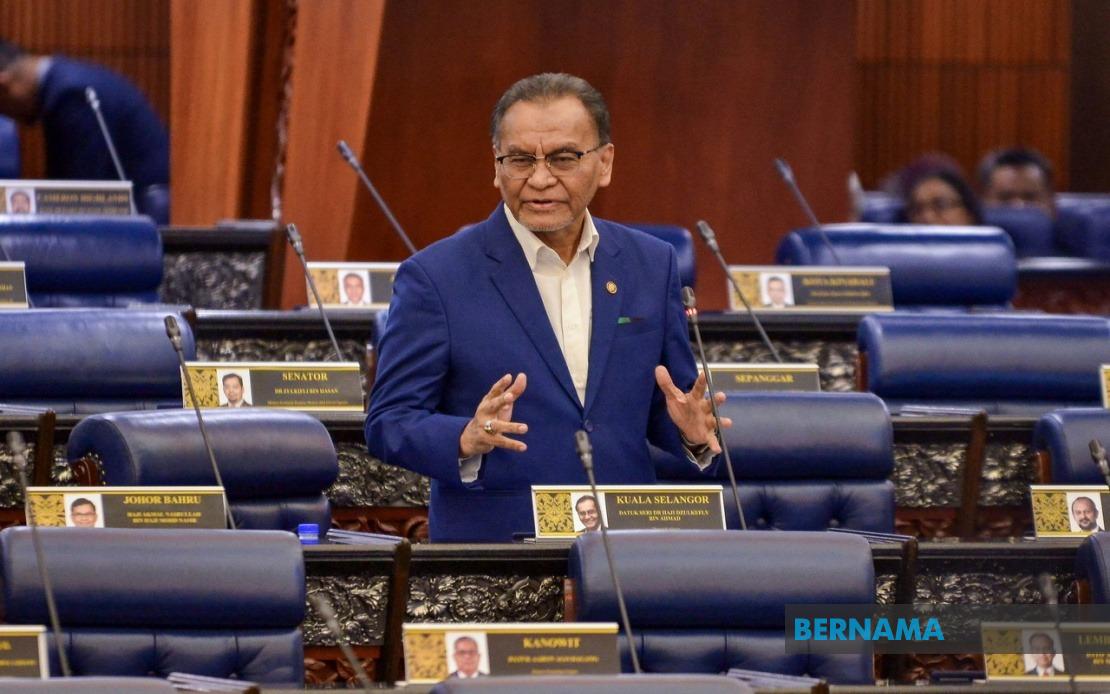
Malaysia's Health Minister Datuk Seri Dr Dzulkefly Ahmad has unveiled a multi-pronged approach to tackle escalating private healthcare costs, with the government introducing MediAsas as a cornerstone initiative to ensure continued health protection access for the M40 and B40 income groups. Announced in Parliament, the MediAsas Plan represents part of the RESET framework—a broader strategy designed to counter the rising expense of private medical care while maintaining the foundation of publicly-funded universal healthcare that underpins Malaysia's health system.
The MediAsas Plan operates as a medical insurance and takaful product engineered to offer substantially lower premium rates compared to conventional private health insurance packages. Critically, the scheme incorporates a phased integration of Diagnosis Related Group (DRG)-based payment mechanisms at participating private hospitals, a structural innovation aimed at creating greater transparency and cost predictability in private sector billing. This approach acknowledges a persistent tension in Malaysia's healthcare landscape: while the public system provides comprehensive coverage funded through tax revenue, a growing segment of the population seeks supplementary private options to reduce waiting times and access a broader range of specialised services.
The government is careful to position MediAsas not as a replacement for public healthcare but as a complementary layer that expands options for middle-income earners. The distinction is important for policy coherence. Malaysia's public healthcare system—comprising 154 hospitals and over 3,000 primary care facilities—continues as the backbone of Universal Health Coverage, available to all citizens regardless of income. The B40 group, representing lower-income households, remains insulated through dedicated schemes including PeKa B40, the MADANI Healthcare Scheme, and MySalam, ensuring this vulnerable segment does not face coverage gaps during the transition to expanded private-sector participation.
The MediAsas Plan specifically targets the M40 demographic—households earning between roughly RM4,850 and RM10,959 monthly—a cohort often described as the "forgotten middle" in healthcare policy. These families frequently earn too much to qualify for means-tested B40 assistance but lack the disposable income to comfortably absorb premium private insurance costs. By offering affordable private health protection, MediAsas addresses a documented concern: M40 households may delay seeking private care due to cost barriers, potentially cascading their demand onto an already-strained public system or compromising health outcomes through deferred treatment.
The rollout strategy reflects cautious pragmatism. MediAsas launches as a pilot programme in the Klang Valley region by the end of July 2024, initially involving six insurance and takaful companies. This geographically-limited trial allows regulators to monitor uptake, assess claims patterns, identify operational bottlenecks, and refine the product before national expansion commences in January 2027. The Klang Valley, home to approximately 8 million residents and Malaysia's densest concentration of private healthcare facilities, provides an ideal test bed: the region encompasses both affluent suburbs and working-class areas, offering demographic diversity for product validation.
A cornerstone of the RESET framework extends beyond MediAsas to include systemic reforms addressing healthcare inefficiency. The government plans to establish interoperability standards for electronic medical records across public and private providers, reducing costly duplication of diagnostic tests and imaging scans. This technical infrastructure improvement carries immediate fiscal implications: unnecessary repetition of laboratory work and radiology represents a significant hidden cost burden for patients and insurers. By enabling seamless data sharing, the system would allow primary care physicians and specialists to access prior results, directing resources toward genuinely new diagnostic information rather than redundant verification.
Parallel to digital integration, the RESET framework encompasses restructuring of private hospital billing practices, targeting opaque pricing structures that have historically frustrated patients and insurers. The DRG-based payment mechanism embedded within MediAsas represents a shift toward case-based reimbursement rather than fee-for-service models, aligning Malaysia with international standards employed in countries including Australia, Singapore, and South Korea. This approach theoretically incentivises clinical efficiency—hospitals benefit from providing necessary care cost-effectively rather than maximizing service volume—though its success depends on appropriate DRG weightings calibrated to Malaysian healthcare contexts.
The health minister acknowledged that MediAsas must address critical coverage dimensions often excluded from standard policies: pre-existing conditions, non-communicable diseases (NCDs), and mental health challenges. These omissions have historically rendered conventional private insurance inaccessible to chronically ill individuals, effectively creating a two-tier system where the healthiest and wealthiest access premium private care while others rely on public facilities. By integrating NCD and mental health coverage from inception, MediAsas signals a policy commitment to horizontal equity—ensuring health protection reaches those most burdened by chronic disease rather than only the young and well.
The initiative arrives amid mounting evidence that private healthcare inflation in Malaysia has outpaced general inflation and wage growth. Specialist consultations, surgical procedures, and hospitalization costs in private facilities have escalated substantially over the past decade, pricing comprehensive private insurance beyond reach for many middle-income families. Simultaneously, public hospital capacity constraints have widened treatment delays for non-emergency procedures, creating political pressure to expand private-sector participation while protecting affordability.
For Malaysian policymakers, MediAsas reflects a pragmatic acceptance that mandatory public-only healthcare provision, while equitable in principle, creates operational challenges in a middle-income country with constrained public resources and rising disease burdens. The scheme represents not ideological retreat but rather recognition that sustainable universal coverage increasingly requires a mixed financing model combining tax-funded public provision with regulated, affordable private options. This approach mirrors healthcare system evolution across East and Southeast Asia, where governments have progressively integrated private sectors under regulatory frameworks rather than attempting prohibition.
The implications extend beyond individual patient choice. By channeling M40 demand toward private providers with predictable reimbursement mechanisms, MediAsas potentially alleviates congestion at public hospitals, allowing concentrated resources on lower-income populations and emergency services. This division of labour, if properly executed, could paradoxically improve public system performance by matching supply and demand more efficiently. However, success hinges on strict regulation: absent robust oversight, providers might exploit M40 patients with aggressive upselling or unnecessary procedures, undermining public confidence in the entire health system.
From a regional perspective, Malaysia's MediAsas initiative contributes to broader Southeast Asian experimentation with mixed healthcare financing. Thailand's Universal Coverage Scheme, Indonesia's Jaminan Kesehatan Nasional, and the Philippines' PhilHealth programme have all grappled with balancing public provision, private participation, and affordability for working-class families. Malaysia's approach—combining strengthened public coverage with regulated, incentive-aligned private options—offers a potential model for peer nations struggling with similar cost-access tensions.
The success of MediAsas will ultimately depend on execution details often overlooked in policy announcements: premium pricing relative to household budgets, breadth of provider networks outside major urban centres, claims processing speed and fairness, and regulatory enforcement against premium escalation. The pilot phase, extending to early 2027, provides crucial opportunity to validate that the scheme achieves its stated objective of expanding healthcare options for middle-income Malaysians rather than creating merely another insurmountable financial barrier.

