Malaysia is stepping up efforts to reshape its approach to digital governance through the International Regulatory Conference (IRC) 2026, a two-day forum that commenced in Kuala Lumpur and reflects growing recognition that technological change is outpacing traditional regulatory models. Organised by the Malaysian Communications and Multimedia Commission (MCMC), the conference has attracted policymakers, industry figures and international experts to deliberate on emerging challenges spanning artificial intelligence, online safety, data sovereignty and future technologies. The event represents a critical juncture as Malaysia navigates the intersection of innovation and consumer protection in an increasingly complex digital ecosystem.
Communications Minister Datuk Seri Fahmi Fadzil is presiding over the opening ceremony, underscoring the political significance attached to digital regulation at cabinet level. The conference's central theme—Shaping the Next Digital Era: Regulation, Resilience and Trust—encapsulates the tripartite challenge facing modern regulators: creating guardrails without stifling economic opportunity, building institutional capacity to anticipate technological disruption, and fostering public confidence in digital systems. This framing suggests Malaysia's communications ministry recognizes that regulatory credibility depends not merely on enforcement mechanisms but on demonstrating foresight and adaptability.
The first substantive session tackled online platform accountability through a dialogue examining child protection in digital environments where users, particularly younger demographics, face mounting vulnerabilities. The discussion brought together the Human Rights Commission of Malaysia (SUHAKAM), represented by children's commissioner Dr Farah Nini Dusuki, alongside international voices including the United Nations Children's Fund (UNICEF) Malaysia and Australia's High Commissioner. This multistakeholder composition reflects an emerging consensus that platform safety cannot be addressed through national regulation alone—it demands coordinated approaches spanning civil society, international development agencies and diplomatic partners. The inclusion of Australian representation also signals deepening regional alignment on digital governance standards within the Indo-Pacific sphere.
A parallel session examined data sovereignty and consumer privacy rights, two interconnected concerns that have assumed heightened importance as Malaysia accelerates its transition toward a digital economy. The discourse involved technology infrastructure providers such as Maxis and telecommunications operators, alongside consultancy firms like PwC, reflecting an implicit acknowledgment that effective regulation requires genuine partnership with commercial entities rather than adversarial posturing. The focus on data sovereignty carries particular resonance for Southeast Asian economies wary of digital colonialism, whereby major technology corporations and foreign governments exercise disproportionate control over information flows originating from the region.
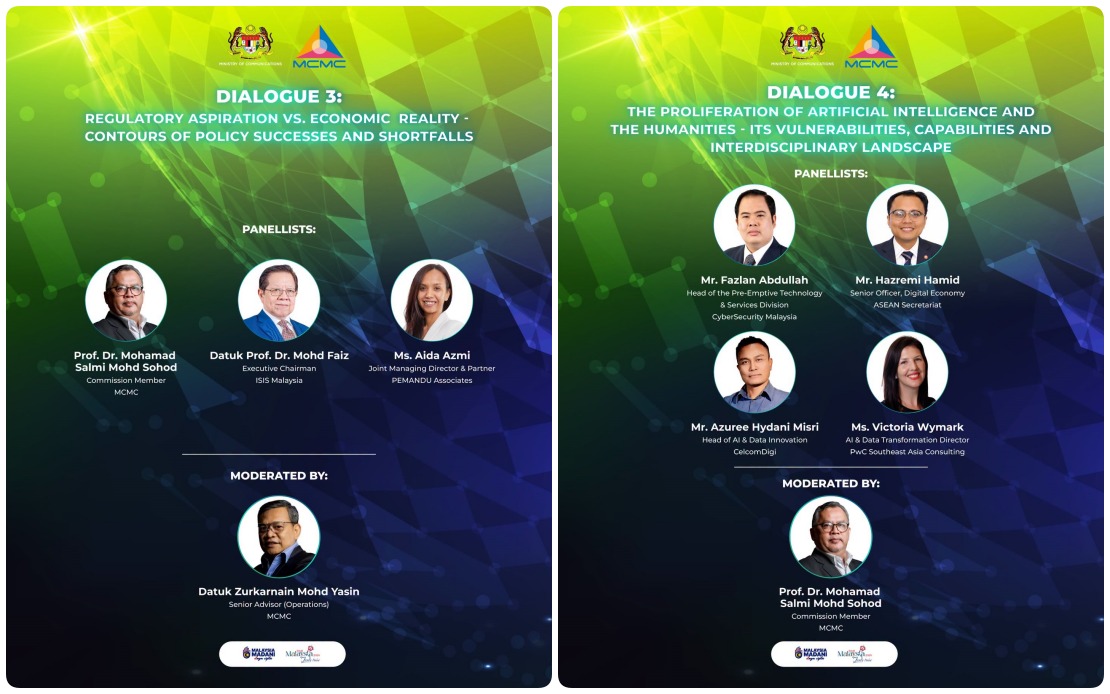
A critical dimension of the conference involved examining the tension between regulatory ambition and economic pragmatism. Sessions exploring this friction featured think tanks including the Institute of Strategic and International Studies (ISIS) Malaysia and PEMANDU Associates, organisations positioned to bridge policy and implementation. This reflects a mature approach to governance—recognition that rules must be technically feasible, economically viable and administratively implementable. Malaysia's experience with previous regulatory frameworks likely informs this emphasis; ambitious legislation without capacity to enforce or industry capacity to comply tends to generate compliance theatre rather than genuine behavioural change.
The conference devoted substantial attention to artificial intelligence's societal implications through an interdisciplinary lens spanning technical, ethical and humanistic dimensions. Participants from the ASEAN Secretariat, academic institutions including Universiti Kebangsaan Malaysia (UKM), and CyberSecurity Malaysia examined how AI systems interact with existing social structures, knowledge production systems and psychological wellbeing. This approach contrasts with narrowly technical or purely economic framings of AI governance, suggesting Malaysian policymakers appreciate that algorithmic systems are fundamentally embedded in social contexts and require correspondingly holistic regulatory thinking.
The conference's second day pivots toward forward-looking technologies with sessions on quantum computing, robotics and autonomous systems. The inclusion of quantum technology reflects sophisticated anticipation of disruptive capabilities that may emerge within the regulatory planning horizon. Engagement with academic institutions—particularly Universiti Teknologi Malaysia (UTM) and Universiti Malaya (UM)—indicates an attempt to ground regulation in scientific understanding rather than reactive responses to commercial deployments. This proactive posture distinguishes Malaysia's approach from purely defensive stances adopted by some jurisdictions.
A distinctive thread running through the conference addresses what might be termed digital dependency—the psychological, cognitive and social consequences of constant connectivity and algorithmic mediation of information. Sessions examining mental wellbeing and knowledge integrity in always-on societies acknowledge that digital regulation extends beyond preventing explicit harms like fraud or child exploitation to encompassing broader questions of cognitive autonomy and epistemic stability. This expansive conception of online safety reflects evolution in regulatory thinking beyond consumer protection toward protection of the informational commons itself.
The IRC 2026 represents the third iteration of this conference series since inception in 2024, indicating Malaysia's commitment to embedding digital governance as an ongoing institutional practice rather than episodic response to crises. The timing aligns with implementation of the Online Safety Act 2025 (ONSA), which came into force January 1, 2026, representing Malaysia's latest legislative attempt to operationalise principles of platform accountability and user protection. The conference functions partly as a legitimation mechanism for these frameworks, convening international expertise to validate Malaysian approaches while also serving as a listening post to identify implementation challenges early.
Participation spanning over seven countries suggests Malaysia is positioning itself as a convening authority on digital governance within the region and beyond. For Southeast Asian economies grappling with similar challenges around AI adoption, platform regulation and data protection, Malaysia's conferences and frameworks may establish reference points influencing neighbouring jurisdictions' policy trajectories. This potential agenda-setting capacity reflects both Malaysia's institutional maturity in telecommunications regulation and the absence of established multilateral governance mechanisms for digital economy issues at the regional level.
The conference's structure and participant composition suggest an implicit theory of regulatory change emphasising consensual standard-setting over command-and-control enforcement. By creating forums where regulators, technologists, businesses and civil society actors deliberate collectively, Malaysia may be attempting to build pre-competitive consensus that facilitates more efficient implementation of subsequent rules. However, this approach carries risks—industry actors and reformers bring divergent interests, and consensus-building processes can result in lowest-common-denominator outcomes that fail to address genuine harms or merely distribute costs among weaker constituencies.
Looking forward, the outcomes from IRC 2026 will likely influence Malaysia's implementation of ONSA and shape technology policy for the remainder of the decade. Particularly significant will be whether the conference generates concrete recommendations on contentious issues such as content moderation standards, data localisation requirements, or AI transparency obligations. As Malaysia experiences the practical challenges of enforcing online safety requirements, international regulatory learning exchanges become essential for adaptation and refinement of frameworks. Deputy Communications Minister Teo Nie Ching's closing remarks tomorrow will offer signals regarding the government's intended policy direction on emerging technologies and its appetite for stronger versus lighter-touch regulatory approaches.

