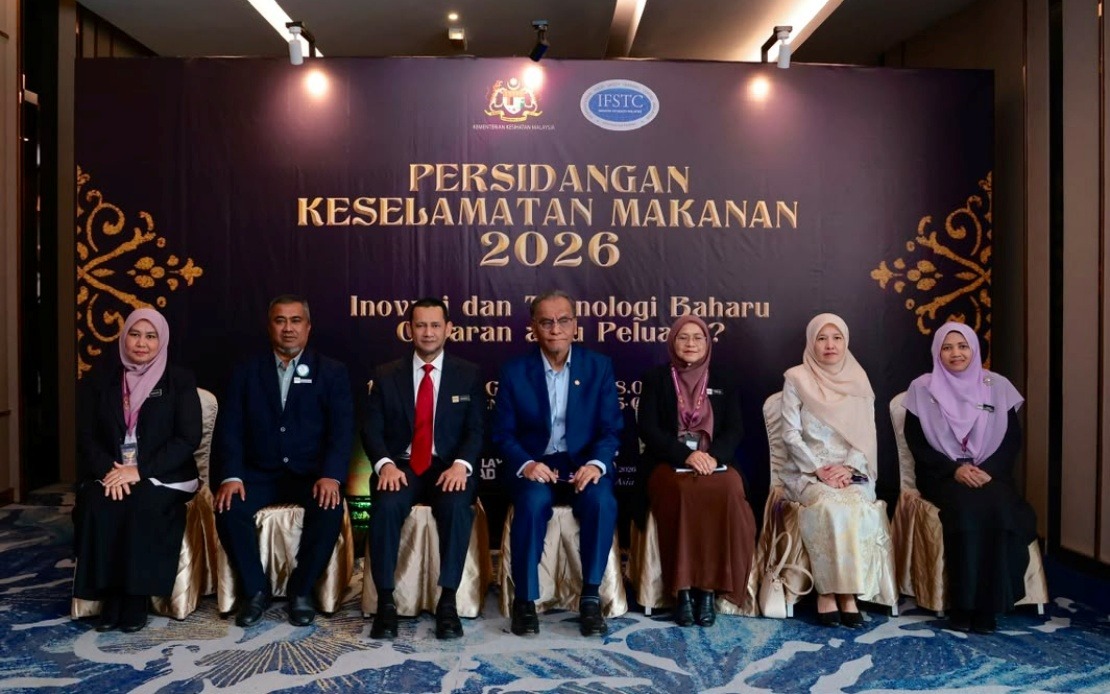
Malaysia has taken a significant step in regional food governance by formally joining the Asia-Pacific Food Regulatory Authority Summit, a multilateral platform designed to harmonise food safety standards and practices across the Asia-Pacific region. Health Minister Datuk Seri Dr Dzulkefly Ahmad announced the development at a membership signing ceremony in Putrajaya, emphasising that the Cabinet had approved the country's accession at its June 12 meeting. The move represents a deliberate strategy to position Malaysia as a leader in modernising how the region manages food safety through technology and coordinated regulatory frameworks.
The timing of Malaysia's APFRAS membership reflects mounting pressure on the country's food security infrastructure. Over the past decade, Malaysia's reliance on imported food has grown dramatically, with the import bill nearly doubling from RM42.6 billion in 2013 to RM78.9 billion in 2023—an 85 per cent increase that underscores the nation's vulnerability to disruptions in global supply chains. This trajectory is consistent with Malaysia's broader economic development pattern, where rising incomes and urbanisation have outpaced domestic agricultural productivity in several key categories. The sheer volume of food crossing Malaysia's borders now means that a substantial portion of what Malaysians consume originates in distant countries, traversing complex logistical networks that span multiple jurisdictions and regulatory systems.
Dr Dzulkefly framed APFRAS membership as instrumental to implementing two cornerstone national policies: the National Food Safety Policy and the National Food Security Policy. By participating in a coordinated regional approach, Malaysia gains access to shared best practices, standardised protocols, and collective intelligence about emerging food safety threats. This is particularly valuable when dealing with cross-border supply chains, where contamination or adulteration in one country can rapidly propagate to consumers thousands of kilometres away. The health minister stressed that the initiative would strengthen Malaysia's role as what he termed a "Smart Gatekeeper" at the regional level—a designation suggesting Malaysia should leverage its geographic and economic position to set standards that neighbouring countries can adopt and align with.
A cornerstone of Malaysia's participation in APFRAS involves leading digital transformation in food safety governance across the region. The Health Ministry intends to champion the adoption of artificial intelligence and predictive analytics technologies that can monitor food safety risks more efficiently at ports of entry, airports, and land borders. Rather than relying solely on traditional inspection methods, AI-powered systems can analyse patterns in shipment data, supplier histories, and laboratory results to identify potential hazards before they reach consumers. Predictive analytics can flag high-risk consignments for deeper scrutiny, thereby optimising the allocation of limited inspection resources and accelerating clearance times for compliant shipments.
Beyond safety monitoring, Malaysia's APFRAS role encompasses efforts to regulate the use of biodegradable packaging materials and establish harmonised legislative frameworks for novel food innovations. The biodegradable packaging agenda is particularly relevant in a region increasingly conscious of environmental sustainability, where consumers and regulators alike demand that food packaging solutions minimise plastic pollution. However, biodegradable materials present their own safety challenges, including potential leaching of compounds and decomposition timelines that may not align with standard supply chain durations. By coordinating regional standards, Malaysia can help prevent a patchwork of conflicting national regulations that would complicate trade and increase compliance costs for manufacturers and importers.
The novel food innovation framework is equally significant for Malaysia's regional positioning. As biotechnology advances, companies are introducing foods derived from genetic modification, cellular agriculture, and precision fermentation into commercial markets. Individual countries adopting disparate approval processes create friction in regional trade and confuse consumers about which products are safe. A harmonised APFRAS approach would establish consistent criteria for safety assessment, allowing companies to obtain regional approval more efficiently while ensuring that consumers across Southeast Asia benefit from consistent protection standards. Malaysia's willingness to lead this effort signals confidence in its regulatory capacity and scientific expertise.
The 2026 Food Safety Conference, which provided the formal setting for Malaysia's APFRAS membership announcement, drew over 300 participants from across the food safety ecosystem—regulators, industry experts, academic researchers, and public health professionals. The conference theme, "New Innovations and Technologies – Challenges or Opportunities?", reflects an underlying tension in modern food systems. Emerging technologies offer genuine opportunities to enhance safety, traceability, and efficiency, yet they also introduce novel risks that regulatory frameworks may struggle to anticipate. The breadth of participation suggests that Malaysia recognises food safety as inherently a cross-sectoral challenge requiring input from diverse stakeholders.
For Malaysian consumers and businesses, APFRAS membership carries several practical implications. Imported food will continue flowing across Malaysia's borders, but regulatory oversight should become more sophisticated and coordinated, reducing the likelihood of unsafe products reaching shelves. Local food manufacturers and exporters will benefit from clearer, more consistent regional standards, reducing the compliance burden of meeting multiple inconsistent national requirements. However, the transition to digital monitoring systems and new packaging regulations will require investment and adaptation from industry players, particularly smaller firms with limited technical capacity. Regional capacity-building initiatives coordinated through APFRAS may help offset these adjustment costs.
The surge in food imports also reflects structural vulnerabilities that APFRAS membership alone cannot resolve. Malaysia's domestic agricultural sector faces land constraints, water scarcity, and shifting labour availability, making it difficult to expand domestic production in certain categories. Climate change poses additional risks to regional agricultural output, with changing rainfall patterns and extreme weather threatening harvests across Southeast Asia. In this context, APFRAS serves not as a solution to import dependence but rather as a mechanism to manage the risks inherent in high import reliance. By ensuring that imported food meets consistently high safety standards and that supply chain disruptions can be detected early, Malaysia reduces its vulnerability to food safety crises.
Looking forward, Malaysia's leadership within APFRAS could influence how the region approaches emerging challenges such as antimicrobial resistance in food production, pesticide residues, and food fraud detection. The country's role as a regional economic hub and its established regulatory infrastructure position it well to shape APFRAS agendas and serve as a model for other nations. However, success will depend on translating membership commitments into concrete regulatory harmonisation, technology adoption, and capacity building across the region. The Health Ministry's emphasis on AI and predictive analytics suggests a sophisticated understanding of where future food safety governance is headed, but implementation will test whether regional cooperation can move beyond aspirational frameworks to practical, binding commitments that protect consumers and facilitate legitimate trade.

