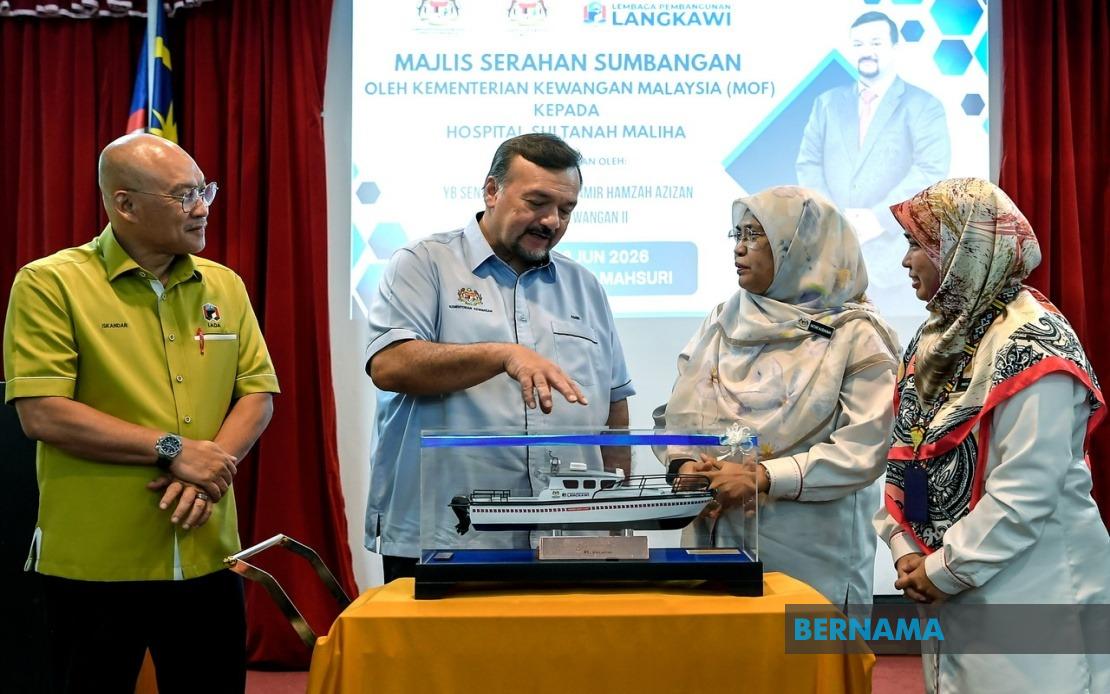
The Malaysian Ministry of Finance has committed RM5.5 million to establish a dedicated maritime ambulance service serving Langkawi, with operations set to commence in the first quarter of next year. Finance Minister II Datuk Seri Amir Hamzah Azizan announced the development during a visit to Hospital Sultanah Maliha, emphasising the government's determination to modernise emergency medical services in the island state. The investment represents a significant step towards addressing longstanding challenges in inter-island patient transport, a persistent concern that has affected both local residents and the millions of international visitors who rely on Langkawi's healthcare infrastructure annually.
Currently, patients requiring transfer from Langkawi to specialised facilities on the Malaysian mainland must depend on conventional passenger ferry services, a system that carries inherent risks and inefficiencies when medical emergencies arise. The reliance on commercial shipping creates particular vulnerabilities during periods when ferry schedules are curtailed due to weather or operational constraints, leaving critically ill patients with severely limited transport options. These delays can prove fatal in time-sensitive conditions, and the absence of dedicated medical equipment and trained personnel aboard standard ferries compromises patient safety and dignity during what are often harrowing journeys.
The new sea ambulance will operate under the management of Hospital Sultanah Maliha, the primary government healthcare facility serving Langkawi's population of approximately 330,000 residents alongside seasonal tourist influxes exceeding three million visitors annually. The vessel's primary function will involve transferring patients to mainland referral hospitals equipped with tertiary care capabilities unavailable on the island, including specialist surgical services, intensive care units, and advanced diagnostic facilities. By establishing a dedicated medical transport channel, the government seeks to eliminate delays inherent in the current system and ensure patients receive treatment-appropriate continuity of care during the critical transfer period.
The ambulance vessel itself will carry medical infrastructure designed for in-transit patient management, accommodating two stretcher-equipped patients simultaneously alongside twelve healthcare personnel who will provide continuous monitoring and intervention during transit. This capacity allows the crew to maintain medications, oxygen delivery, cardiac monitoring, and other life-sustaining interventions throughout the journey. Equally important, the vessel's design prioritises patient privacy and dignity, a frequently overlooked but crucial element of compassionate emergency care that distinguishes medical transport from ordinary maritime passage.
Beyond the sea ambulance initiative, the Ministry of Finance simultaneously presented RM700,000 in healthcare equipment to Hospital Sultanah Maliha, reflecting a broader modernisation strategy for the facility. This supplementary investment encompasses medical diagnostic devices, information technology infrastructure, clinical furniture, transport vehicles, and enhanced security systems—components essential for elevating overall operational capacity and patient experience. The combined funding approach suggests recognition that maritime access improvements alone prove insufficient without concurrent upgrades to the receiving facility's diagnostic and treatment capabilities.
A particularly significant element involves the integration of Electronic Medical Record systems, aligning Hospital Sultanah Maliha with the nationwide digitalisation initiative championed by the Health Ministry. The EMR platform enables seamless information flow between Langkawi and mainland healthcare providers, with healthcare workers utilising mobile computing devices to document patient data in real-time during clinical encounters. This interconnected approach eliminates information silos that historically complicated treatment coordination, enabling mainland specialists to access complete Langkawi medical histories immediately upon patient arrival, thereby reducing diagnostic duplication and accelerating definitive care initiation.
The sea ambulance initiative carries particular resonance within Malaysia's broader healthcare equity framework, addressing the inherent geographical disadvantages faced by island and remote populations. While Peninsular Malaysia benefits from dense networks of tertiary care facilities accessible by road, island residents historically shoulder disproportionate healthcare access burdens. Langkawi's development trajectory as a major international tourist destination has heightened these disparities, as the facility must simultaneously serve a growing permanent population while managing acute care demands from visiting tourists unfamiliar with local medical facilities. A dedicated maritime ambulance partially corrects these structural inequities by ensuring time-critical medical emergencies receive response standards comparable to those available in urban centres.
The initiative also reflects evolving healthcare security considerations within the region. Tourist-dependent economies like Langkawi increasingly recognise that healthcare infrastructure quality directly influences visitor confidence and spending patterns. International travellers evaluating potential destinations factor medical facility accessibility and emergency response capabilities into risk assessments. By demonstrating commitment to world-class emergency medical transport, Malaysia signals seriousness about competitive positioning within Southeast Asia's increasingly crowded tourism marketplace, where healthcare reputation increasingly differentiates destinations.
Implementation timelines suggest procurement processes have advanced substantially, with early next year launch windows indicating contracts are finalised or approaching conclusion. The estimated operating costs embedded within the RM5.5 million allocation will cover crew salaries, fuel, maintenance, and medical supply replenishment during the initial operational period, providing stability during the service's establishment phase. However, longer-term sustainability questions regarding permanent operational funding sources remain unanswered, potentially indicating this represents initial government seeding with expectation of budgetary integration following successful proof-of-concept operations.
For Malaysian healthcare administrators and policymakers, the Langkawi project provides valuable template potential for addressing similar access challenges affecting other island and peripheral populations. Sabah and Sarawak, with their respective maritime-dependent communities, may reference this model when advocating for comparable infrastructure investments. The success or complications encountered during Langkawi implementation will likely inform government decisions regarding similar interventions elsewhere, making this initiative significant beyond its immediate geographic scope.
The timing of this announcement reflects broader government momentum toward healthcare infrastructure enhancement, occurring within a period of policy emphasis on digital health integration and facility modernisation across the public sector. By coupling traditional capital investment—the ambulance vessel—with contemporary technological solutions like EMR systems, the government demonstrates integrated thinking about healthcare system transformation. This combination of physical infrastructure and digital capability increasingly characterises successful healthcare system improvements globally, positioning Malaysia's approach within international best-practice frameworks that recognise equipment and systems must evolve in coordinated fashion.

