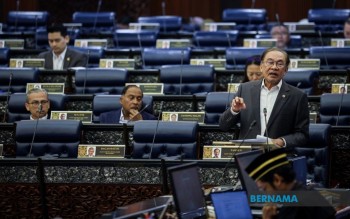
Prime Minister Datuk Seri Anwar Ibrahim has unveiled a new e-Invoice Voluntary Declaration Programme extending through December 31, 2027, marking a significant policy intervention aimed at easing the regulatory burden on Malaysia's business community, particularly its vast network of micro, small and medium enterprises. Speaking during Minister's Question Time in Parliament, Anwar, who concurrently holds the Finance Ministry portfolio, positioned the initiative as part of the government's broader commitment to supporting business viability in challenging global economic conditions. The programme represents an unusual departure from conventional tax administration practice in the context of income tax compliance, introducing a grace period during which businesses can voluntarily correct their tax filings without facing financial penalties from the Inland Revenue Board of Malaysia.
The voluntary declaration mechanism is designed to address a critical pain point for Malaysian businesses: the administrative complexity and associated costs of transitioning to digital invoicing systems. For MSMEs in particular, which often operate with limited in-house accounting and compliance expertise, the financial and operational consequences of inadvertent errors in e-Invoice implementation can be disproportionately severe. By suspending penalty provisions during the three-year window, the government effectively creates a safe harbour for businesses to audit their own compliance records, identify discrepancies, and make corrections without triggering enforcement action from tax authorities. This approach acknowledges a fundamental tension in tax policy between maintaining fiscal integrity and recognising that overly punitive compliance mechanisms can inadvertently drive informal economic activity or deter business formalisation.
Complementing the voluntary declaration arrangement, the government has also accelerated its tax incentive regime to encourage genuine investment in e-Invoice infrastructure. The Finance Ministry has authorised full capital allowance claims within a single fiscal year for all eligible expenses incurred in implementing e-Invoice systems and processes. This accelerated depreciation schedule substantially improves the cash flow dynamics for businesses undergoing digital transformation, enabling them to recover their technology investments more rapidly through tax deductions. For a small enterprise purchasing invoicing software, hardware, and staff training, this represents a meaningful reduction in the effective cost of compliance, potentially recovering ten to fifteen percent of implementation expenses in the first year alone.
The programme must be understood within the context of the government's previous e-Invoice policy adjustments. In December 2025, authorities raised the income exemption threshold for e-Invoice requirements from RM500,000 to RM1 million in annual turnover, a substantial upward revision that immediately removed compliance obligations for more than one million taxpayers. That threshold increase reflected mounting political and commercial pressure regarding the regulatory burden on Malaysia's informal and semi-formal business sectors. The current voluntary declaration initiative represents a second concession, suggesting that despite the December 2025 adjustment, the government continues to receive feedback that compliance costs and the risk of unintentional breaches remain material impediments to business confidence.
For the broader Malaysian economy, these measures carry significant implications for tax compliance rates and the informal economy's gradual formalisation. When compliance costs and penalty risks climb too steeply, businesses rationally calculate that evading or minimising formal registration becomes economically advantageous. By reducing the effective cost of compliance through tax incentives and suspending penalties during a transition period, the government is attempting to shift that calculus, making formal participation more attractive to marginal enterprises. This is particularly consequential in Malaysia's context, where the informal economy remains substantial and represents both a revenue collection opportunity and a labour standards concern for policymakers.
The announcement also reflects shifting priorities within the Finance Ministry's compliance strategy. Rather than emphasising enforcement and penalty escalation, the current approach emphasises carrot-based incentives and administrative flexibility. This represents a philosophical shift in tax administration, moving away from the deterrence model that dominated many revenue authorities during the 2010s and early 2020s, toward a cooperative compliance framework that views businesses and tax authorities as partners in a shared project of economic formalisation and growth. Such frameworks have gained traction internationally, particularly in jurisdictions where informal economic activity remains substantial or where business confidence in government has been eroded.
The voluntary declaration programme's three-year timeline is strategically significant. It provides sufficient duration for even the smallest enterprises to complete their digital transformation journey and establish stable, compliant processes, yet remains bounded enough that it does not create indefinite moral hazard or signal that e-Invoice compliance is genuinely optional. Businesses will need to complete their voluntary declarations and corrections by December 31, 2027, after which standard enforcement protocols resume. This timeline aligns with reasonable expectations for a comprehensive MSME transition, allowing clustered groups of businesses to coordinate their technology adoption and share implementation experiences and best practices.
Regionally, Malaysia's approach to e-Invoice compliance and tax administration holds relevance for other Southeast Asian economies attempting similar digital transformation in their tax systems. Singapore, Thailand, and Indonesia have all pursued digital invoicing initiatives with varying degrees of rigour and enforcement intensity. Malaysia's combination of threshold exemptions, accelerated tax incentives, and penalty waivers provides a model of graduated compliance that acknowledges both the revenue collection imperatives of the state and the practical constraints facing small business operators in developing or middle-income economies.
The policy also intersects with broader Malaysian fiscal concerns regarding the government's revenue base and debt trajectory. Formalising additional businesses and improving voluntary compliance rates can expand the tax base without rate increases, a particularly valuable approach when public finances remain constrained and political space for broad tax hikes is limited. Each additional business transitioning from informal to formal status, or from underreporting to accurate compliance, incrementally improves government revenue without requiring any formal rate adjustment or legislative change.
Implementation success will depend substantially on whether the Inland Revenue Board effectively communicates the voluntary declaration programme to affected businesses and whether the agency's frontline personnel understand and consistently apply the penalty waiver provisions. Tax compliance is influenced not only by formal policy but also by perceived compliance norms and bureaucratic practice. If businesses believe that penalties may still apply despite the announced programme, or if they encounter inconsistent treatment across regional revenue offices, the policy's intended benefits will be substantially diminished. The government has therefore invested significantly in public communication campaigns and staff training to ensure the programme functions as designed.
Looking forward, the success or failure of this voluntary declaration initiative will likely inform future Malaysian tax administration policy. If voluntary compliance rates rise substantially and correction filings are submitted in significant volumes, policymakers will have evidence that reduced-penalty, incentive-based approaches generate superior outcomes compared to purely punitive regimes. Conversely, if uptake remains limited, it may suggest that compliance barriers are more fundamental, rooted in business systems capacity or fundamental scepticism of government institutions rather than merely penalty aversion. Either way, the initiative represents an important experimental adjustment in how Malaysia's tax administration balances revenue collection with business support objectives.

