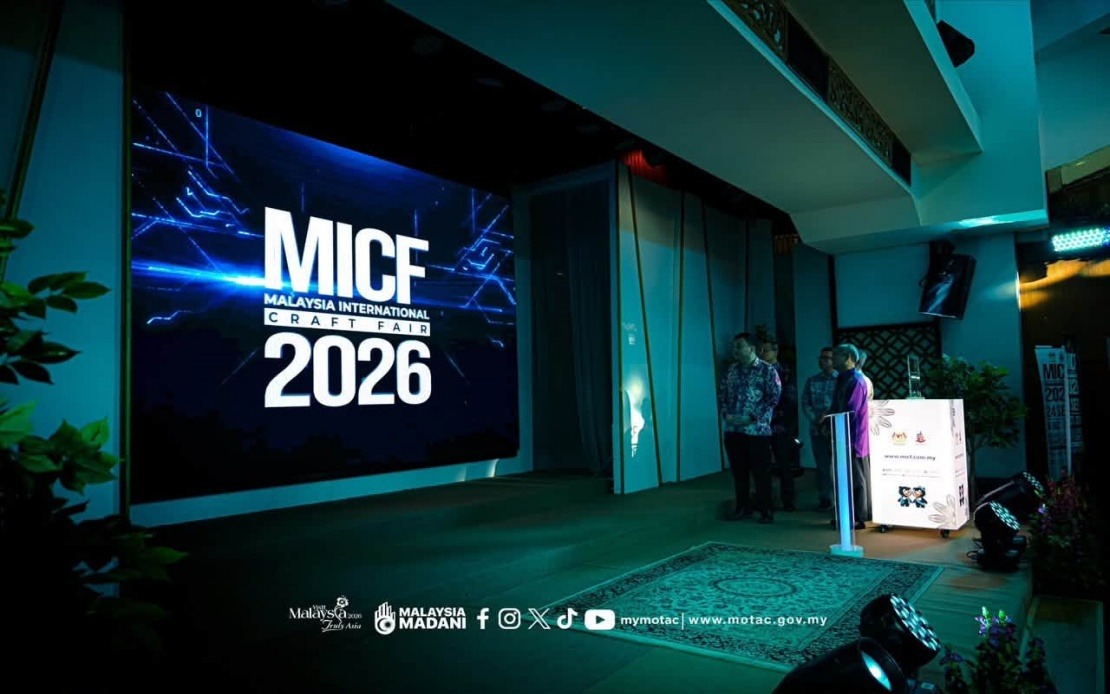
The Malaysia International Craft Fair (MICF) 2026 is poised to become a major gathering for the global craft community, with organisers targeting an ambitious roster of 400 participants when the event unfolds at the Kuala Lumpur Craft Complex from September 24 to October 5 next year. The delegation will comprise 300 local artisans and entrepreneurs alongside 100 international participants representing more than 20 countries, creating what promises to be one of the region's most comprehensive platforms for traditional craftsmanship and contemporary artistic practice.
According to Kraftangan Malaysia, the organising body, the 12-day festival is designed as more than a marketplace or exhibition space. Rather, it functions as a deliberate mechanism for facilitating meaningful connections among craft practitioners, establishing commercial partnerships that can extend beyond the fair itself, and opening new distribution channels for artisans who might otherwise struggle to access international markets. For Malaysia's craft sector—long positioned as a repository of cultural heritage and a source of tourism revenue—this positioning reflects growing recognition that traditional skills require active economic support and global visibility to remain viable in contemporary economies.
The international dimension distinguishes MICF 2026 from purely domestic celebrations of craft heritage. Six countries will anchor the event with comprehensive craft demonstrations, each representing distinct artistic traditions with deep historical roots. China will present the intricate art of jade carving, a practice refined over millennia that transforms raw stone into delicate sculptural forms. New Zealand's Maori carving tradition brings Pacific Island aesthetic principles and storytelling embedded in wood and bone work. Uzbekistan's jewellery artisans will demonstrate the complex techniques of precious metal work that have flourished along Central Asian trade routes. Sri Lanka's participation focuses on beeralu lace work, a laborious hand-crafted textile tradition requiring exceptional precision and patience. Indonesia brings leather art, reflecting the archipelago's rich tradition of worked hide craftsmanship. India rounds out the international showcase with tarkashi brass inlay, an intricate metalworking practice where contrasting metals are fitted seamlessly together to create elaborate decorative patterns.
This curatorial approach reveals a deliberate strategy to present craft not as static museum pieces but as living practices requiring demonstration and explanation. Visitors will observe artisans actively engaged in their work, observing how hands and tools transform raw materials into finished objects—a visceral understanding impossible through viewing completed pieces alone. The diversity of techniques represented underscores a fundamental truth often obscured in globalised consumer markets: that objects of beauty and utility emerge from specific cultural contexts, accumulated knowledge, and individual mastery developed over years or decades.
Malaysia's own craft traditions will occupy equal prominence in the programming. Ten local craft masters and entrepreneurs have been selected to demonstrate Malaysian crafts, though the statement does not specify which particular traditions these practitioners represent. This selection presumably encompasses forms such as batik weaving, silverware craftsmanship, pewter work, traditional woodcarving, and textile arts that remain culturally significant across different regions of Malaysia. By positioning local and international demonstrations as equal components rather than relegating Malaysian work to secondary status, organisers signal respect for indigenous practice while encouraging cross-cultural dialogue and mutual learning among practitioners.
The fair's programming extends well beyond static exhibitions or marketplace transactions. An International Craft Talk component will presumably convene practitioners and theorists for substantive conversation about contemporary challenges facing traditional crafts, from market pressures to knowledge transmission to the integration of digital technologies. An International Fashion Showcase suggests that contemporary fashion designers and traditional craft artisans will explore intersections between haute couture and handmade heritage techniques—a growing area where luxury fashion houses increasingly collaborate with craft communities. Cultural performances will provide atmospheric and cultural context for the diverse traditions on display, while interactive activities will invite general visitors to attempt basic techniques, democratising access to skills often guarded within craft communities.
Strategic partnerships have been leveraged to enrich the programming further. Traditional cooking demonstrations coordinated by partner organisations will introduce visitors to culinary arts as craft practice—techniques for preparing dishes that often require specialised knowledge and cannot be industrialised without significant loss of quality or authenticity. This integration reflects a holistic understanding of craft that encompasses not only visual and decorative arts but also performing arts, culinary traditions, and other skilled practices that constitute cultural heritage.
Operationally, the fair will maintain extended hours designed to accommodate diverse visitor schedules and preferences. Running daily from 10 am to 10 pm over the full 12-day period means that working professionals, students, families, and tourists can access the event at times suited to their circumstances. This accessibility strategy potentially expands the fair's reach significantly compared to events with more limited operating hours.
The pre-launch ceremony presided over by Deputy Minister of Tourism, Arts and Culture Chiew Choon Man at the Kuala Lumpur Craft Complex underscores government recognition of craft's importance to Malaysia's cultural diplomacy and tourism sector. Government participation lends political weight and suggests commitment to adequate resourcing for the event's execution.
For Malaysian and Southeast Asian craft practitioners, MICF 2026 represents a rare opportunity to position their work within a genuinely international context without travelling to distant art fairs or relying on virtual platforms. The concentration of global expertise and buying interest within a single venue creates conditions for discoveries, collaborations, and market development that might otherwise require years of individual effort to cultivate. For visitors and tourists, the fair promises immersion in the world's craft traditions at a level of depth that casual museum visits rarely achieve, offering genuine encounters with living artisans and their knowledge systems.

