Malaysia's government is sharpening its focus on the electrical and electronics industry as a linchpin of the country's economic strategy and technological standing. Deputy Investment, Trade and Industry Minister Sim Tze Tzin has underscored MITI's commitment to sustaining and expanding the nation's presence across the full spectrum of E&E manufacturing, from advanced semiconductors and sensor technology through to telecommunications infrastructure. The emphasis reflects recognition that this sector remains fundamental to Malaysia's integration into sophisticated international production networks where it occupies a strategically valuable position.
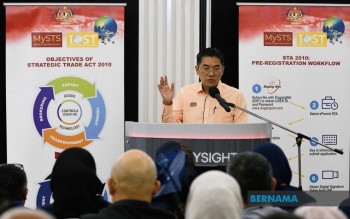
The Northern Region, particularly Penang and surrounding areas, represents the nerve centre of Malaysia's E&E capabilities. Home to hundreds of multinational technology manufacturers and sophisticated production facilities, this cluster has evolved into one of the world's most important hubs for semiconductor assembly, testing, and packaging operations. Sim's remarks, delivered at the 2024 Strategic Trade Act Customer Day and STA Northern Region Clinic in Bayan Lepas, emphasised that this concentration of expertise and infrastructure cannot be taken for granted but requires sustained governmental support and coordinated policy frameworks to maintain competitiveness against rivals in Taiwan, South Korea, and increasingly Vietnam and Thailand.
The semiconductor industry occupies a particularly crucial role within Malaysia's E&E portfolio. As a major location within the global value chain for semiconductor assembly, testing, and packaging activities, Malaysia processes a substantial share of the world's integrated circuits at critical stages of production. This specialisation positions the country as indispensable to global technology supply chains, particularly as geopolitical tensions and supply chain fragmentation drive multinational corporations to diversify manufacturing footprints away from single-country dependencies. The sector's health therefore carries implications extending far beyond Malaysia's borders, affecting technology availability and pricing worldwide.
MITI's strategy encompasses both promotion and regulation. Beyond encouraging investment and capability development, the ministry is intensifying focus on export control compliance mechanisms to ensure that Malaysia's technology sector operates within international norms and legal frameworks. This dual approach addresses a growing concern among global partners regarding the proper handling of sensitive technologies and intellectual property. By strengthening compliance infrastructure and providing direct advisory support to companies navigating complex regulatory landscapes, MITI aims to position Malaysia as a trustworthy and reliable manufacturing partner capable of meeting the stringent governance requirements demanded by multinational technology companies and their customers.
The government has initiated structured engagement mechanisms to translate policy into practical support. The Northern Region STA Clinic, which brought together 86 industry participants, exemplifies this approach by offering direct advisory services covering product classification, permit applications, interactions with licensing authorities, and internal audit procedures. These clinics serve as critical touchpoints where government officials and industry representatives collaborate to resolve practical obstacles and clarify ambiguous regulatory requirements. Such programmes reduce friction in the business environment and demonstrate genuine commitment to addressing company concerns rather than imposing requirements from a distance.
Malaysia's solid trade performance during the first half of the year has created momentum that officials believe can be leveraged to strengthen the E&E sector further. Strong export revenues provide companies with financial resources to invest in technology upgrading, workforce development, and expansion of production capacity. Sim has urged companies benefiting from favourable trading conditions to distribute gains among employees through salary increases and performance bonuses, recognising that worker welfare and retention directly influence productivity and innovation. This framing links company performance to broader social stability and suggests that government expects private sector success to translate into improved living standards for Malaysian workers.
The collaborative framework that MITI is promoting reflects a deeper strategic calculation about the future of manufacturing in Southeast Asia. Rather than viewing government and industry as opposing forces, the ministry presents partnership as essential to sustaining Malaysia's position. Technological change, shifting geopolitical alignments, and competition from other low-cost manufacturing destinations create an environment where coordination and shared purpose become competitive advantages. Companies that enjoy certainty regarding regulatory frameworks, access to skilled labour, and reliable infrastructure can commit capital more confidently to operations in Malaysia, whereas those facing regulatory ambiguity or policy instability are more likely to relocate.
The emphasis on Penang and the Northern Region reflects economic geography realities but also political and historical factors. The region has accumulated decades of expertise, supply chain networks, and skilled workforce experience that cannot easily be replicated elsewhere. However, this legacy also creates complacency risks. Other countries actively pursue E&E manufacturing investments through aggressive incentives and streamlined regulatory processes. Malaysia's advantage must be continuously renewed through investment in human capital, research capabilities, and infrastructure modernisation. MITI's initiatives suggest recognition that resting on past achievements is insufficient in a dynamic global economy.
The broader implications extend to Malaysia's role within regional technology ecosystems and global supply networks. As the world's economic powers increase protectionism and competition for advanced manufacturing intensifies, countries that can reliably produce complex electronics components while maintaining strong governance standards will find themselves increasingly valuable. Malaysia has the potential to benefit from this shift, but only if government and industry maintain alignment on development priorities and support mechanisms. The current push from MITI indicates policymakers understand this opportunity window and are attempting to position the country to capitalise on it.

