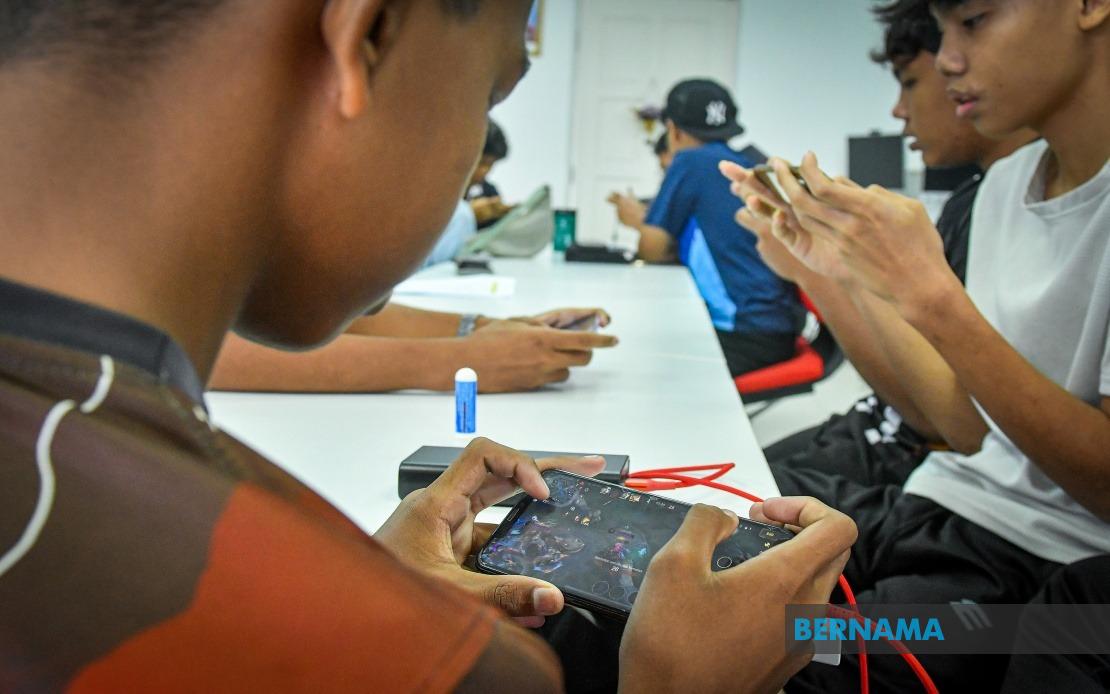
Malaysia's government is intensifying a nationwide campaign to ensure parents understand and enforce the prohibition on social media accounts for children under 16, according to Deputy Communications Minister Teo Nie Ching. Speaking at a Parent-Teacher Association convention in Johor Bahru on August 22, Teo outlined how the Safe Internet Campaign would serve as the primary vehicle for raising awareness amongst families about the restrictions introduced under the MADANI administration's digital protection framework.
The campaign represents a significant shift in approach, moving beyond simple account bans to focus on education and parental engagement. Rather than relying solely on prohibitive measures, the government is now emphasising the role of families in guiding children's digital behaviour through active monitoring and guidance. This strategy acknowledges that enforcement alone cannot protect young people from online risks, and that fostering digital literacy and responsible device use within households is equally important. Teo stressed that parents must take ownership of this responsibility, using preventive measures and self-regulation at home as the foundation for compliance with official policy.
A critical element of the Safe Internet Campaign involves clarifying the relationship between parental authority and platform regulation. Although parents remain permitted to register digital accounts on behalf of their children for legitimate purposes, such as educational or parental monitoring applications, the government policy explicitly bars children aged 16 and below from independently holding social media accounts. This distinction is crucial for parents to understand, as it requires them to make deliberate decisions about when and how young people access digital platforms rather than simply prohibiting all access.
The campaign has achieved substantial reach across Malaysia's education sector. Implementation has extended to 5,946 primary schools, 2,416 secondary schools, 1,285 Chinese-medium schools and 524 Tamil-medium schools. Beyond primary and secondary institutions, the initiative has also been rolled out to 68 higher education institutions, 67 form six colleges or vocational colleges, and six teacher education institutes. This comprehensive coverage demonstrates the government's commitment to embedding digital safety awareness throughout the education system, reaching not only students but also educators and families.
Enforcement mechanisms are being coordinated through the Malaysian Communications and Multimedia Commission, which acts as the regulatory body responsible for implementing the policy. The MCMC will review reports of account misuse involving minors and submit formal complaints to digital platform providers, requesting the removal of non-compliant accounts. This coordinated approach between government agencies and technology companies aims to create a practical enforcement framework, though success ultimately depends on consistent reporting and corporate cooperation.
Malaysia's regulatory foundation for these restrictions came into effect on June 1 this year, when the government began enforcing age-verification requirements under the Child Protection Code and Risk Mitigation Code. These codes were enacted through the Online Safety Act 2025, legislation designed to protect minors from online harms including predatory behaviour, cyberbullying, inappropriate content, and excessive screen time. Under these regulations, individuals attempting to open social media accounts must verify their identity using official documents such as the MyKad, passport, or MyDigital ID, creating a technical barrier to underage account creation.
For Malaysian readers, this policy carries particular significance given Southeast Asia's high rates of social media adoption among young people. Malaysia ranks among the world's most active social media user populations by proportion of internet users, and young people represent the fastest-growing demographic on major platforms. The age-restriction policy attempts to address documented concerns about the psychological impact of social media on adolescents, including increased rates of anxiety, depression, sleep disruption, and body image dissatisfaction. By implementing restrictions earlier than comparable democracies, Malaysia has positioned itself as a regional leader in youth digital protection, though the approach has also attracted criticism regarding privacy and digital rights.
The Safe Internet Campaign roadshow, currently operating in Johor, will progress to Sabah in September and Sarawak in October, ensuring coverage of East Malaysian populations who face unique connectivity and educational infrastructure challenges. This geographic phasing suggests the government recognises different regional contexts may require tailored communication strategies and implementation approaches. The focus on parent-teacher associations as campaign platforms leverages existing community networks and trusted institutional relationships, rather than relying solely on top-down government messaging.
Parental education remains central to the campaign's philosophy because enforcement without understanding risks creating resistance or workarounds. Parents who comprehend the rationale behind the age restriction—protection from developmental harms, predatory exploitation, and algorithm-driven content design—are more likely to enforce guidelines consistently and explain the reasoning to their children. Conversely, restrictions perceived as arbitrary often provoke circumvention attempts through alternative accounts, shared credentials, or peer-to-peer access. The government's emphasis on education rather than pure prohibition reflects evidence from digital policy research suggesting that participatory approaches to online safety prove more effective than restrictive-only strategies.
The implementation timeline reveals how policy development and enforcement are staggered across multiple phases. Initial regulatory infrastructure was established through the Online Safety Act 2025, followed by technical implementation of age-verification systems in June. The current phase focuses on building social consensus and parental capability, recognising that sustainable policy change requires cultural shift alongside technological enforcement. This sequential approach suggests officials anticipate a period of transition during which compliance will gradually improve as awareness spreads.
For Malaysian parents, the campaign's messaging emphasises that account restrictions are only one component of digital safety. Devices themselves—smartphones, tablets, and computers—require monitored use regardless of social media restrictions. Teo's framing suggests parents should view these tools as requiring active stewardship, with rules about acceptable use, screen time limitations, and content appropriateness extending beyond social media platforms to all digital access. This broader framing addresses concerns about gaming platforms, streaming services, messaging applications, and web browsing, all of which present developmental and safety risks for young users.
The campaign's success will ultimately depend on whether parents internalise the policy objectives and maintain enforcement over time. Initial compliance among early-aware families will likely be strong, but sustaining restrictions as children grow older and peer pressure intensifies requires ongoing parental commitment. The government's decision to frame this as parental responsibility rather than corporate or state regulation reflects acknowledgment that maintaining digital boundaries depends ultimately on family relationships and trust, factors no policy framework can mandate directly.

