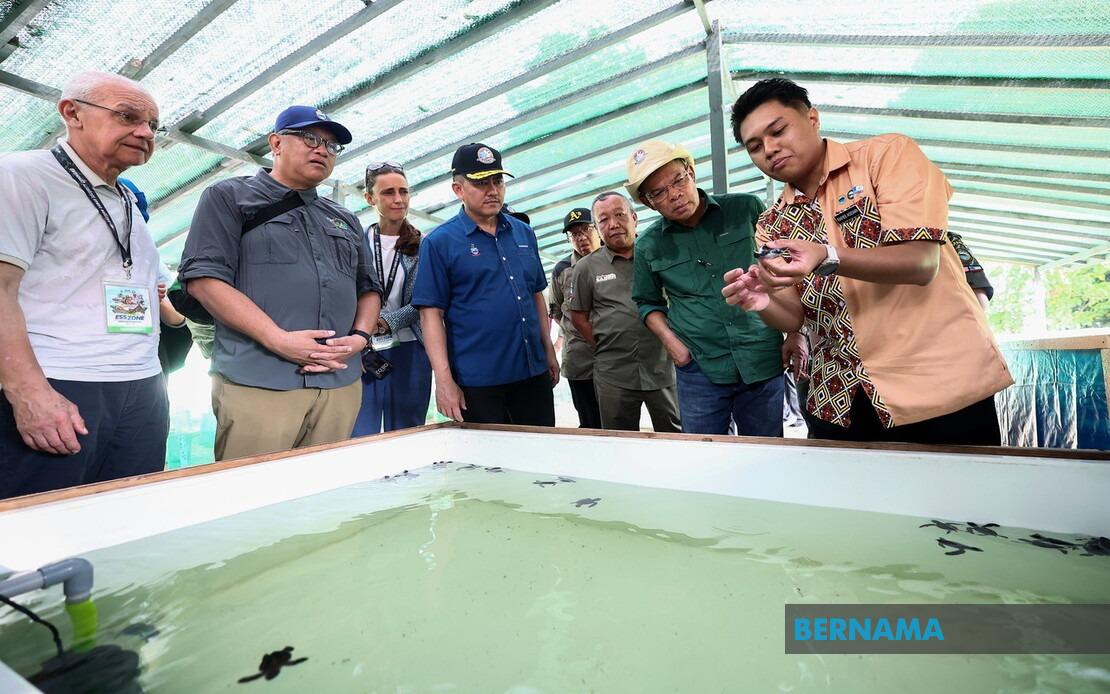
Malaysia's Home Ministry has launched a comprehensive enforcement drive to curb the misuse of social visit passes by foreign nationals engaged in illicit commercial enterprises across Sabah's strategic coastal region. Home Minister Datuk Seri Saifuddin Nasution Ismail disclosed the crackdown during a visit to Semporna on August 8, where he inspected security arrangements across islands within the Eastern Sabah Security Zone and met with foreign diplomatic representatives. The initiative comes in response to mounting concerns about the infiltration of illegal foreign investment into the local tourism economy, a phenomenon that threatens both Malaysia's regulatory framework and the economic welfare of indigenous communities.
According to Saifuddin, immigration authorities have uncovered a troubling pattern wherein foreign visitors arrive as ostensible tourists but subsequently transition into business ownership and operational roles. These individuals have established themselves as proprietors or co-operators of resort facilities and other hospitality ventures through arrangements with local residents, effectively circumventing Malaysia's strict immigration and foreign investment regulations. Such arrangements constitute clear violations of the Immigration Act, rendering both the foreign operators and any complicit local partners liable to criminal prosecution. The Home Minister characterised this exploitation as deliberately evading Malaysia's visa conditions and legal requirements governing foreign economic participation.
The government's response encompasses a multi-agency operational framework designed to identify, investigate, and prosecute offenders systematically. Saifuddin has directed the Eastern Sabah Security Command, alongside the Home Ministry's various departments and local government authorities, to conduct integrated enforcement sweeps throughout the region. The coordinated approach extends beyond immigration authorities to incorporate municipal bodies and other relevant government entities, reflecting the complexity and interconnected nature of the violations. Action mechanisms range from opening formal investigation files and issuing compounds to initiating full prosecutorial proceedings against identified offenders. This layered enforcement strategy signals determination to address both symptomatic cases and underlying structural vulnerabilities that enable such abuses.
The disclosures emerge following a Bernama Special Report published on August 8 titled "Semporna: Emergence of a Shadow Threat," which detailed how foreign investors have allegedly captured control over significant portions of Semporna's tourism supply chain. The investigation raised alarm about the security and economic consequences of this foreign encroachment, painting a picture of a locally-rooted economy progressively subordinated to external commercial interests operating outside regulatory oversight. Semporna, located on Sabah's southeastern coast, occupies strategic importance given its proximity to maritime boundaries and its role as a major tourism gateway. The illicit capture of its economic assets by unvetted foreign operators presents compound risks: regulatory non-compliance, tax evasion, potential exploitation of local labour, and security concerns relating to inadequately vetted foreign nationals occupying economically significant positions.
During his Sandakan press conference, Saifuddin articulated the government's balancing act between welcoming international tourism and protecting Malaysia's legal sovereignty and economic interests. He emphasised that while Malaysia remains committed to attracting foreign visitors, such visitors must strictly observe Malaysian law. Those who violate the terms of their entry permits by engaging in prohibited commercial activities face legal consequences without exception. The Home Minister's comments reflect a recognition that visa abuse, particularly when linked to large-scale business operations, represents a systemic governance challenge requiring visible, consequential enforcement to maintain both legal integrity and public confidence in immigration administration.
Paradoxically, even as authorities address these regulatory violations, the Eastern Sabah Security Zone has recorded encouraging tourism metrics. Through June, the ESS Zone received 129,492 tourist arrivals, a volume that Saifuddin interpreted as evidence of robust international confidence in the region's security environment and tourism prospects. This statistic underscores a central tension in contemporary tourism governance: facilitating visitor flows while simultaneously protecting against bad actors who exploit the openness that tourism requires. The strong tourist numbers suggest that the crackdown need not dampen legitimate tourism activity; rather, proper enforcement may enhance the zone's attractiveness to law-abiding international visitors and investors who operate transparently within Malaysian law.
For Malaysia's tourism and investment sectors, the enforcement campaign carries significant implications. The crackdown demonstrates that foreign nationals cannot unilaterally redefine their visa status through informal business arrangements with local partners. By prosecuting violations aggressively, authorities aim to restore the structural integrity of Malaysia's visa categories and foreign investment screening mechanisms. Legitimate foreign tourism operators and investors who comply with Malaysian requirements may benefit from reduced competition from unregulated competitors operating outside legal frameworks. Moreover, local communities and entrepreneurs gain protection against displacement by foreign capital operating without accountability or compliance with labour and environmental standards.
The enforcement focus on Semporna reflects broader trends affecting Sabah's tourism-dependent economy. The state's geographic position and relative stability following security improvements have made it increasingly attractive to regional and international investors. Without vigilant regulatory oversight, such attractiveness creates opportunity for regulatory arbitrage, whereby foreign operators exploit gaps between Malaysian immigration law and enforcement capacity. Semporna's island-based tourism economy, characterised by numerous small-scale resort operations, may particularly lend itself to informal partnerships that obscure underlying foreign ownership and control. The crackdown attempts to reassert regulatory authority over such informal arrangements before they calcify into entrenched patterns of foreign economic dominance.
Beyond immediate enforcement metrics, the campaign raises broader questions about monitoring mechanisms and inter-agency coordination in Malaysia's tourism zones. The involvement of ESSCOM, local authorities, and various Home Ministry agencies suggests that tourism regulation requires integration with security apparatus in sensitive coastal regions. Such coordination, while necessary, demands clear protocols to avoid conflating normal tourist activity with security threats. The government must communicate transparently with the legitimate tourism industry about compliance requirements and enforcement procedures to maintain investor confidence in Malaysia's business environment while pursuing genuine violations.
Moving forward, the enforcement campaign's success will depend on sustained commitment and resource allocation rather than episodic operations. Foreign nationals and local partners contemplating visa abuse must understand that detection carries real legal and financial consequences. Simultaneously, the government should examine whether existing visa categories and foreign investment regulations adequately address contemporary tourism investment patterns, particularly in cases involving non-resident foreign owners operating through local intermediaries. Where regulatory gaps exist, statutory amendments may prove more effective than enforcement alone in preventing future violations. The Semporna initiative thus represents both an immediate law enforcement response and a potential catalyst for broader review of Malaysia's frameworks governing foreign participation in tourism and hospitality sectors.

