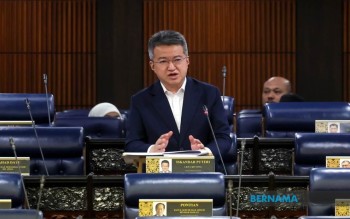
Malaysia's fiscal framework remains anchored despite mounting pressures from volatile global energy markets, with Deputy Finance Minister Liew Chin Tong confirming that the government sees no pressing need to immediately adjust Budget 2027 projections based on first-half 2026 performance. Speaking during Parliamentary oral questions in Kuala Lumpur, Liew signalled that while continuous monitoring persists, the administration believes its existing fiscal trajectory remains viable under current economic conditions.
The decision to maintain projections reflects a measured confidence in Malaysia's ability to absorb near-term shocks, particularly the surging fuel subsidy burden estimated at RM40 billion driven by elevated international crude oil prices. This substantial outlay represents one of the most acute fiscal pressures the government faces, as the nation's administered fuel price mechanism shields domestic consumers from global commodity volatility. The magnitude of the subsidy cost underscores how tightly Malaysia's fiscal health remains tethered to the volatile international energy markets, a structural vulnerability that policymakers cannot afford to ignore as geopolitical tensions persist in West Asia.
However, Liew's statement reveals an important offsetting dynamic that provides fiscal breathing room. Each one-dollar-per-barrel increase in world crude oil prices generates approximately RM300 million in additional petroleum-related revenue for the government, excluding dividend contributions from national oil company Petronas. This natural hedge mechanism means that while subsidy expenditure climbs with oil prices, government revenues simultaneously expand through higher taxation of petroleum products and upstream oil sector earnings. The interplay between these countervailing forces creates a partial self-correcting mechanism that prevents fiscal deterioration from becoming as acute as raw subsidy figures might suggest.
Yet the government's restraint in revising projections does not reflect complacency. Liew emphasised that the administration will maintain vigilant monitoring through October when Budget 2027 is formally tabled in Parliament. This extended observation period allows policymakers to incorporate the most recent economic data and revenue performance before finalising next year's fiscal framework. The approach acknowledges that mid-year assessments provide incomplete information—full-year trajectories often diverge significantly from six-month snapshots, particularly in commodity-dependent economies where quarterly volatility can mask underlying trends.
The government's crisis management infrastructure has been notably activated in response to regional instability affecting energy supplies. A dedicated task force operating under the National Economic Action Council conducts weekly engagement sessions to coordinate responses to geopolitical developments in West Asia. This institutional framework extends beyond traditional fiscal monitoring to encompass supply chain resilience and domestic price stability. The emphasis on protecting energy supplies and ensuring basic needs remain accessible reflects recognition that macroeconomic stability depends partly on preventing supply shocks from cascading into social discontent.
Rev revenue collection performance has emerged as a critical variable in Malaysia's fiscal equation. The government is intensifying focus on ensuring that tax compliance and collection efficiency keep pace with expenditure needs, particularly as operating costs rise. This reflects a strategic pivot toward demand-side fiscal adjustment—improving the numerator of the revenue equation rather than simply cutting expenditure. Such an approach requires sustained effort on compliance infrastructure, digital tax collection systems, and closing loopholes that limit the tax base. For a middle-income country aspiring toward high-income status, such revenue enhancement measures offer more sustainable paths to fiscal consolidation than austerity alone.
The broader fiscal consolidation strategy encompasses targeted subsidy restructuring rather than blanket removal. Rather than eliminating fuel price controls entirely—a politically fraught option with inflationary consequences—the government continues pursuing means-tested approaches that channel support toward lower-income households while allowing prices to reflect market costs for wealthier consumers. This granular approach to subsidy reform, combined with expenditure reprioritisation, aims to maintain fiscal discipline without triggering the demand shocks associated with abrupt policy shifts. The strategy acknowledges that in developing economies, the distributional consequences of fiscal adjustment matter as much as the aggregate impact.
Expenditures priorities themselves are undergoing continuous reassessment. Rather than allowing spending to drift with nominal growth, the government is explicitly restructuring where resources flow across the budget. This suggests potential reallocation from lower-priority items toward areas deemed essential for sustained development and social stability. The emphasis on spending efficiency improvements implies that budget envelopes may remain fixed or grow modestly while outputs expand through better resource deployment. Such exercises typically prove politically contentious, as different constituencies compete for resources and resist perceived reallocations.
The fiscal sustainability narrative advanced by Liew rests on three pillars: targeted subsidies keeping inflation at bay, expenditure discipline preventing runaway spending, and strengthened revenue collection expanding the fiscal base. These elements must work in concert; failure in any single dimension could undermine the overall consolidation framework. Global economic uncertainties—from potential recession risks to protectionist trade policies affecting Malaysian exports—add layers of complexity. Commodity price reversals, should oil decline sharply, would simultaneously reduce subsidy pressures and government revenues, requiring adaptive fiscal management.
For Malaysian businesses and consumers, the government's measured fiscal approach carries important implications. Maintaining credible medium-term consolidation helps preserve credit ratings and contain borrowing costs, supporting long-term economic stability. However, the government's confidence in sustaining current trajectories may be tested if global conditions deteriorate more sharply than anticipated. Currency volatility, capital outflows, or external financing constraints could force more dramatic adjustments. The October Budget 2027 tabling will reveal whether the government's current optimism proves justified or whether fiscal pressures force more aggressive intervention.
Liew's parliamentary comments ultimately reflect a government gambling that current fiscal metrics remain manageable without dramatic intervention, even as energy markets remain turbulent. This patience carries risks—waiting too long to implement structural reforms can accelerate fiscal deterioration—but also reflects pragmatism about the limited political space for radical fiscal action. The coming months will test whether Malaysia's fiscal engineering can indeed absorb the shocks of volatile global energy markets while maintaining both economic stability and social cohesion.

