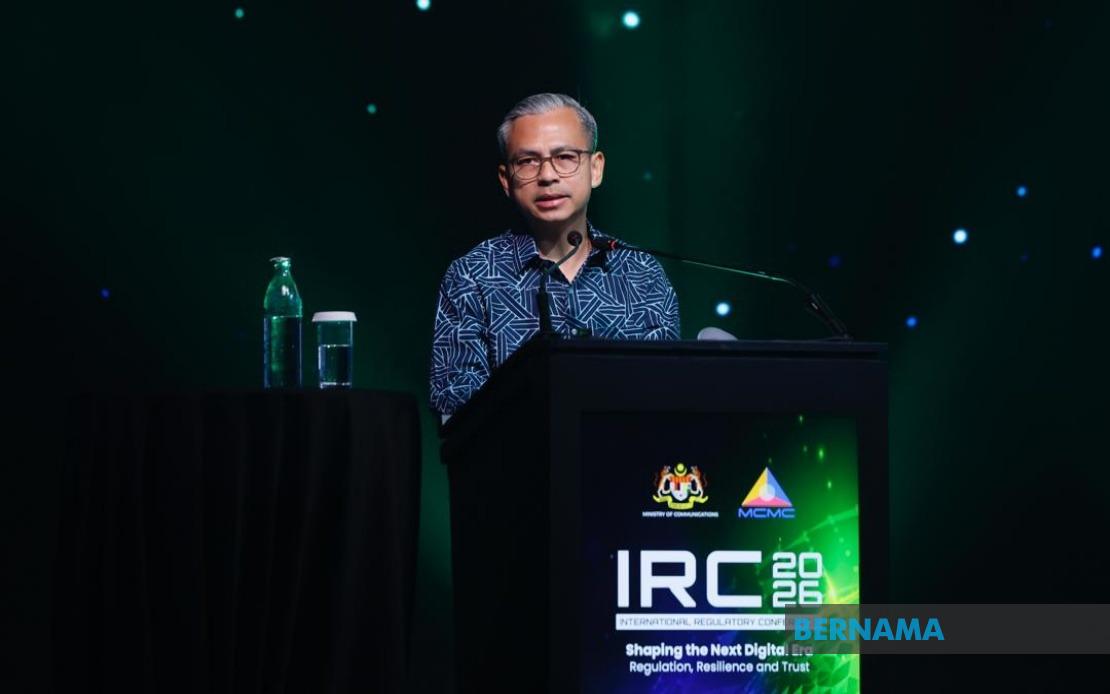
Malaysia is taking concrete steps to overhaul its approach to digital governance, positioning trust and security as central pillars of the nation's technological advancement. Communications Minister Datuk Seri Fahmi Fadzil outlined this strategy at the International Regulators Conference 2026 in Kuala Lumpur, framing the challenge as one of fundamental importance to citizens navigating an increasingly complex digital landscape where technology evolves far faster than the regulatory systems designed to govern it.
The minister's remarks underscore a critical tension shaping digital policy across Southeast Asia. As platforms proliferate and digital systems become embedded in everyday life—from financial transactions to healthcare access—the question of institutional trust becomes paramount. Fahmi articulated this concern directly: can citizens have confidence in the platforms they depend on, the information they receive, and the systems that mediate their experiences? This framing reflects broader regional anxieties about data security, misinformation, and the concentration of technological power in corporate hands, resonating particularly with Malaysia's efforts to develop indigenous regulatory capacity.
Several major initiatives demonstrate the government's commitment to building infrastructure alongside governance. The National Digital Network Plan (Jendela) represents an ambitious connectivity agenda, whilst the nationwide 5G rollout and submarine cable investments signal confidence in Malaysia's digital future. Yet these infrastructure advances must be accompanied by regulatory sophistication. The Online Safety Act 2025 marks a significant philosophical shift—moving from reactive enforcement against online harms to preventative frameworks that embed accountability into platform design. This approach prioritises protecting vulnerable populations, particularly children, whilst establishing clearer obligations for digital intermediaries to police their own ecosystems.
The timing of these regulatory developments reflects global patterns. Across the region and beyond, governments have recognised that light-touch regulation fails to address contemporary challenges including coordinated disinformation campaigns, child exploitation, and data breaches affecting millions. ONSA represents Malaysia's commitment to joining jurisdictions that impose affirmative duties on platforms rather than treating them merely as neutral conduits. The legislation acknowledges that technology companies exercise enormous power over information flows and must be held accountable accordingly.
Fahmi emphasised that effective regulation must remain proportionate and agile, responsive to technological change without strangling innovation. This balanced approach matters particularly for Malaysia, which aspires to grow its digital economy and attract tech investment. Overly restrictive rules risk driving companies and talent elsewhere, whilst inadequate safeguards damage consumer confidence and expose vulnerable groups to exploitation. The regulatory challenge therefore demands sophisticated policy design that protects without paralyising growth—a difficult equilibrium that most jurisdictions struggle to achieve.
The IRC 2026 itself reflects Malaysia's emerging role as a regional hub for digital governance thinking. Now in its third iteration, the conference evolved from Malaysia's experience with its dual-network 5G model, which attracted international regulatory interest and positioned the country as an open laboratory for testing alternative telecommunications architectures. By hosting high-level discussions on online safety, data governance, artificial intelligence, quantum communications, and autonomous systems, Malaysia signals that it sees digital policy as a domain where international leadership is possible and valuable.
Critically, Fahmi acknowledged that governance gaps identified through domestic regulation must inform international cooperation. The challenge of addressing online harms extends beyond any single nation's borders—digital platforms operate globally, coordinated campaigns organise across jurisdictions, and data flows internationally. Malaysia's participation in the International Telecommunication Union and bilateral regulatory exchanges creates opportunities to export lessons learned and import best practices. This cooperative approach recognises that unilateral action by any country, no matter how well-designed, cannot fully address challenges requiring coordinated international responses.
The conference theme—"Shaping the Next Digital Era: Regulation, Resilience and Trust"—encapsulates the philosophical framework animating Malaysia's digital governance evolution. Resilience implies both technical robustness and organisational capacity to withstand shocks and adapt to threats. Trust requires transparency, accountability, and demonstrated commitment to protecting user interests over corporate profit maximisation. Regulation, in this conception, functions not as a barrier to progress but as an enabler of sustainable innovation by establishing predictable rules and level playing fields.
For Malaysian businesses and citizens, these developments carry practical implications. Companies operating in regulated sectors face clearer expectations and compliance obligations under ONSA, necessitating investment in safety infrastructure and risk management. Citizens gain new avenues for recourse when platforms fail to protect them from harm. The regulatory environment becomes more transparent and predictable, though also more demanding. The submarine cable investments and 5G rollout mean improving connectivity, particularly important for rural communities and smaller businesses seeking to participate in digital economy opportunities.
The conference's focus on data governance and artificial intelligence reflects Malaysia's recognition that future competitive advantages depend on responsible stewardship of these transformative technologies. AI systems raise novel questions about algorithmic accountability, bias, and transparency that existing regulatory frameworks inadequately address. By convening international expertise to develop governance approaches, Malaysia positions itself at the forefront of anticipatory regulation rather than perpetually chasing problems after they emerge.
Fahmi's emphasis on translating dialogue into "practical policy outcomes" distinguishes this conference from purely academic or theoretical exercises. The commitment to share findings with the ITU and other international bodies suggests Malaysia intends IRC outcomes to influence broader global regulatory norms. This ambition reflects growing recognition that digital governance frameworks developed by a handful of large Western jurisdictions may not suit the diverse needs and contexts of Asian countries with different regulatory traditions, market structures, and developmental priorities.
Ultimately, Malaysia's digital governance strengthening reflects both opportunity and necessity. The opportunity lies in building digital systems that citizens genuinely trust, that support inclusive economic participation, and that protect vulnerable populations whilst enabling innovation. The necessity stems from recognition that unregulated digital spaces increasingly harm public welfare, undermine democratic processes, and concentrate power dangerously. By articulating a clear governance vision and demonstrating commitment through legislation and international engagement, Malaysia contributes to regional dialogue whilst building foundations for sustainable digital development.

