Malaysia has formally lodged its candidacy for a non-permanent seat on the United Nations Security Council during the 2036–2037 term, signalling renewed commitment to international diplomacy and multilateral governance reform. The submission represents Kuala Lumpur's determination to shape discussions on global security architecture at a time when questions about the council's effectiveness have intensified amid geopolitical tensions and humanitarian crises that have exposed the limitations of the current system.
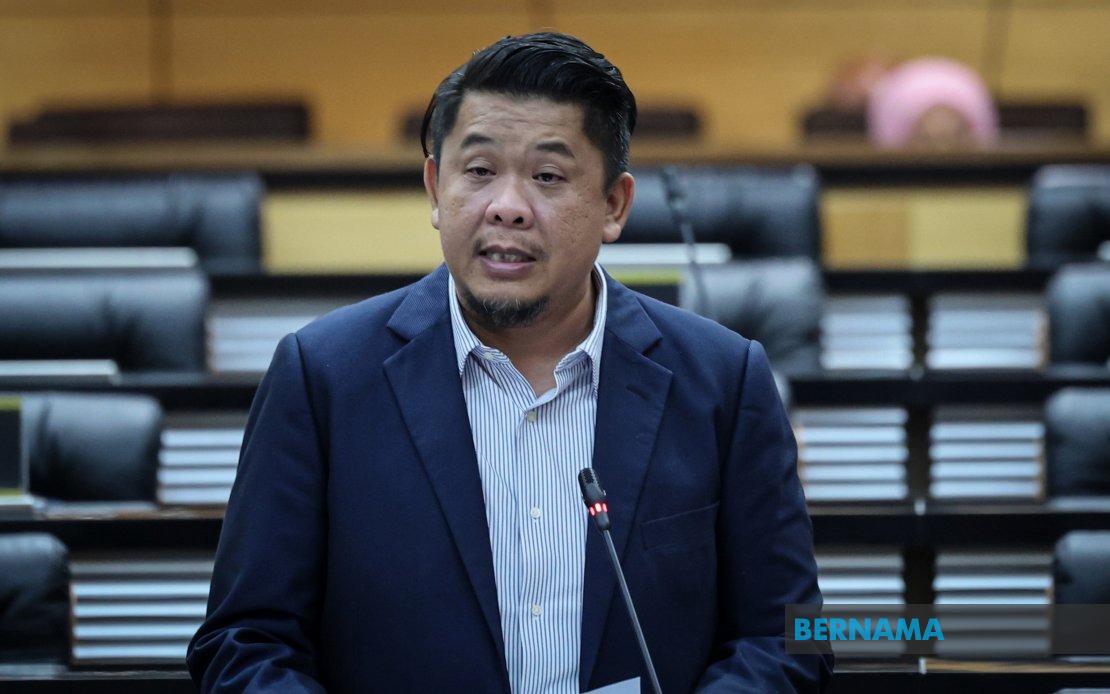
Deputy Foreign Minister Datuk Lukanisman Awang Sauni emphasised that Malaysia's candidacy carries a broader agenda than simply occupying a council seat. The deputy minister articulated that reform of the Security Council—particularly the elimination or meaningful restriction of the veto power—will remain central to Malaysia's diplomatic priorities regardless of electoral outcome. This framing positions Malaysia as a principled advocate for institutional change rather than a nation seeking influence for its own sake, an approach that could resonate with fellow nations frustrated by the veto system's inherent inequities.
The veto mechanism, wielded exclusively by the five permanent members—the United States, Russia, China, France and the United Kingdom—has become increasingly contentious in recent years. Malaysia's explicit position, articulated by Deputy Minister Awang Sauni, holds that the veto constitutes an unjust arrangement incompatible with modern democratic principles. More provocatively, Malaysia argues that the veto should at minimum be prohibited in cases where it shields nations accused of grave international law violations, including war crimes, genocide, crimes against humanity and the destruction of civilian infrastructure.
The reference to Gaza in the deputy minister's statement underscores Malaysia's alignment with broader Global South sentiment regarding recent Middle Eastern developments. By explicitly invoking the Palestinian context, Malaysia signals that its reform agenda is not abstract but grounded in contemporary humanitarian concerns. This positioning carries political weight within the Non-Aligned Movement and among Organisation of Islamic Cooperation members, constituencies where Malaysian diplomacy maintains considerable credibility and influence.
Malaysia previously served as a non-permanent Security Council member in 1965–1966 and again in 1989–1990, providing institutional memory and established relationships that could prove advantageous during competitive elections. However, the intervening decades have witnessed substantial shifts in global power dynamics, with rising nations in Asia demanding greater representation in international institutions. Malaysia's candidacy represents not merely a return to the council but a bid to amplify developing-world perspectives at a critical juncture in international relations.
Foreign Minister Datuk Seri Mohamad Hasan will formally articulate Malaysia's platform during the National Statement at the 81st UN General Assembly session scheduled for September in New York. This venue offers a high-profile opportunity to present Malaysia's vision for Security Council reform to the broader international community and to solicit support from fellow nations that share frustrations with the current veto architecture. The timing, ahead of competitive elections for the 2036–2037 term, allows Malaysia to build diplomatic momentum and frame its candidacy as part of a larger movement toward institutional modernisation.
Malaysia's emphasis on UNSC reform and global peace and security as cornerstone foreign policy objectives reflects a deliberate strategic calculation. Rather than positioning itself as a aspirant power seeking special privileges, Malaysia crafts a narrative around universal principles and institutional justice. This approach appeals to a broad coalition—from developing nations underrepresented in permanent positions to middle powers dissatisfied with the dominance of established great powers—potentially constructing a winning electoral coalition.
The question raised in parliament by Datuk Seri Sh Mohmed Puzi Sh Ali from Pekan highlighted legitimate concerns about the disproportionate influence wielded by major nations through veto authority. This parliamentary engagement demonstrates that the Security Council reform agenda has domestic political salience in Malaysia, with legislators recognising constituent interest in how international institutions function. The exchange also provided an official platform for the government to reaffirm its commitment to challenging hierarchical international structures.
For Southeast Asia specifically, Malaysia's candidacy carries implications beyond symbolic representation. The region, home to over 600 million people and spanning critical sea lanes and economic zones, remains substantially underrepresented in permanent UN institutions. A Malaysian seat, combined with potential diplomatic alliances with other regional and non-aligned candidates, could amplify Southeast Asian perspectives on maritime security, transnational challenges and the rights of smaller nations to meaningful participation in global governance.
The broader context involves recognition that the Security Council's legitimacy faces erosion when permanent members deploy vetoes to shield allies or block action on humanitarian grounds. Recent years have witnessed multiple vetoes preventing council action on Syria, Palestine and Ukraine, undermining the institution's credibility. Malaysia's campaign for veto restrictions thus taps into genuine international frustration and positions the nation as leading reform advocacy rather than merely seeking a council seat.
Successfully securing election to the non-permanent council in 2036 would enhance Malaysia's diplomatic standing and provide a platform for advancing specific regional interests. However, Malaysia's articulation of the candidacy emphasises that the pursuit of institutional reform matters independently of electoral success. This framing protects Malaysia's interests by ensuring that even if the election proves unsuccessful, the nation has advanced its foreign policy agenda and strengthened relationships with reform-minded nations.

