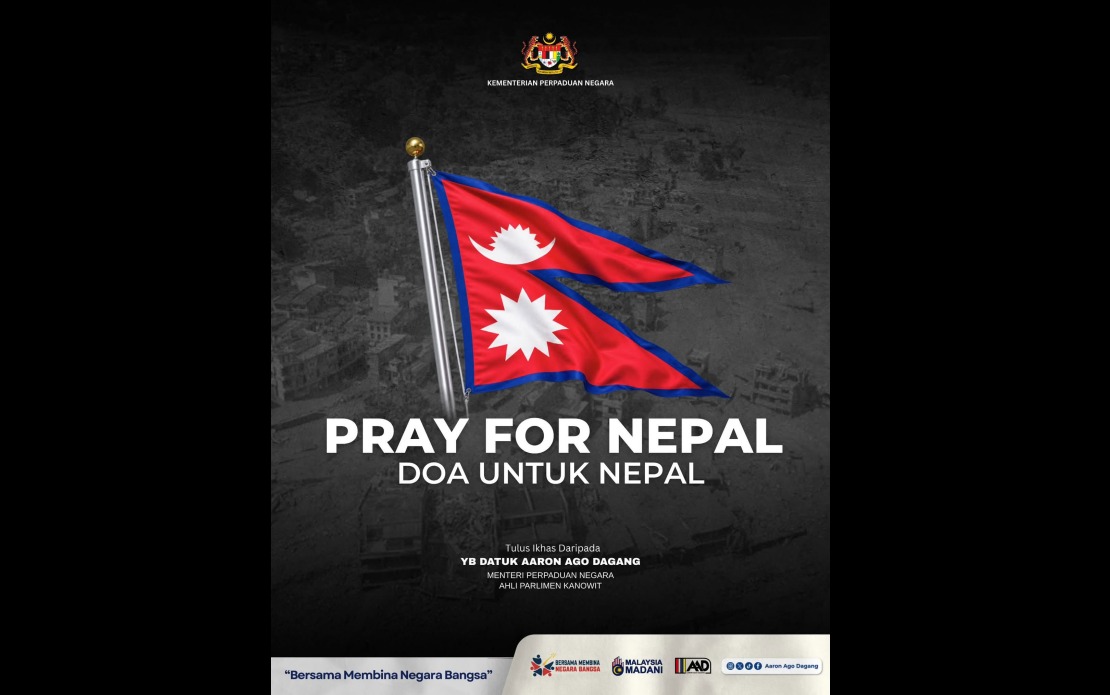
Malaysia has mobilised government resources and expressed deep solidarity with Nepal following severe flooding that struck the Himalayan nation, with particular concern for dozens of Malaysian citizens caught in the disaster. Minister of National Unity Datuk Aaron Ago Dagang issued a public statement through social media on August 28, conveying his personal grief over the calamity that devastated the Rasuwa district and calling upon fellow Malaysians to join in prayers for those affected by the catastrophe.
The minister's intervention reflects the gravity of the situation, which has left considerable numbers of Malaysian nationals unaccounted for in the aftermath of the disaster. As of August 27 at 11 pm, the Foreign Ministry had confirmed that 57 Malaysians could not be reached or located, a figure compiled from reports submitted by concerned family members, friends, and employers who had lost contact with their relatives or colleagues in the region. This uncertainty has prompted urgent coordination across multiple government agencies to establish the fate and whereabouts of these citizens.
In response to the unfolding crisis, Prime Minister Datuk Seri Anwar Ibrahim issued immediate directives to key national institutions responsible for security and foreign affairs. The National Security Council, working alongside the Ministry of Foreign Affairs, was instructed to rapidly identify affected Malaysians and establish direct communication with them. This multi-agency approach underscores the seriousness with which Kuala Lumpur is treating the emergency, moving beyond symbolic gestures to concrete operational measures designed to locate and assist its citizens in distress.
Datak Aaron's public appeal carries significance beyond mere diplomatic courtesy. By explicitly requesting Malaysians to pray for the safety and prosperity of Nepal's affected population, he positioned Malaysia's response within a broader framework of humanitarian concern that transcends bilateral relations. The minister emphasised that Malaysia stands with Nepal during this period of acute hardship, framing the disaster not as an isolated national tragedy but as a regional humanitarian challenge requiring collective compassion and practical support.
The flooding in Rasuwa district represents a serious environmental and humanitarian crisis for Nepal, a nation frequently vulnerable to monsoon-induced disasters due to its mountainous geography and seasonal precipitation patterns. The district's location in the Langtang Valley region, a popular trekking destination, means the disaster likely affected both local communities and international visitors. For Malaysian nationals in Nepal, many of whom work in tourism, education, or business sectors, the flooding creates immediate physical danger alongside the challenge of accessing communication infrastructure that may have been damaged by the disaster.
Datuk Aaron's emphasis on smooth coordination of assistance and recovery efforts reflects Malaysia's understanding that post-disaster support requires sustained engagement beyond the initial emergency phase. The floods damage not only physical infrastructure but also create long-term humanitarian needs including shelter, medical care, clean water, and food security. Malaysia's willingness to contribute to Nepal's recovery demonstrates recognition that Southeast Asian stability depends partly on maintaining constructive relations with South Asian neighbours and demonstrating regional responsibility during crises.
The situation also highlights vulnerabilities faced by Malaysian expatriates working across Asia. While Malaysia has strong consular networks in major countries, natural disasters can quickly overwhelm communication systems and overwhelm embassy resources. The attempt to contact 57 unaccounted Malaysians reveals both the scale of Malaysian presence in Nepal and the challenges authorities face in verification during chaos. Families in Malaysia who have lost contact with loved ones face agonising uncertainty, placing emotional and logistical pressure on both Malaysian and Nepalese authorities to provide rapid updates.
The coordination between Prime Minister Anwar's office and the National Security Council, alongside the Foreign Ministry, demonstrates Malaysia's institutional approach to overseas emergencies. This multi-layered response attempts to balance immediate rescue and accountability with longer-term diplomatic and humanitarian considerations. The Foreign Ministry's capacity to track and report on Malaysian nationals reflects institutional competencies developed through previous regional crises and Malaysia's experience managing large diaspora communities throughout Southeast Asia and beyond.
For Nepal, the inflow of international assistance and expressions of solidarity from neighbouring countries including Malaysia can facilitate more coordinated relief efforts. International attention often mobilises additional resources, technical expertise, and logistical support that overwhelmed local authorities struggle to provide alone. Malaysia's engagement, particularly through formal government channels, may encourage other nations to provide similar assistance while also ensuring that Malaysian-specific needs receive appropriate attention within broader relief operations.
The incident underscores broader environmental and climate-related challenges facing the Hindu Kush Himalayan region, where monsoon patterns and glacial melt interact with human settlement patterns to create periodic disaster scenarios. For Malaysia, with its own vulnerability to flooding and climate impacts, the Nepal disaster serves as a reminder of shared regional environmental vulnerabilities and the importance of maintaining preparedness and international cooperation mechanisms. The government's rapid response suggests Malaysia recognises these interdependencies and views humanitarian assistance as integral to regional security and stability.
Looking forward, the resolution of the current emergency will depend on sustained coordination between Malaysian and Nepalese authorities, efficient use of available communication channels to verify the status of missing citizens, and Malaysia's capacity to contribute meaningfully to Nepal's recovery efforts. The 57 uncontactable Malaysians represent both a practical challenge for government agencies and a human tragedy for families awaiting news. How quickly authorities can establish contact and ensure the safety of these nationals will significantly influence both Malaysia's humanitarian credentials and public confidence in government emergency response capabilities.

