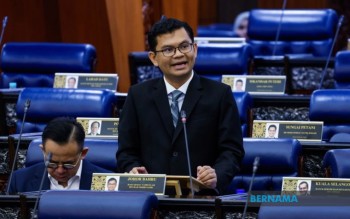
Malaysia is pressing ahead with a comprehensive 120-point action plan devised by the National Economic Action Council (MTEN) to shield the nation's economy from ongoing global supply chain turbulence. Economy Minister Akmal Nasrullah Mohd Nasir told parliament on June 29 that the breadth and pace of implementation underscore the government's determination to prevent supply disruptions from cascading into broader economic instability. Of the total interventions, 27 have reached full implementation while the remaining 93 are actively progressing, signalling sustained policy momentum rather than a temporary response to fleeting market pressures.
The government's multi-layered strategy targets both immediate relief and medium-term resilience. Individual decisions focus on shielding vulnerable populations and shoring up micro, small and medium enterprises—the backbone of Malaysia's economy and employment—whilst simultaneously ensuring uninterrupted availability of critical goods. This dual focus acknowledges that supply crises inflict asymmetrical damage: while large corporations possess hedging mechanisms and alternative sourcing channels, MSMEs typically operate with tighter margins and fewer contingencies. By ringfencing these segments, policymakers aim to prevent localised disruptions from spreading throughout the broader economic ecosystem.
Minister Akmal's emphasis on "realistic approach" reflects an important recalibration of expectations. Rather than projecting swift resolution, the government now openly acknowledges that global supply constraints will persist well into 2026 and potentially beyond. This candour marks a departure from earlier optimism that normalcy would return within months. Energy markets, which underpin transportation, manufacturing and heating costs across developed and developing economies alike, are forecast to stabilise only gradually from the third quarter of 2026—a timeline contingent on geopolitical stability holding and major trade routes remaining unobstructed. Commodity price volatility, particularly in energy, will likely remain a headwind for another one to two years, continuously inflating input costs and consumer prices.
Malaysia's economic vulnerability to supply shocks runs deeper than many Western economies. The country's manufacturing sector—automotive, electronics, semiconductors, and petrochemicals—depends heavily on imported raw materials and intermediate components, making it acutely sensitive to shipping delays, port congestion, and tariff disruptions. Additionally, Malaysia's energy-intensive industries face direct exposure to fuel price swings. Unlike some peers, Malaysia cannot simply absorb these costs; they translate swiftly into manufacturing competitiveness pressures and consumer price inflation. The government's forward-looking posture therefore reflects not pessimism but pragmatism born from structural economic realities.
The MTEN mechanism itself deserves attention as an institutional innovation. By centralising decision-making and monitoring across 120 distinct interventions through a dedicated council, the government has created both accountability and agility. Rather than siloed ministerial responses, MTEN can orchestrate cross-cutting measures—from tariff adjustments to supply route diversification to strategic stockpiling—in coordinated fashion. This institutional architecture also enables real-time course correction as conditions evolve. Minister Akmal's commitment to continuous monitoring and public transparency signals that the plan is not static but adaptive.
For Malaysian businesses and households, the implications are mixed. On one hand, government intervention will cushion the worst shocks, particularly for essential goods and MSME operations. Targeted measures likely include price stabilisation mechanisms, import duty reductions on critical inputs, and credit facilities for working capital strain. On the other hand, consumers and producers should prepare for elevated costs to persist through 2026 and possibly beyond. Inflationary pressures on food, fuel, transport and manufacturing inputs are unlikely to evaporate merely because the government has enacted 120 decisions; rather, those decisions aim to prevent crisis from becoming catastrophe.
Regionally, Malaysia's approach holds lessons for Southeast Asia. The bloc comprises small, open economies similarly exposed to global supply chain fractures, yet often lacking Malaysia's fiscal space for large-scale intervention. If Malaysia's 120-point plan succeeds in maintaining growth and stability despite extended global turbulence, it could validate the case for proactive, data-driven crisis management across ASEAN. Conversely, if spillovers overwhelm domestic safeguards, it would expose the limits of national policy in an era of hyperconnected supply networks.
Minister Akmal's framing of the challenge—"vigilant without undue concern, realistic without being defensive, and proactive in responding"—captures the psychological and policy balance required. Excessive alarmism can trigger precautionary hoarding and panic buying that exacerbate shortages. Conversely, dismissing genuine risks invites complacency and weak preparation. The government's willingness to acknowledge prolonged uncertainty whilst simultaneously assuring active management may succeed in anchoring public and business confidence at the right equilibrium point.
The emphasis on stakeholder cooperation underscores that government levers, whilst important, cannot solve supply crises alone. Private sector diversification of sourcing, logistics optimisation, and voluntary price restraint all matter enormously. Labour unions' restraint on wage demands, despite inflation pressures, aids competitiveness preservation. Consumer patience with temporary shortages and price adjustments supports system stability. Farmer and trader willingness to adopt new distribution channels and technologies can unlock efficiencies. The 120 decisions therefore form only part of a larger social contract requiring shared responsibility across government, business and civil society.
Looking ahead, the trajectory hinges on global developments beyond Malaysia's control—chiefly geopolitical stability and normalisation of trade routes. A fresh conflict, a new pandemic variant, or further protectionist tariff escalation could extend timelines and deepen impacts. Within those constraints, Malaysia's government has demonstrated it will not remain passive. Whether 120 decisions prove sufficient, whether execution matches ambition, and whether coordination across agencies remains disciplined will ultimately determine how effectively the nation navigates a supply landscape likely to remain turbulent through 2026 and possibly beyond.

