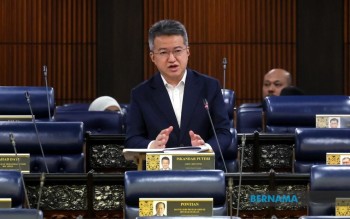
Malaysia has taken a significant step towards building intergenerational wealth by tabling the National Trust Fund Bill 2026 for its first reading in the Dewan Rakyat on July 14. The legislation establishes the National Trust Fund (KWAN) and creates a corresponding incorporated body to govern, manage and deploy the fund's investments. This initiative represents a strategic effort to ensure Malaysia maintains robust financial buffers to sustain current citizens while preserving resources for future generations facing an uncertain economic landscape.
Deputy Finance Minister Liew Chin Tong introduced the bill, confirming that its second reading will proceed during the current parliamentary session. Once enacted, the National Trust Fund Act 2026 will commence operations on a date designated by the Finance Minister through a Gazette notification, establishing the formal legal framework for what promises to be a cornerstone of Malaysia's long-term fiscal planning. The accelerated parliamentary timeline reflects the government's determination to advance this flagship initiative without unnecessary delay.
The funding mechanism represents a carefully calibrated approach to resource stewardship. The Federal Government commits to channelling a minimum of 0.1 per cent of its projected annual revenue into the trust annually, establishing a steady baseline contribution. More significantly, the government must allocate no less than two per cent of all dividend receipts from Petroliam Nasional Bhd (Petronas) into the fund each financial year, tapping Malaysia's most valuable asset for sovereign wealth accumulation. Additionally, the government will contribute at least two per cent of export duties collected from depleting resources after offsetting any duty-related assignments made to states, ensuring that resource-rich regions participate in the broader national savings mechanism.
These contribution requirements carry profound implications for Malaysia's fiscal strategy. By mandating fixed percentages rather than discretionary amounts, the legislation removes political pressure to raid the fund during budget pressures, a discipline that distinguishes genuine sovereign wealth funds from temporary rainy-day accounts. The reliance on Petronas dividends as a primary funding source is particularly shrewd, as it ties the fund's growth to Malaysia's hydrocarbon wealth precisely when the nation must prepare for the eventual decline of petroleum revenues. This approach acknowledges the finite nature of fossil fuel exports whilst using current energy revenues to subsidise Malaysia's post-petroleum future.
Transparency mechanisms built into the bill demonstrate institutional awareness of governance risks. All contributions must be detailed in Malaysia's annual financial statements presented to parliament, subjecting the fund to legislative scrutiny and public accountability. The Federal Government must complete fund transfers by the end of each financial year, eliminating opportunities for delayed compliance or creative accounting. This transparency distinguishes the National Trust Fund from shadow mechanisms that have historically eroded public confidence in resource management across Southeast Asia.
The legislative framework also permits voluntary participation by state governments deriving royalties from petroleum or other depleting resources, potentially expanding the fund's capital base whilst respecting federalism principles. Petroleum-producing states such as Terengganu, Sabah and Sarawak may choose to contribute their own resource revenues to the national trust, creating alignment between state and federal interests in long-term wealth preservation. Such cooperative architecture could serve as a model for regional coordination on resource stewardship, particularly as neighbouring countries grapple with managing finite reserves.
The National Trust Fund (Incorporated) board must develop a comprehensive strategic asset allocation framework articulating Malaysia's long-term investment philosophy and return expectations. This requirement moves beyond passive fund management towards active wealth creation, positioning the board to deploy capital across diverse asset classes—equities, bonds, real estate and alternative investments—seeking returns that exceed inflation and population growth. The explicit mandate for strategic planning prevents the fund from becoming a repository of capital managed by default rather than design, a distinction separating world-class sovereign wealth funds from mediocre alternatives.
Governance and reporting obligations centre on accountability to the Finance Minister, who gains authority to demand comprehensive returns, financial statements, asset reports and operational information as deemed necessary. This oversight structure preserves ministerial control while constraining discretionary interference. The board must balance responsiveness to political leadership with operational independence—a tension familiar to institutional investors worldwide. Malaysia's experience managing Petronas and the Employees Provident Fund provides institutional experience for navigating such dynamics, though establishing appropriate governance norms remains an ongoing challenge.
Fund expenditures are explicitly limited to legitimate operational costs: board member remuneration, staff reimbursements, investment management fees, and administrative expenses. This delineation prevents the fund from becoming a slush mechanism for general government spending, a safeguard increasingly important as fiscal pressures mount globally. By distinguishing between investment capital and operational budgets, the legislation ensures that contributed amounts remain deployed for wealth creation rather than subsidising recurrent government operations.
The establishment of this trust reflects Malaysia's belated recognition that resource-dependent economies must consciously build alternatives to commodity-driven growth models. Norway's sovereign wealth fund, built from North Sea oil revenues and now exceeding USD 1.4 trillion, demonstrates the transformative potential of disciplined resource management. Malaysia's fund arrives later but with clearer legal foundations than many regional peers, suggesting that implementation rigour may ultimately matter more than historical timing. For Malaysian investors and citizens, the fund represents a tangible commitment that current resource wealth generates enduring national prosperity rather than temporary enrichment.
The broader regional significance extends beyond Malaysia's borders. Neighbouring ASEAN members including Indonesia, Thailand, and Vietnam face similar resource management challenges, and Malaysia's legislative approach may inspire comparable initiatives. The National Trust Fund demonstrates that emerging markets can establish institutional mechanisms rivalling developed-nation practices, particularly when political will aligns with technical expertise. Success requires not merely legislation but sustained commitment to funding obligations even during budget emergencies—the ultimate test facing any sovereign wealth endeavour.

