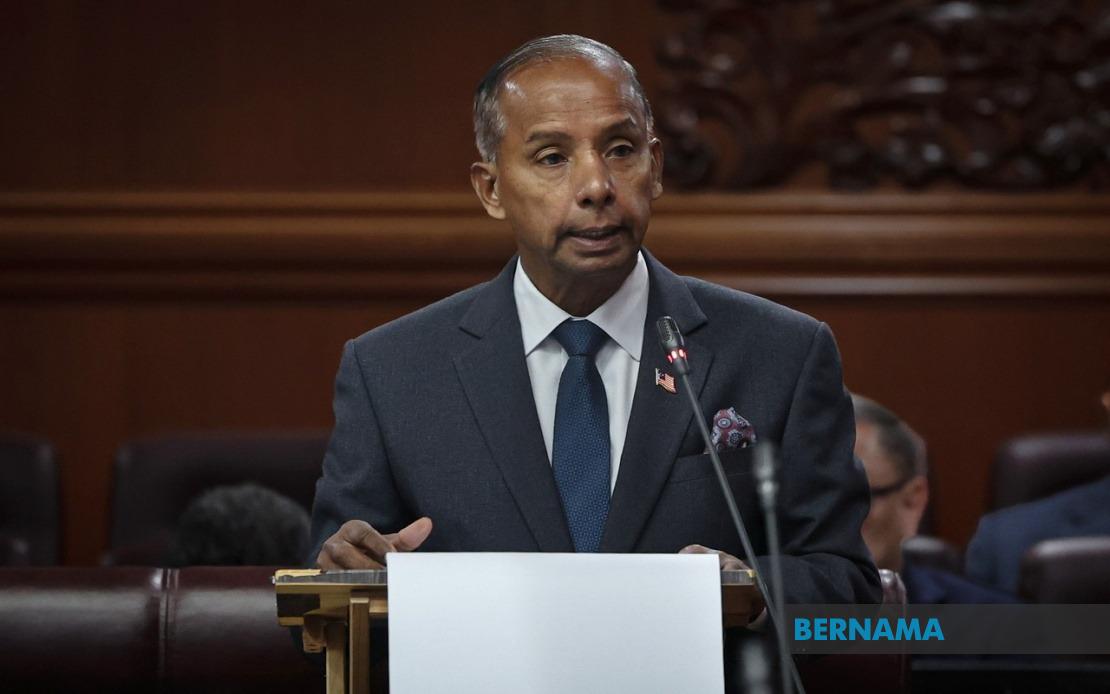
Malaysia is moving to fill a significant safety gap in its criminal justice system with the passage of the Witness Protection (Amendment) Bill 2026, legislation that introduces formal support mechanisms for programme participants as they leave protected status. The pivotal change addresses what observers have long identified as a vulnerability in the nation's existing framework: witnesses who have provided testimony in serious cases face an abrupt transition from structured security to civilian life without institutional backing. Deputy Minister M. Kulasegaran, representing the Prime Minister's Department on law and institutional reform, framed the amendment as essential protection for a particularly vulnerable moment when former witnesses navigate the practical and psychological challenges of reintegration.
Under the current Witness Protection Act 2009, support terminates immediately when the Attorney General decides to end a participant's protection status. This creates an often-precarious period where individuals must suddenly arrange housing, relocate their families, enrol children in new schools, and establish fresh lives in unfamiliar communities—all while potentially remaining targets of ongoing criminal networks or associates seeking retribution. The legislative gap has been particularly acute for participants who have sacrificed stability and anonymity to testify against organised crime figures, corrupt officials, or kingpins in high-profile cases. The amendment directly acknowledges that exiting the programme represents not a conclusion but a transition requiring institutional oversight and material assistance.
The proposed one-off support package encompasses multiple practical needs that witnesses typically confront upon departure. Financial assistance may be allocated toward securing appropriate housing in locations chosen for safety considerations, covering transportation and logistics costs for relocating from protected accommodation to permanent residences, and funding educational transfers when witness families require placement in new schools. Kulasegaran emphasised that this assistance is precisely calibrated as temporary intervention rather than indefinite welfare provision. The distinction matters operationally: the measure aims to bridge a finite transitional window, stabilising participants enough to establish independent footing within their communities without creating ongoing dependency on state support.
The scope of assistance reflects input from protection programme operators and victim advocates who have observed real-world difficulties facing departing witnesses. Housing costs in Malaysia's major urban centres and premium residential areas selected for security reasons can be prohibitively expensive for individuals whose careers were interrupted by protection status. Moving expenses, often underestimated in policy discussions, create genuine obstacles when witnesses must transport household goods, vehicles, and personal effects across states or into rural communities where their visibility is lower. School transfers generate additional costs and administrative complexity, particularly when witness children have experienced educational disruption already attributable to their parents' legal obligations. The amendment treats these practical realities as legitimate governance concerns deserving structured response.
The Bill itself underwent parliamentary review in two stages, with the Dewan Rakyat approving its passage on July 14 before advancing to the Dewan Negara for senate-level consideration during July's legislative session. The legislation encompasses six substantive clauses designed to comprehensively strengthen witness safety protocols and programme administration. Beyond exit assistance, the amendments grant the director-general of the Protection Division expanded authority to determine and provide necessary protection measures proportionate to individual risk profiles and circumstances. This discretionary flexibility represents recognition that witness threats vary considerably depending on the nature of testified crimes, the profile and resources of accused parties, and the geographical reach of criminal organisations involved.
The significance of this legislation extends beyond individual assistance measures to reflect broader Malaysian policy evolution toward victims' rights and witness security. International best practices demonstrate that robust witness protection programmes substantially increase prosecution success rates in serious criminal and corruption cases. When witnesses fear inadequate protection during and after their court involvement, they often decline participation or provide diminished testimony, effectively shielding perpetrators from justice. By extending systematic support through the critical exit phase, Malaysia signals institutional commitment to sustaining witness cooperation even when formal protection ends. This sends a powerful message to potential witnesses contemplating participation in investigations involving organised crime, financial fraud, or corruption cases where professional retaliation remains possible.
The amendment's passage also reflects recognition among Malaysian policymakers that witness protection transcends conventional security concerns to encompass social and economic reintegration. A witness emerging from years of protected status may face employment challenges, having been absent from formal job markets and potentially lacking current professional credentials or references. Families may have experienced educational gaps or health service disruptions. Psychological impacts of living under assumed identities, social isolation, and constant security protocols require various support interventions beyond financial assistance. While the current amendment focuses on material transition support, its adoption creates potential foundation for future legislation addressing psychological services, employment transition support, or extended assistance for particularly vulnerable participants including elderly witnesses or those with dependent children.
For Malaysian criminal justice stakeholders, the amendment carries substantial operational implications. Judges and prosecutors handling serious cases can now credibly assure witnesses that the state maintains responsibility for their welfare through the exit process, potentially encouraging fuller cooperation and more detailed testimony. Police investigators building cases against organised crime or corruption networks benefit from knowing witnesses face reduced disincentives to participation. Corruption investigation agencies confronting entrenched networks requiring insider testimony gain leverage through enhanced witness protections. Conversely, the legislation also establishes clearer boundaries: assistance is formally limited to defined transitional needs and finite duration, reducing indefinite state financial obligations while maintaining humanitarian commitments.
The international context amplifies the amendment's importance for Malaysia's regional standing. ASEAN nations increasingly confront transnational organised crime, money laundering, and corruption requiring cross-border witness cooperation. Countries with robust, credible witness protection frameworks attract international collaboration in investigations and prosecutions. The amendment demonstrates Malaysia's willingness to professionalise its witness protection infrastructure according to emerging standards, potentially facilitating intelligence sharing and joint investigations with regional neighbours and international agencies. This positioning becomes particularly relevant as ASEAN economies increasingly encounter sophisticated financial crimes and trafficking networks requiring coordinated enforcement responses.
Looking forward, the amendment's success will likely depend heavily on implementation quality and resource allocation within the Protection Division. Generous legislation proves counterproductive if bureaucratic processes delay assistance disbursement, creating hardship precisely during the transitional period the support targets. Adequate funding, trained personnel, and transparent assessment criteria for determining assistance eligibility will determine whether the framework achieves its humanitarian objectives. Additionally, programme administrators must navigate sensitive determinations regarding threat duration and participant vulnerability, ensuring that protection termination decisions account realistically for residual dangers facing former witnesses rather than prematurely concluding protection is unnecessary.
The amendment ultimately represents mature policymaking addressing previously neglected dimensions of criminal justice administration. Witness protection systems exist only to facilitate prosecution; participants gain nothing personally from testifying and sacrifice substantially in terms of privacy, freedom of movement, and established relationships. Extending institutional responsibility through the exit transition acknowledges this sacrifice while simultaneously strengthening the justice system's capacity to prosecute serious crimes that threaten Malaysian communities. As organised crime networks professionalise and corruption schemes grow more sophisticated, comprehensive witness protection including exit support becomes increasingly essential to effective law enforcement.

