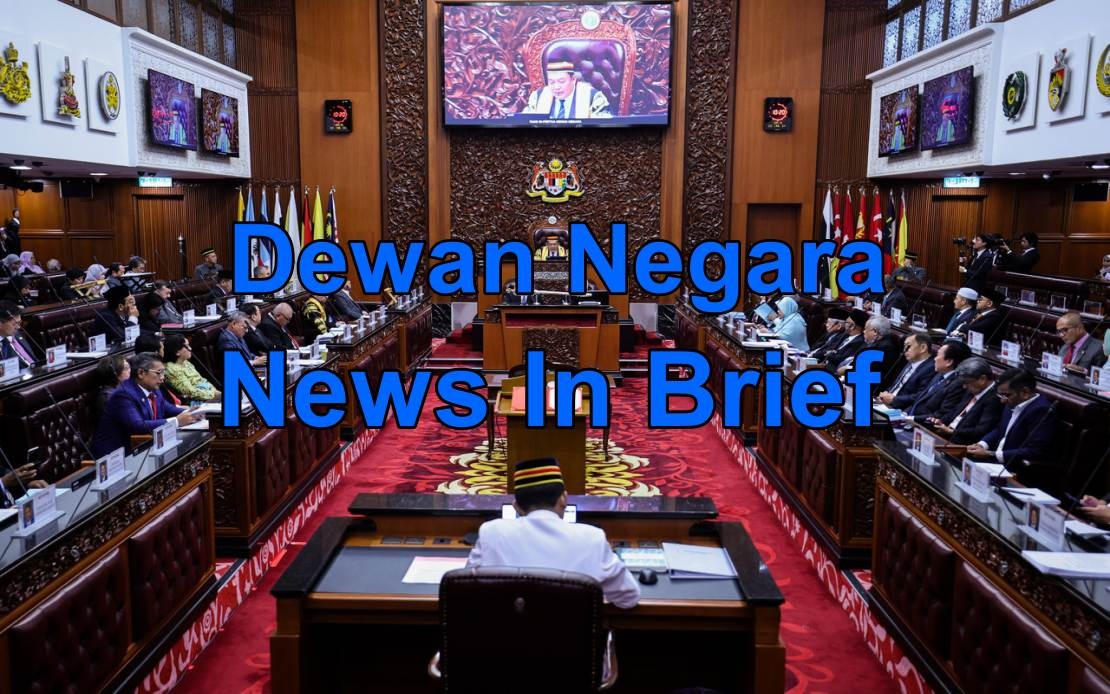
Malaysia's climate resilience strategy is taking concrete shape as the government intensifies its response to the El Niño phenomenon forecast to persist through early 2027. Between February and June this year, authorities conducted 35 cloud seeding operations at strategic locations nationwide, representing a proactive attempt to bolster rainfall and stabilise water resources during a prolonged dry spell. Speaking in the Dewan Negara, Deputy Natural Resources and Environmental Sustainability Minister Syed Ibrahim Syed Noh outlined how these atmospheric interventions are designed to counteract both immediate water scarcity and secondary environmental crises including haze events that frequently plague the region.
The cloud seeding programme reveals the intergovernmental coordination required to manage climate variability in a tropical nation heavily dependent on monsoon patterns and reservoir systems. The National Disaster Management Agency and Royal Malaysian Air Force collaborate on these operations, which remain weather-dependent and contingent on favourable atmospheric conditions. This multi-agency approach acknowledges that singular weather phenomena—whether droughts, floods, or transboundary haze—demand integrated responses spanning water resources, disaster management, and security infrastructure. The initiative addresses Senator Michael Mujah Lihan's concerns about broader vulnerabilities across water security, agricultural productivity, and public health during extended El Niño cycles, signalling government awareness that climate shocks cascade through interconnected systems.
On the economic front, Malaysia's Progressive Wage Policy is delivering measurable income gains for workers in entry-level positions, a demographic segment historically vulnerable to wage stagnation. The policy has increased median monthly wages for entry-level employees from RM1,900 to RM2,200—a 15.79 per cent uplift—while surpassing its initial recruitment target of 50,000 participating workers. By late July, 51,363 employees across 4,025 participating employers had benefited from structured wage progression mechanisms. Economy Minister Akmal Nasrullah Mohd Nasir reported that non-entry-level workers also saw gains, with median monthly wages rising 10.86 per cent from RM2,199.15 to RM2,438, translating to an additional RM238.86 monthly.
The policy's success carries implications for Malaysia's broader competitiveness and labour market stability. With a RM300 million government allocation committed for 2025–2027, the initiative represents a structured intervention in wage formation—moving beyond minimum wage floors towards productivity-linked progression. This approach aligns with regional concerns about wage growth lagging productivity in Southeast Asian manufacturing and service sectors, where Malaysia competes for skilled talent against higher-wage jurisdictions. The government is preparing a comprehensive impact assessment to evaluate expansion possibilities, suggesting policymakers view the scheme as potentially scalable beyond its current footprint. For workers and their families, these gains directly improve purchasing power and financial security, though sustainability depends on participating employers maintaining engagement and the broader economy sustaining growth.
Cultural heritage recognition has emerged as a complementary agenda within parliamentary business, reflecting Malaysia's commitment to preserving and celebrating its multicultural identity. The Tourism, Arts and Culture Ministry signalled openness to designating Malaysian Tamil music and songs as National Heritage under the National Heritage Act 2005. Deputy Minister Chiew Choon Man clarified that such recognition requires rigorous processes including scholarly research, comprehensive documentation, and formal evaluation against heritage criteria set out in Section 67(2) of the legislation. This measured approach ensures that heritage designations rest on verifiable artistic, cultural, and historical significance rather than administrative caprice.
The pathway to heritage status reflects Singapore and Malaysia's shared understanding that intangible cultural assets merit institutional protection and public investment. Tamil musical traditions—spanning devotional compositions, folk narratives, and contemporary adaptations—constitute living heritage interwoven with Malaysia's social fabric, particularly in peninsular urban centres and plantation communities where Tamil-speaking populations have long resided. Senator K. Saraswathy's question prompted this clarification, underscoring civil society interest in archival projects and government mechanisms to identify, document, and preserve such cultural treasures. By creating formal recognition frameworks, authorities signal that minority-language artistic expressions form part of the national patrimony, promoting both intercommunal understanding and institutional memory.
Parallel to these initiatives, the government is reassessing the merchant discount rate embedded in the Sumbangan Asas Rahmah social assistance scheme. The one per cent MDR, levied on participating merchants' transactions, funds operational costs including system development, merchant training, and complaint management through Yayasan MyKasih. Finance Minister II Datuk Seri Amir Hamzah Azizan confirmed that the scheme imposes no direct cost on beneficiaries; instead, merchants bear the charge through transaction deductions. However, concerns from Senator Tan Sri Low Kian Chuan regarding disproportionate burdens on small traders and retailers prompted assurances of periodic review and potential cost reductions.
The MDR mechanism illustrates the structural tensions inherent in scaling social assistance programmes while maintaining fiscal sustainability. Small retailers operating on thin margins may experience the one per cent levy as material, potentially discouraging participation or narrowing their integration into digital payment networks. Conversely, removing or substantially reducing the MDR would require alternative government funding, creating budgetary pressures. The Finance Ministry's commitment to ongoing review suggests recognition that programme design must balance accessibility for vulnerable merchants against operational viability—a particularly acute challenge in Malaysia's fragmented retail landscape, where informal traders and small shops coexist with modern hypermarkets. Any future MDR adjustment will require careful calibration to avoid inadvertently reducing merchant participation or forcing informality.
These four parliamentary updates—cloud seeding, wage policy expansion, heritage recognition, and social assistance design—collectively signal a government grappling with intersecting challenges spanning climate adaptation, inclusive growth, cultural preservation, and social protection. None operates in isolation. Climate volatility threatens both food security and water resources, implying that wage gains may prove temporary if agricultural productivity falters or energy costs spike due to drought-related hydropower constraints. Cultural heritage recognition depends partly on institutional capacity and political will to fund archival infrastructure, which competes for resources with emergency climate response. Social assistance sustainability rests on economic growth generating merchant transaction volumes sufficient to yield operational revenue through the MDR mechanism.
For Malaysian and Southeast Asian observers, these parliamentary deliberations reveal policymaking preoccupied with medium-term resilience rather than immediate crisis management. The cloud seeding operations acknowledge that El Niño represents not an anomaly but a recurring climatic pattern requiring permanent institutional adaptation. The Progressive Wage Policy reflects confidence that structural labour market reform can simultaneously improve worker welfare and maintain employer competitiveness—a gamble not all Southeast Asian nations have matched. Cultural heritage work demonstrates institutional recognition that development involves more than GDP growth; it encompasses preservation of community memory and intercultural dialogue. The ongoing SARA review indicates that social safety nets require continuous refinement as they scale, with no design proving permanently optimal.
Looking forward, these initiatives will intersect in ways policymakers must monitor. If climate-driven water or energy stress persists beyond 2027, wage gains may erode through inflation or unemployment. If heritage recognition initiatives succeed, they may set precedents encouraging documentation and protection of other minority traditions, amplifying Malaysia's portfolio of cultural assets while potentially generating tourism revenue. The SARA scheme's expansion depends partly on merchants having sufficient transaction volume—itself contingent on economic stability and consumer purchasing power sustained partly through wages like those advanced by the Progressive Wage Policy. For Malaysia's neighbours facing similar demographic, climatic, and economic pressures, these parliamentary debates offer early indicators of policy directions increasingly unavoidable across the region.

