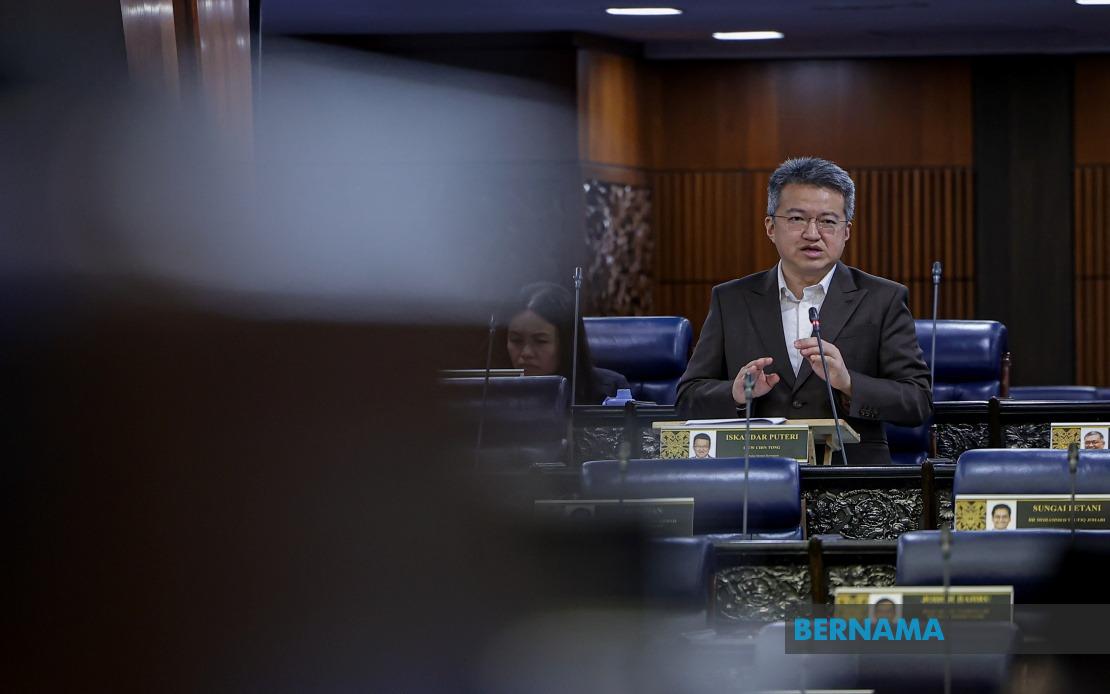
The MADANI Government is intensifying its institutional overhaul to address the deep governance failures exposed by the 1Malaysia Development Berhad scandal, according to Deputy Finance Minister Liew Chin Tong. Speaking in Parliament on July 9, Liew emphasised that under Prime Minister Datuk Seri Anwar Ibrahim's leadership, the administration has introduced sweeping reforms designed to rebuild Malaysia's damaged reputation and reassure international investors and markets of the country's commitment to sound fiscal management.
The scale of the 1MDB crisis's impact on Malaysia extends far beyond the immediate financial loss. Liew underscored how the scandal severely compromised the nation's international standing, triggering extensive global media scrutiny, probes by foreign regulatory agencies, and protracted cross-border legal proceedings that left deep scars on Malaysia's image as a responsible emerging economy. This reputational damage has fundamentally challenged efforts to attract foreign investment, strengthen Malaysia's global competitiveness, and maintain the confidence of international capital markets in the country's institutions and fiscal frameworks.
Central to the government's reform agenda is the enactment of the Public Finance and Fiscal Responsibility Act 2023, which establishes stringent controls on government spending and creates robust safeguards against the misuse of public resources. This legislation represents a foundational shift toward transparency and accountability in how the state manages taxpayer money, closing loopholes that enabled the 1MDB debacle to occur unchecked. By institutionalising fiscal discipline at the legislative level, the government aims to create structural barriers that make future financial scandals of this magnitude significantly more difficult to execute.
Complementing this legislative framework is a substantial expansion of the Auditor-General's investigative authority through amendments to the Audit Act. The new "follow the public money" approach grants Malaysia's top auditor unprecedented powers to trace how government funds flow through the system, enabling far more thorough scrutiny of public expenditure across agencies and programmes. This enhanced oversight mechanism effectively creates a more vigilant guardian of the public purse, capable of identifying irregularities and misappropriations at earlier stages before they metastasise into systemic crises.
The government is also advancing a Government Procurement Bill and overhauling the legal framework governing state-owned enterprises (SOEs), recognising that many governance failures stem from opaque procurement processes and inadequate oversight of government-linked companies. These reforms seek to inject greater competition into government contracting, reduce opportunities for cronyism and favouritism in project allocation, and ensure that SOEs operate with the same accountability standards expected of private sector enterprises. Together, these measures address multiple vectors through which public funds have been misappropriated in Malaysia's recent history.
The financial burden of remedying the 1MDB disaster has proven staggering. Since 2017, the government has expended RM18.7 billion from operational and development budgets to discharge 1MDB's financial liabilities. More notably, the MADANI Government alone, having assumed office in March 2023, was forced to allocate RM13 billion from its development budget to retire USD3 billion in government-guaranteed bonds that 1MDB had issued—a sum representing approximately 13.1 per cent of the entire year's development expenditure allocation. This diversion of resources from productive investments in infrastructure, education, and social services illustrates the ongoing fiscal cost of previous governance failures.
Liew's parliamentary comments signal that the government recognises institutional reform as essential to Malaysia's economic recovery strategy. The improvements in investment inflows and trade performance that Malaysia has recently experienced rest partially on restored confidence in the country's governance framework. These reforms, therefore, serve dual purposes: they genuinely strengthen accountability mechanisms while simultaneously sending a powerful signal to international investors, credit rating agencies, and financial institutions that Malaysia is serious about preventing future scandals.
The implications for Malaysia's standing in Southeast Asia are considerable. As a regional financial hub with significant cross-border capital flows, Malaysia's governance standards directly influence how other ASEAN nations are perceived by international investors. By demonstrating commitment to rigorous reform, Malaysia can reclaim its leadership position in the region's governance discourse and potentially set benchmarks that other economies might emulate. Conversely, any suggestion that these reforms are merely cosmetic could perpetuate the lingering doubts about institutional integrity that the 1MDB scandal engendered.
For Malaysian citizens and taxpayers, these governance reforms represent an attempt to restore the fundamental social contract between government and the governed—the notion that public resources serve the public interest rather than enriching a connected elite. The scale of investment required to recover from 1MDB's damage reflects not merely financial mismanagement but a systemic breakdown in institutional oversight and political accountability. Whether these latest reforms prove genuinely transformative or merely procedurally adjustable will depend heavily on implementation rigour and political will to enforce consequences when violations occur.
The government's emphasis on preventing recurrence suggests an understanding that Malaysia's economic future depends critically on investor confidence, and that confidence rests on demonstrable governance improvements. As the MADANI Government moves forward with these institutional changes, the challenge will be translating legal reforms into embedded cultural shifts within the civil service and political establishment—ensuring that accountability becomes an ingrained norm rather than a periodic exercise undertaken in response to scandals.

