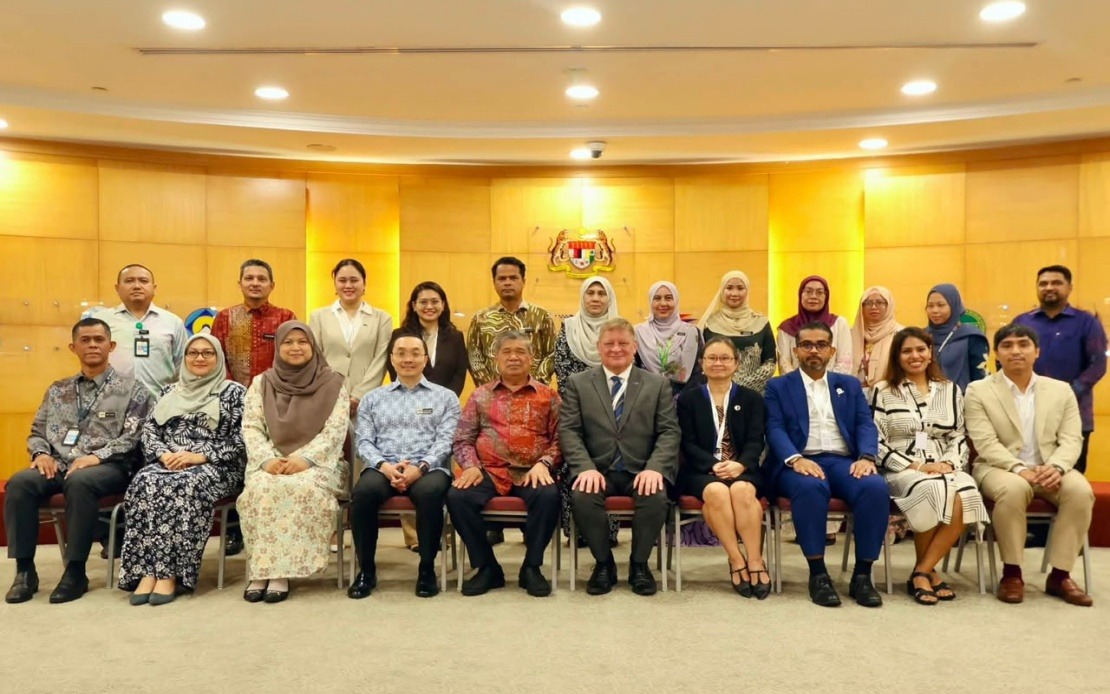
Malaysia is positioning itself at the centre of a strategic partnership with Europe aimed at transforming its agricultural landscape through technology and innovation. During a meeting at Wisma Tani in Putrajaya, Agriculture and Food Security Minister Datuk Seri Mohamad Sabu engaged with EU-ASEAN Business Council executive director Chris Humphrey and his delegation to chart a new course for the nation's agri-food sector.
The discussion centred on implementing the National Agro-Food Policy 2.0, a comprehensive framework designed to guarantee domestic food security while bolstering Malaysia's competitive advantage in regional and global markets. Mohamad emphasised that this policy represents more than just administrative reorganisation; it reflects Malaysia's commitment to addressing interconnected challenges spanning food production, environmental sustainability, and economic resilience in an increasingly volatile geopolitical context.
Technology adoption emerged as a critical theme during the exchange. The integration of artificial intelligence and advanced agricultural systems featured prominently in the conversation, reflecting growing recognition within Malaysia's agricultural establishment that traditional farming methods alone cannot meet 21st-century demands. The EU's considerable expertise in agri-tech solutions positions European companies as invaluable partners in this transformation, offering proven methodologies that Southeast Asian farmers can adapt to local conditions.
Beyond crop production, the delegation explored opportunities to strengthen Malaysia's dairy sector through supply chain improvements. The local dairy industry, which has historically struggled with productivity and cost competitiveness against imported alternatives, could benefit substantially from European technical assistance and investment in infrastructure. Enhanced biosecurity protocols and animal health standards would simultaneously address consumer concerns and unlock new export possibilities for Malaysian dairy producers seeking recognition in discerning international markets.
Modernising biosecurity frameworks carries particular significance for Malaysia, a tropical nation vulnerable to emerging animal diseases and agricultural pathogens. Strengthening these standards aligns with Malaysia's broader economic interests by reducing trade barriers and enhancing market access. Countries with robust sanitary and phytosanitary measures typically enjoy preferential access to premium markets, a consideration that would directly benefit Malaysian exporters attempting to elevate their market positioning beyond commodity-dependent trade relationships.
The minister articulated a vision positioning the EU as one of Malaysia's most consequential partners for agri-food transformation, acknowledging Europe's technical sophistication and commitment to sustainable practices. This recognition reflects Malaysia's strategic calculation that European expertise and investment constitute essential ingredients for modernising agricultural systems that have remained relatively unchanged for decades. The emphasis on sustainability resonates with growing Malaysian consumer awareness of environmental concerns and international buyer preferences for responsibly produced food.
Capacity building emerged as another focal point, with Mohamad expressing hope that European enterprises would provide training and development opportunities for Malaysian farmers and livestock breeders. Compliance with stringent EU quality standards and sanitary requirements presents both immediate challenges and longer-term opportunities; farmers equipped to meet these benchmarks gain access to premium value chains and differentiated market segments that reward quality over volume. Such capability development could catalyse broader agricultural productivity improvements across the sector.
Both parties reaffirmed their commitment to advancing the Malaysia-European Union Free Trade Agreement currently under negotiation. This pact carries substantial implications for Malaysian agriculture, potentially reducing tariffs on exports while facilitating greater European investment in Malaysian agri-business infrastructure. The agreement represents an opportunity to shift Malaysia's agricultural exports toward higher-value products rather than remaining locked into commodity competition where price and volume dominate commercial dynamics.
The discussion underscores Malaysia's recognition that food security transcends national borders and domestic production alone. Global supply chain disruptions demonstrated during recent years have highlighted vulnerabilities in systems dependent on distant sources. By collaborating with EU partners on technology transfer and sustainable production methods, Malaysia seeks to build agricultural resilience while simultaneously developing competitive advantages in processing, value addition, and export markets where quality and reliability command premium pricing.
Moving forward, Malaysia views European companies as catalysts for agricultural sector modernisation rather than mere suppliers of technology or inputs. The minister's invitation for EU-ABC representatives to attend the 2026 Malaysia Agriculture, Horticulture and Agro-Tourism Exhibition reflects this broader engagement strategy. MAHA 2026, scheduled for August 28 to September 6 at the Malaysia Agricultural Expo Park in Serdang, Selangor, will showcase Malaysia's agricultural capabilities while providing a platform for connecting European investors and technology providers with Malaysian enterprises seeking partnership opportunities.
The strategic importance of this partnership extends throughout Southeast Asia, where Malaysia's agricultural innovations and policy frameworks often influence regional approaches to food security and agricultural modernisation. Successful collaboration with European partners could establish blueprints that other ASEAN nations adopt, amplifying Malaysia's regional influence while contributing to collective Southeast Asian food security objectives. The meeting thus represents more than bilateral diplomacy; it constitutes a meaningful step toward building a more technologically advanced, sustainable, and resilient agricultural sector capable of feeding Malaysia's growing population while competing effectively in increasingly demanding international markets.

