The Department of Information is preparing a nationwide campaign to kindle patriotic fervour across Malaysia during the 2026 National Month and Malaysia Day festivities, with a deliberate shift toward a more focused, community-centred approach. Officials revealed on Thursday that the celebrations will feature mobile outreach units deployed strategically across the country, stopping at worship centres, sporting grounds, and other community hubs to engage ordinary Malaysians in the commemorations. The initiative represents an evolution in how the government seeks to foster national pride beyond traditional ceremonial settings, attempting instead to weave patriotic observance into the everyday spaces where citizens naturally congregate.
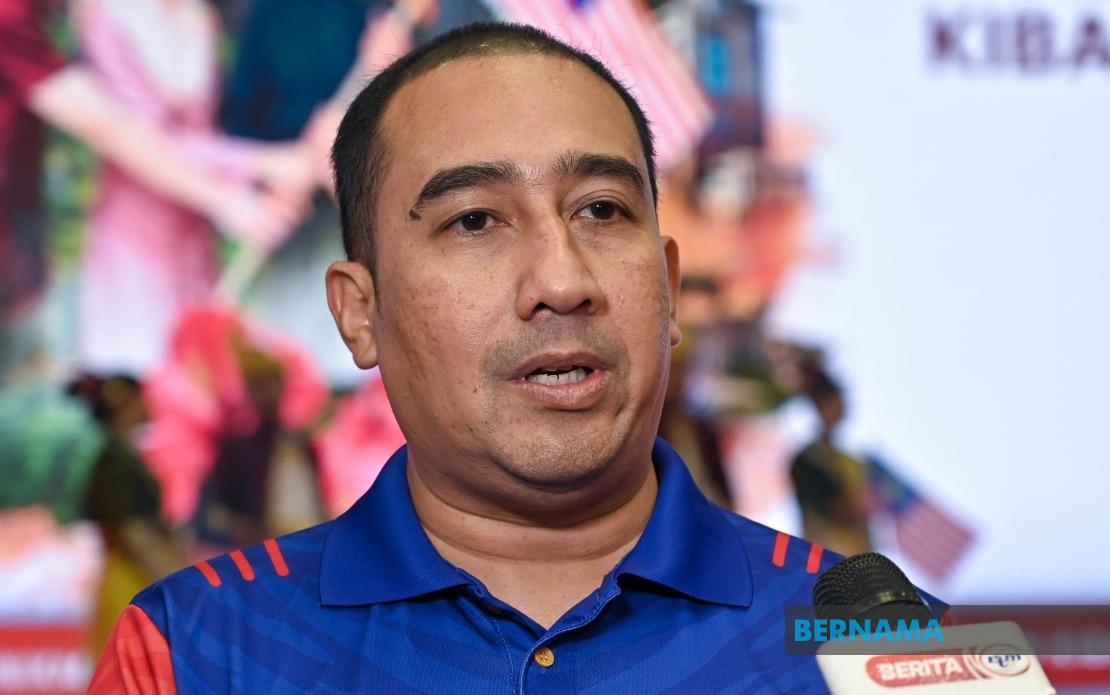
Muhammad Najmi Mustapha, who heads the Department of Information's Communication Services and Community Development Division, explained that despite adopting what officials describe as a "moderate concept" this year, the programming will remain substantive and engaging. Speaking in Ipoh following rehearsals for tomorrow's official launch ceremony, he characterised the scaled approach as a strategic recalibration rather than a diminishment of ambition. The department aims to maintain public enthusiasm while operating within what appear to be tighter resource parameters, suggesting a recognition of budgetary constraints that have influenced government programming across Southeast Asia in recent years.
The centrepiece of the patriotic push is an expansion of the existing "1 House 1 Jalur Gemilang" campaign, a grassroots initiative designed to encourage households throughout Malaysia to display the national flag. This year's iteration dramatically broadens the programme's reach by incorporating two entirely new sectors: places of worship and sports facilities. Previously, the campaign had operated across seven distinct clusters including schools, hospitals, government offices, industrial workplaces, security services, tertiary institutions, and general community organisations. The inclusion of religious venues and athletic centres reflects an understanding that fostering national identity requires engagement across Malaysia's full institutional landscape, particularly through spaces that command deep emotional and social investment from citizens.
The mechanics of the expanded campaign reveal careful thought about how to embed patriotic messaging into existing community infrastructure. At worship centres—whether mosques, churches, temples, or other faith communities—the Department of Information plans not merely to distribute flags but also to provide financial contributions to the institutions themselves. This approach transforms flag distribution from a one-way government gesture into a reciprocal relationship of support. Simultaneously, religious communities will be invited to participate in organised flag-raising activities, creating moments of collective patriotic expression within their customary gathering spaces. The symbolic resonance of flying the national flag at places where Malaysians already gather regularly vastly amplifies the campaign's cultural penetration compared to standalone promotional events.
Sports venues represent similarly strategic deployment points. Athletic facilities serve as gathering places for Malaysians across generational and socioeconomic lines, from elite athletes to weekend recreational participants to spectating families. By integrating flag distribution and patriotic activities into these spaces, organisers appear intent on associating national pride with the vigour, community spirit, and aspiration that sport embodies in popular consciousness. The approach suggests recognition that patriotism resonates most powerfully when linked to experiences people genuinely enjoy, rather than presented as an obligation imposed from above.
The logistics of tomorrow's official launch event underscore the importance the government assigns to this campaign. Prime Minister Datuk Seri Anwar Ibrahim will preside over a ceremony beginning at 10 am at the Sultan Azlan Shah Ministry of Health Training Institute in Tanjung Rambutan, near Ipoh. Approximately 3,000 participants are expected, drawn from the MADANI Community and representing regions across the nation. The event will feature a Merdeka Patriot Run during morning hours, a symbolic gesture linking physical exertion and national pride. Most notably, security forces will recommence the flag-hoisting ceremony, a ritual that had lapsed for two years—a pause whose cause and duration merit scrutiny regarding how pandemic-era disruptions have affected ceremonial practices across government agencies.
The launch will also introduce the official theme song for HKHM2026, a composition intended to provide an auditory anchor for the year's celebrations. Music has historically served as a powerful vehicle for national sentiment throughout Malaysia's history, and investing in a dedicated composition suggests the government's confidence in music's capacity to solidify emotional connections to national identity. The ceremony's proceedings will be broadcast live across multiple platforms—Radio Televisyen Malaysia, the national news agency Bernama, Facebook Live channels, and official government social media accounts—ensuring access for Malaysians unable to attend in person and amplifying the event's reach across the nation.
This year's approach to National Month and Malaysia Day celebrations carries particular resonance given Southeast Asia's broader geopolitical context. As regional nations navigate questions of national cohesion amid increasing diversity, economic pressures, and digital fragmentation, Malaysia's emphasis on bringing patriotic messaging into community spaces where citizens naturally interact offers a case study in contemporary nationalism. The deliberate incorporation of religious venues and sports facilities acknowledges that patriotism in a multicultural, multi-faith society must find expression through institutions that command loyalty and participation across demographic lines, rather than through government-controlled channels alone.
The shift toward a scaled, community-based approach may also reflect evolving perspectives on the cost-effectiveness of patriotic campaigns. Large-scale public events, while visually impressive, reach limited audiences and generate fleeting engagement. By contrast, distributing flags and organising activities at hundreds of worship centres and sports grounds throughout the nation creates multiple touchpoints and extends the campaign's temporal footprint across the entire month of celebration. This methodology suggests that contemporary approaches to fostering national pride increasingly prioritise breadth and frequency of engagement over the grandeur of centralised spectacle.
For regional observers and international stakeholders tracking Malaysia's internal cohesion and social development, this campaign offers insight into how the government perceives current challenges to national unity. The specific emphasis on incorporating new institutional sectors indicates concern that previous campaigns may have insufficiently engaged certain communities, particularly religious groups and youth-oriented spaces. The expansion appears calibrated to address potential gaps in patriotic messaging that might leave segments of the population feeling excluded from national celebrations, a sensitive consideration in any pluralistic society.
The timing and scale of the 2026 campaign also position it as a test case for government communications strategy moving forward. Success in embedding patriotic messaging at the community level through these expanded channels could shape how subsequent campaigns are designed and deployed. Conversely, if engagement falters despite expanded reach, the Department of Information may need to fundamentally reconsider how to foster national pride in an increasingly digitalised, individualised society where traditional forms of collective participation are fragmenting across demographic lines.

