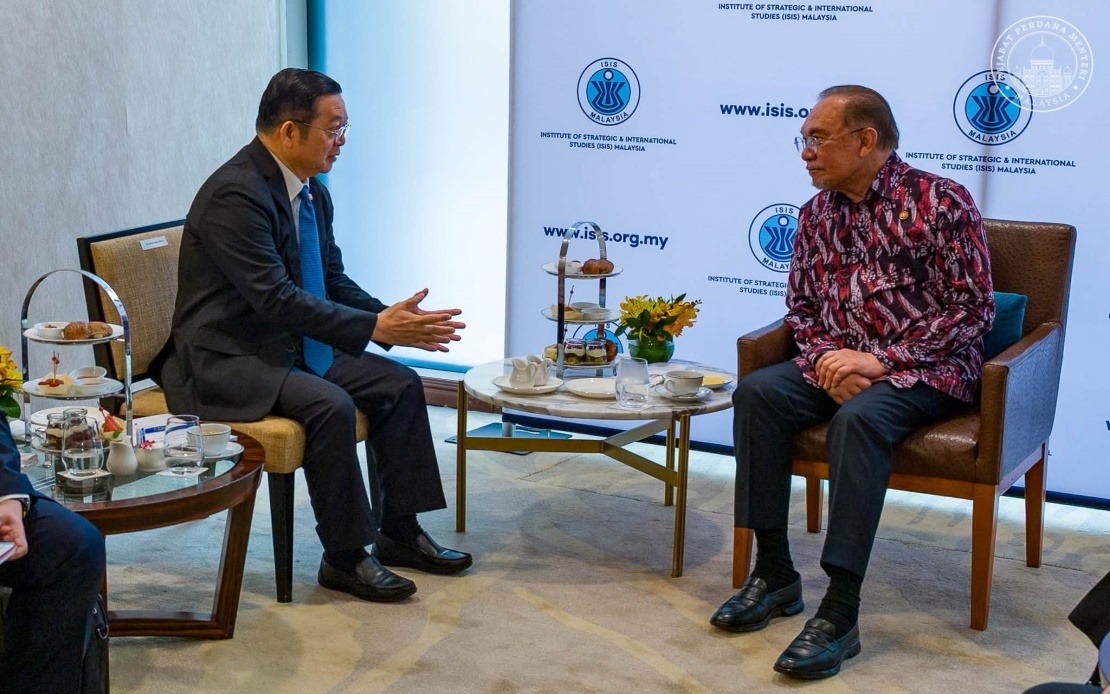
Prime Minister Datuk Seri Anwar Ibrahim has reiterated Malaysia's dedication to supporting ASEAN's development as a cohesive, inclusive bloc capable of fulfilling the aspirations of its 650 million citizens. Speaking following the 39th Asia-Pacific Roundtable in Kuala Lumpur, Anwar underscored the nation's ongoing commitment to advancing the regional grouping's resilience amid a period of significant geopolitical strain and economic uncertainty affecting the Indo-Pacific.
The reaffirmation came during a bilateral meeting with ASEAN Secretary-General Dr Kao Kim Hourn, who visited Malaysia to receive Anwar's keynote address at the roundtable conference. The encounter allowed both officials to engage in substantive dialogue on matters of strategic importance to Southeast Asia and the broader region, reflecting Malaysia's diplomatic prominence within ASEAN's institutional framework.
The discussions between Anwar and Dr Kao Kim Hourn ranged across several pressing regional dossiers. High on the agenda was the protracted political crisis in Myanmar, where the military coup of February 2021 continues to destabilise the nation and create humanitarian challenges that ripple across ASEAN's borders. The bilateral also touched upon tensions in the South China Sea, where competing maritime claims and increased military activities have raised concerns about unintended escalation and the potential for disputes to undermine regional prosperity.
Embracing emerging technological frontiers, both officials explored the implications of rapid advancement in artificial intelligence for Southeast Asia's economies and societies. The discussion acknowledged that AI development presents both opportunities for productivity and growth, as well as governance challenges that ASEAN nations must navigate collectively to ensure equitable distribution of benefits and prevent digital divides from widening further among member states.
Timor-Leste's transition to full ASEAN membership featured prominently in the conversation. The newly admitted nation, which formally joined the bloc in 2002, is now entering a phase where it must fully integrate into ASEAN's institutional architecture and participate meaningfully in regional cooperation mechanisms, requiring coordinated support from established members including Malaysia.
Anwar also highlighted discussions on ASEAN Community Vision 2045, the strategic roadmap that guides the regional bloc's development through the mid-21st century. This vision encompasses economic integration, social progress, and environmental sustainability, though implementation faces persistent challenges including development disparities among member states and competing national priorities that sometimes strain consensus-based decision-making.
The impact of the West Asia conflict, encompassing the Israel-Gaza situation and broader Middle Eastern tensions, also factored into the bilateral assessment. The conflict carries implications for ASEAN's shipping lanes, energy security, and the economic interests of member states with significant Muslim populations, necessitating careful diplomatic positioning by the regional organisation.
Anwar stressed that ASEAN's effectiveness ultimately depends upon the bloc's steadfast adherence to its foundational principles of centrality, unity, and comprehensive cooperation. Centrality refers to ASEAN's role as the driving force in regional architecture and dialogue processes, a position that faces pressure from great power competition and bilateral tensions among member states. Unity requires that ASEAN member governments prioritise collective interests over narrower national calculations, a perpetual challenge given the grouping's diversity of political systems, development levels, and external alignments.
The Prime Minister's emphasis on close cooperation underscores recognition that fragmentation would diminish ASEAN's capacity to shape regional outcomes and protect member interests in an increasingly multipolar world. China's growing assertiveness, renewed American engagement in Southeast Asia, and tensions between major powers all create incentives for ASEAN to maintain cohesion and demonstrate strategic autonomy rather than becoming terrain for great power proxy competition.
Malaysia's specific positioning within these dynamics reflects its role as a moderate voice and a bridge between ASEAN's more assertive members and those preferring cautious diplomacy. As both Finance Minister and Prime Minister, Anwar brings economic expertise to discussions, recognising that ASEAN's long-term stability depends upon shared prosperity and the success of regional integration initiatives such as the ASEAN Economic Community and ASEAN Regional Forum.
The convergence of these multiple challenges—from internal security crises to external geopolitical competition to technological disruption—creates a complex environment where Malaysia's constructive engagement becomes especially valuable. The nation's experience navigating religious and ethnic diversity, and its history of balancing between major powers, position it to contribute meaningfully to solutions that preserve ASEAN's consensus-based approach while addressing urgent regional concerns.
Looking forward, Malaysia's commitment to playing a substantive role in ASEAN's evolution suggests the nation will continue advocating for practical cooperation on transnational challenges ranging from climate change and pandemic preparedness to maritime security and digital governance. This approach aligns with Malaysia's broader strategic interests in maintaining regional peace and prosperity while enhancing its own developmental trajectory and economic competitiveness within the ASEAN framework.

