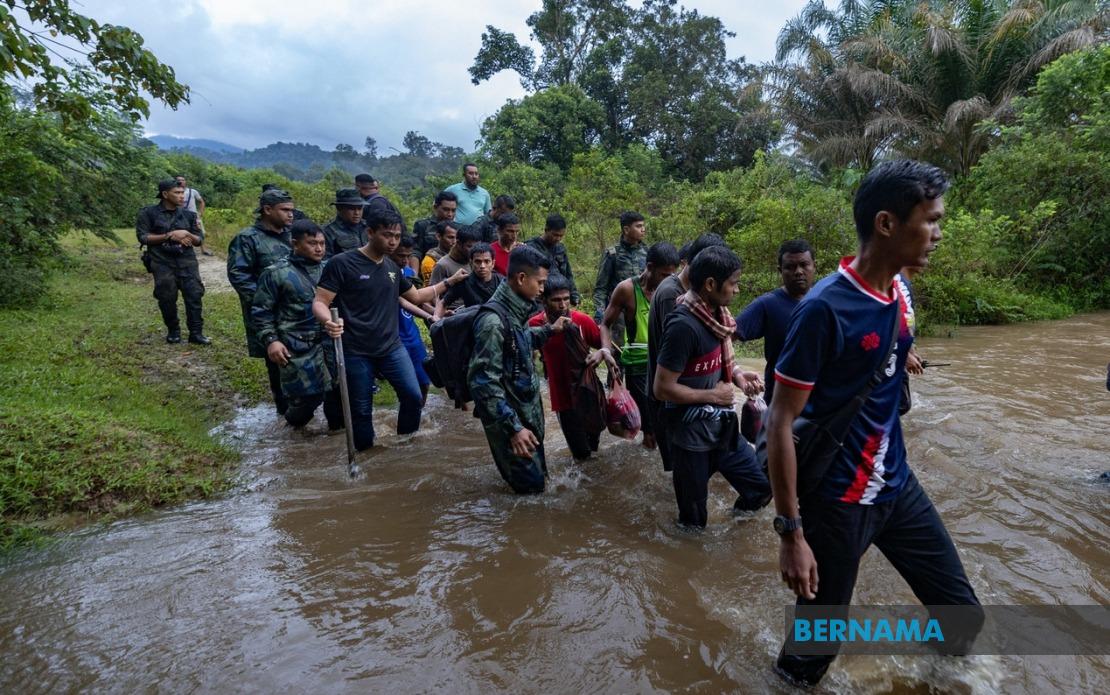
Malaysia is committed to intensifying its partnership with fellow ASEAN nations and the United Nations High Commissioner for Refugees to forge a more holistic response to the ongoing Rohingya refugee emergency, Deputy Foreign Minister Datuk Lukanisman Awang Sauni announced in parliament. Speaking during a special chamber session of the Dewan Rakyat, the minister outlined how Malaysia intends to leverage both regional and international mechanisms to move beyond short-term relief measures towards a sustainable resolution that addresses the root causes driving the displacement of hundreds of thousands from Myanmar's Rakhine State.
Malaysia's diplomatic efforts have consistently positioned the Southeast Asian bloc as a vehicle for pursuing peaceful settlement of the Myanmar crisis, the deputy minister explained, while simultaneously coordinating with the UNHCR to ensure vulnerable Rohingya populations receive adequate safeguarding and essential aid services. This dual-track strategy reflects Kuala Lumpur's understanding that addressing refugee flows demands action at multiple institutional levels, recognising that humanitarian intervention and political engagement must work in concert rather than isolation.
The government's position acknowledges that the refugee and asylum seeker phenomenon affecting the Rohingya carries profound regional ramifications extending well beyond Myanmar's borders. Issues such as irregular maritime migration, organised human trafficking networks, and attendant security concerns have created transnational challenges that impact stability across Southeast Asia. Malaysia, as a primary transit and destination country for Rohingya boat arrivals, bears particularly acute pressure from these displacement dynamics, making coherent regional coordination essential to national interests.
However, Lukanisman candidly recognised significant limitations constraining current multilateral responses. ASEAN's foundational principle of non-interference in member states' internal affairs, combined with its requirement for consensus-based decision-making, substantially restricts the bloc's capacity to pursue assertive collective measures against Myanmar's government. This institutional architecture, while designed to protect smaller nations from external pressure, paradoxically inhibits forceful action on humanitarian crises occurring within member territories.
The UNHCR's mandate presents a complementary but distinct constraint. Although the organisation provides essential refugee protection services and humanitarian assistance, its authority does not extend to resolving the political circumstances generating displacement. The agency functions within a framework focused on managing refugee consequences rather than addressing state-level governance failures or communal violence that drive exodus movements. This separation of responsibilities between refugee management and political resolution creates coordination gaps that inhibit comprehensive problem-solving.
Present cooperative mechanisms consequently concentrate efforts on defending refugee rights and distributing humanitarian relief rather than engineering transformative political settlements. While these protective functions remain indispensable, they represent secondary responses rather than primary solutions. Lukanisman acknowledged this reality, noting that without meaningful political change within Myanmar, humanitarian assistance primarily addresses symptoms whilst underlying drivers persist.
Looking ahead, Malaysia is examining several potentially high-impact regional strategies to advance this agenda. One priority involves reinforcing burden-sharing frameworks among ASEAN member states, ensuring that hosting nations receive proportionate support and resources rather than bearing displacement burdens unequally. This approach recognises that countries like Malaysia, Bangladesh, and Indonesia have absorbed disproportionate numbers of Rohingya, creating domestic resource pressures that international burden-sharing mechanisms could alleviate.
Simultaneously, Malaysia is promoting pathways toward political resolution that would facilitate Rohingya voluntary return to Myanmar under conditions guaranteeing safety, dignity, and fundamental rights protection. This repatriation objective fundamentally differs from forced return scenarios that have triggered humanitarian criticism; instead, it envisions conditions where Rohingya could reasonably choose to rebuild lives in ancestral territories. Achieving such conditions requires Myanmar's government to implement substantive reforms addressing discrimination, ensuring citizenship recognition, and establishing accountability for past violations.
These strategic initiatives, Lukanisman argued, serve dual purposes aligned with Malaysia's broader foreign policy positioning. Enhanced regional stability constitutes an obvious benefit, as unresolved refugee crises perpetuate irregular migration, human trafficking, and communal tensions affecting multiple countries. Simultaneously, Malaysia's advocacy for peace, security, and humanitarian values strengthens the nation's standing as a responsible international actor committed to rules-based engagement and principled statesmanship.
For Southeast Asian policymakers and regional observers, Malaysia's refined approach reflects broader grappling with tensions between ASEAN's non-interference tradition and humanitarian imperatives increasingly demanding external engagement. The Rohingya situation exemplifies how internal state failures generate externalities that transcend borders, potentially requiring recalibration of regional norms. Malaysia's emphasis on responsibility-sharing mechanisms and political solutions suggests growing recognition that purely humanitarian responses, whilst necessary, cannot substitute for diplomatic efforts addressing Myanmar's governance challenges.

