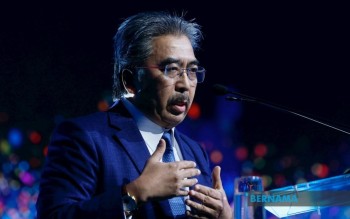
The Malaysian government has committed to undertaking a comprehensive examination of the country's import portfolio as part of a broader effort to fortify domestic industries and secure greater economic value from international commerce. Minister of Investment, Trade and Industry Datuk Seri Johari Abdul Ghani outlined this strategy during remarks at a financial sector conference in Kuala Lumpur, signalling a shift toward more strategic management of the nation's trade relationships and manufacturing capabilities. The initiative responds to mounting pressures to transform Malaysia's economy beyond its traditional model of import-based growth, positioning homegrown innovation and local production capacity as essential pillars for sustainable prosperity.
Johari emphasised that the reassessment must encompass capital goods and essential inputs, with particular attention to sectors where Malaysia possesses latent or developing capabilities. The government intends to craft targeted policies that encourage domestic manufacturing while simultaneously reducing unnecessary external dependency. This measured approach recognises the critical distinction between imports that enhance productivity—such as advanced machinery or technological components—and those that displace or weaken indigenous industries through lower-cost competition without corresponding knowledge transfer or skill development. By making these distinctions, policymakers hope to establish a framework that protects nascent industries while remaining open to foreign investment that genuinely augments Malaysia's technological sophistication.
The timing of this initiative becomes more significant when viewed against Malaysia's recent economic performance. In the preceding year, the nation's total merchandise trade exceeded RM3 trillion for the first time in its history, a symbolic threshold reflecting decades of commerce-driven development. Exports expanded by 6.5 per cent, reaching RM1.61 trillion, whilst imports grew at a slightly slower rate of 6.2 per cent to RM1.45 trillion, generating a trade surplus of RM151.8 billion. These headline figures mask underlying structural questions about whether such volumes truly benefit ordinary Malaysians or primarily concentrate wealth within trading conglomerates and multinational corporations operating within Malaysian borders.
Crucially, Johari articulated the government's longer-term aspiration to elevate Malaysia into the high-income economy category—a classification determined by the World Bank using gross national income per capita as the primary metric. Currently, the threshold stands at US$14,375 annually, whilst Malaysia trails at approximately US$12,380, representing a gap of roughly 16 per cent. This shortfall proves particularly vexing because the target itself shifts upward over time as global economies advance, meaning Malaysia must pursue continuous improvement in productivity, technological innovation, and economic diversification simply to maintain relative position. The mathematical reality demands not incremental adjustment but sustained acceleration in economic complexity and value creation.
The minister cautioned against complacency, explicitly rejecting the notion that Malaysia can rely indefinitely on established patterns of trade and investment. Instead, he called for strategic flexibility—an organisational capacity to respond swiftly to evolving global circumstances, cultivate diverse international partnerships, and prioritise decisions that protect Malaysia's long-term economic sovereignty and competitiveness. This language reflects recognition that reliance on particular trading partners or commodity exports leaves Malaysia vulnerable to external shocks, price volatility, and the inexorable march of technological displacement. Southeast Asian economies increasingly understand that economic resilience demands domestic depth and technological mastery rather than mere participation in global supply chains.
To illustrate the concrete consequences of unchecked import dependency, Johari referenced Malaysia's iron and steel sector—a cautionary tale of declining self-sufficiency. Once capable of meeting domestic demand through local production, the industry has contracted substantially following competitive pressure from larger foreign manufacturers. Rather than viewing this as inevitable market evolution, the government now interprets it as a policy failure: the absence of protective frameworks allowed domestic capacity to atrophy without securing offsetting gains in technological sophistication or higher-value manufacturing. This historical lesson animates current thinking about which sectors warrant deliberate domestic development and which might reasonably be sourced externally.
The minister articulated a nuanced position toward foreign investment, distinguishing between capital that addresses genuine market gaps and that which merely undercuts local competitors without creating broader economic benefits. Foreign investors remain welcome, he stated, but should function as complements to Malaysia's existing ecosystem rather than substitutes for domestic capability. When multinational enterprises introduce novel products, technologies, or expertise previously unavailable in Malaysia, they generate multiplicative benefits: domestic firms gain access to knowledge, supply chains deepen, and import substitution becomes feasible. Conversely, when foreign producers simply replicate existing Malaysian products at lower cost without transferring knowledge, the net effect weakens local industrial capacity and concentrates decision-making authority offshore.
The strategic review initiative also reflects broader Southeast Asian trends toward greater economic nationalism and regional self-sufficiency. Countries throughout the region increasingly question whether deep integration into global value chains serves national interests or primarily enriches multinational corporations whilst constraining local development. Malaysia's approach attempts a measured recalibration rather than wholesale rejection of globalisation: embracing trade and foreign investment where genuinely advantageous, whilst reasserting policy space for domestic industry development. This pragmatic middle path requires sophisticated institutional capacity and political will to resist pressures from entrenched trading interests benefiting from the status quo.
Complementing these policy considerations, the financial sector has introduced technological infrastructure designed to facilitate smoother domestic commerce. RHB Bank unveiled RHB Pay, described as Malaysia's first bank-owned unified digital payment gateway, enabling businesses to consolidate payment acceptance through a single platform. The system accommodates card transactions, FPX transfers, and DuitNow Pay mechanisms, with plans to incorporate e-wallet functionality, QR code payments, and various debit options during a second implementation phase anticipated for the final quarter of 2026. This infrastructure addresses a genuine friction point in Malaysia's business environment: merchants previously required multiple integrations and payment processors to accommodate diverse consumer preferences, fragmenting cash flows and complicating reconciliation.
The payment platform targets mid-sized enterprises, commercial establishments, corporate entities, and government institutions seeking streamlined transaction processing and improved working capital management. By consolidating payment channels within a domestically owned and operated system offering bank-grade security and automated reconciliation, the initiative addresses both efficiency and sovereignty concerns. Faster access to funds and enhanced cash flow visibility provide tangible benefits, particularly for small and medium enterprises operating with constrained working capital. This infrastructure development complements the broader import policy review by creating domestic payment mechanisms that reduce reliance on foreign-controlled systems and strengthen Malaysia's digital financial ecosystem.
Taken together, these initiatives—the import review and domestic industry strengthening alongside financial infrastructure development—represent an integrated approach to economic resilience and value creation. The government recognises that achieving high-income status requires not simply higher trade volumes or greater investment inflows, but fundamental transformation in the sophistication, ownership, and technological content of Malaysia's economic activity. For Malaysian businesses and investors, these policy directions signal a recalibrating environment where domestic capability development receives explicit government encouragement, foreign partnerships must demonstrate genuine knowledge transfer, and financial infrastructure increasingly serves local needs rather than facilitating external resource extraction. The implications extend throughout Southeast Asia, where other developing economies face similar questions about the sustainability and distributional fairness of traditional globalisation models.

