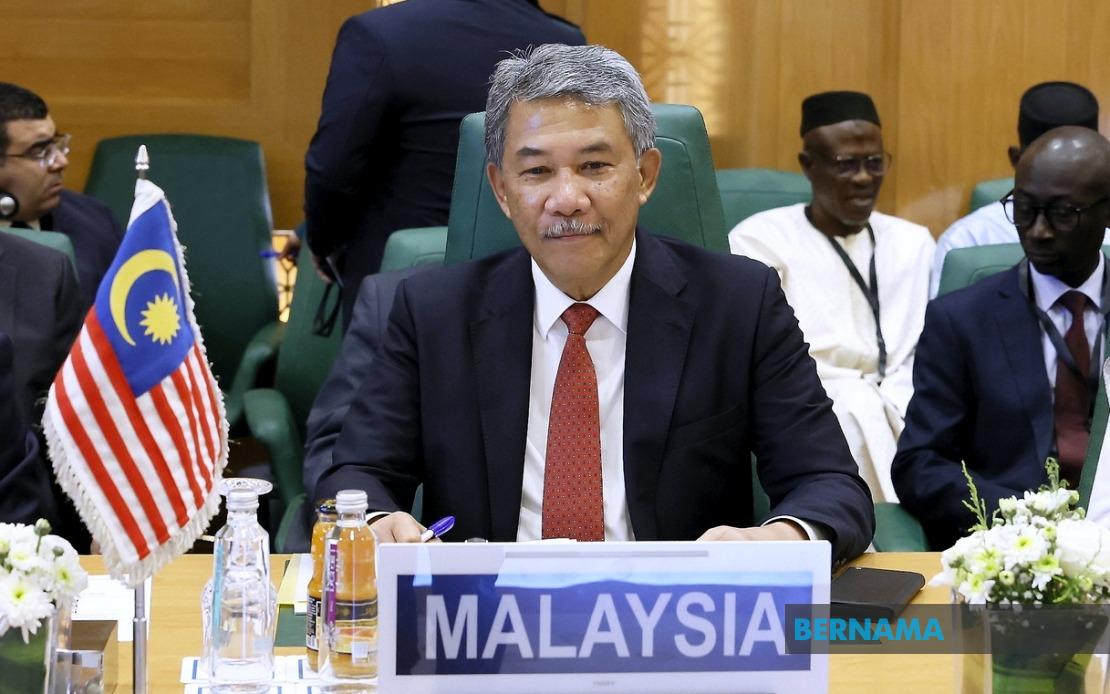
Malaysia has intensified its diplomatic pressure on the Organisation of Islamic Cooperation (OIC) to take unified action against Israel's ongoing settlement expansion programme, which Foreign Minister Datuk Seri Mohamad Hasan characterised as both illegal and fundamentally corrosive to prospects for Palestinian independence. Speaking at an extraordinary gathering of OIC foreign ministers in Jeddah on August 27, Mohamad framed the US$2.3 billion settlement initiative as part of a systematic campaign to make a two-state solution impossible, demanding that member states collectively withhold any form of support or recognition for these projects.
The Malaysian government's intervention came in response to accelerating Israeli construction activities in the West Bank and East Jerusalem, which Kuala Lumpur views as flagrant disregard for international legal standards and the recent advisory ruling from the International Court of Justice. Mohamad specifically highlighted the so-called E1 settlement plan as a particularly egregious example of measures designed to fragment Palestinian territory and eliminate geographic continuity between the anticipated Palestinian state's component regions. By drawing attention to this scheme at the OIC platform, Malaysia sought to mobilise collective pressure from the Muslim-majority bloc of nations, which collectively represents substantial global diplomatic weight.
For Malaysian policymakers, the settlement expansion represents a direct affront to the international rules-based order that Kuala Lumpur has consistently championed. The Foreign Minister stressed that the OIC must align its collective position with the International Court of Justice's July 19, 2024 advisory opinion, which found Israel's occupation unlawful and established clear legal grounds for member states to distance themselves from settlement-related activities. This alignment would demonstrate that regional powers are willing to enforce international law even against well-armed adversaries, a principle that holds significance far beyond the Israeli-Palestinian context.
Mohamad's statement went beyond settlements to encompass broader security and humanitarian concerns in occupied Palestinian territories. He condemned what he characterised as systematic settler violence targeting Palestinian communities, forced evictions from East Jerusalem properties, and measures that alter the city's demographic and cultural character. These activities, the minister argued, violate fundamental principles of international humanitarian law and represent attempts to engineer irreversible facts on the ground that would preclude negotiated resolution of disputes over Jerusalem's status and administration.
The humanitarian dimensions of the Israeli-Palestinian conflict featured prominently in Malaysia's OIC address. Mohamad painted a stark picture of conditions in Gaza, where over 70,000 lives have been lost and the territory faces devastating infrastructure destruction. He framed the international community's near-three-year inability to secure a permanent ceasefire as evidence of systemic failure in the global governance architecture, particularly given documented instances of airstrikes targeting civilian infrastructure including hospitals and schools alongside sustained restrictions on humanitarian aid delivery. For Malaysia, such outcomes underscore the moral bankruptcy of allowing powerful states to operate outside established legal frameworks.
Malaysia's advocacy for Palestinian institutional development represents a parallel track to its opposition of settlement expansion. Rather than focusing exclusively on negative measures against Israel, Mohamad called for enhanced OIC investment in strengthening Palestinian governance structures, reconstruction efforts, and institutional capacity. This approach reflects recognition that Palestinian statehood requires not merely removal of occupying military forces but also the functional capacity to govern effectively and provide services to its population. Southeast Asian nations like Malaysia, which have navigated state-building challenges themselves, bring practical perspective to such institutional imperatives.
The Foreign Minister reiterated Malaysia's unwavering commitment to the established parameters of a viable Palestinian state, specifically invoking the June 4, 1967 borders and designating East Jerusalem as the Palestinian capital. This formulation reflects decades of Malaysian diplomatic consistency on the Palestinian question and aligns with consensus positions within the OIC and broader Non-Aligned Movement. By emphasising that this position represents not negotiable preference but fundamental necessity, Mohamad sought to preclude any misunderstanding that Malaysia might accommodate diluted territorial or sovereignty arrangements.
Religious and cultural protection emerged as another significant dimension of Malaysia's OIC intervention. The Foreign Minister condemned Israeli officials' and settlers' entry into the Al-Aqsa Mosque compound on July 23 as unacceptable provocation that threatened the sanctity of Islam's third-holiest site. Malaysia's emphasis on preserving the historical Hashemite custodianship over Jerusalem's Islamic and Christian holy sites reflects the country's own experience as a Muslim-majority nation with significant religious diversity and heightened sensitivity to religious freedom questions. The protection of Al-Quds Ash-Sharif emerged as a non-negotiable principle transcending conventional diplomatic language.
Malaysia also targeted specific international institutional arrangements that it views as under siege. The Foreign Minister called on the United Nations Security Council to defend the UN Relief and Works Agency for Palestine Refugees in the Near East (UNRWA) following the seizure of its Kalandia Training Centre and the adoption of legislation imposing capital punishment on Palestinians. These developments, in Malaysia's analysis, represent attempts to systematically dismantle international mechanisms designed to protect Palestinian populations and preserve the foundation for eventual statehood.
For Malaysia and other Southeast Asian observers, the settlement question carries implications extending beyond the immediate Israeli-Palestinian context. The precedent established regarding territorial occupation and permanent demographic alteration carries relevance to maritime disputes, minority rights questions, and broader patterns of powerful states attempting to impose fait accompli situations in contested territories. Malaysian diplomatic intervention at the OIC thus serves to defend principles with applicability to Southeast Asia's own unresolved jurisdictional and territorial questions, including those in the South China Sea.
Malaysia's insistence that the OIC remain steadfast in championing a rules-based international order reflects frustration with perceived selective enforcement of international law. The Foreign Minister emphasised that Israel must face full accountability for its actions, implying that the international community's current approach permits powerful states disproportionate latitude in violating established norms. This critique resonates with broader Malaysian arguments about the need for reformed global governance structures that apply consistent standards regardless of actors' military or economic power.
The OIC extraordinary meeting in Jeddah provided Malaysia with a platform to consolidate support among Islamic nations for a comprehensive approach encompassing legal accountability, territorial integrity, humanitarian access, and institutional development. By articulating these interconnected demands simultaneously, Malaysia sought to prevent fragmentation of the Palestinian cause or piecemeal compromises that might sacrifice core principles. The convergence of diplomatic, legal, humanitarian, and institutional arguments reflected sophisticated understanding of how sustained pressure requires multi-dimensional reinforcement rather than single-issue focus.

