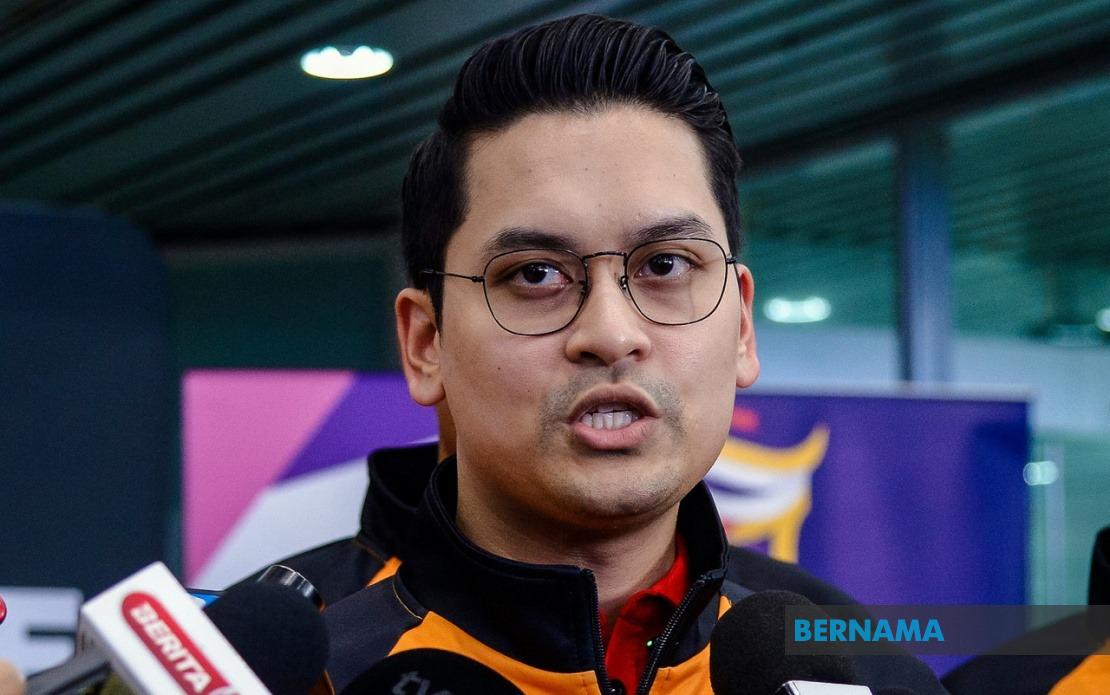
Malaysia's commitment to developing weightlifting as a flagship Olympic sport has taken concrete form with a substantial RM4.1 million allocation announced for 2026, while the Youth and Sports Ministry signals openness to providing extra funding beyond this baseline investment. The decision underscores growing confidence that weightlifting represents one of the country's most realistic pathways to capturing an elusive Olympic gold medal, a target that has driven strategic investment decisions across multiple sporting disciplines in recent years.
Minister Dr Mohammed Taufiq Johari disclosed the funding package following Malaysia's triumphant return from the Commonwealth Games, where weightlifting emerged as an exceptional performer for the national contingent. The minister revealed that discussions with Malaysia Weightlifting Federation president Datuk Ayub Rahmat and various state weightlifting associations have explored the federation's request for an additional RM1 million annually, though no final determination has been reached on whether this supplement will be approved.
The RM4.1 million core allocation targets multiple layers of athlete development, spanning elite international competitors through to emerging grassroots talent. The budget encompasses expenses for athlete welfare and development, coaching staff support, and participation in four key programme streams: the Road to Gold initiative targeting near-elite prospects, the Podium programme for established medal contenders, the Pelapis scheme for developing-stage athletes, and foundational grassroots identification and nurturing activities. This tiered approach reflects international best practice in talent development, where resources flow strategically from mass participation toward podium performance.
Currently, the national programme structure reflects this hierarchy, with two weightlifters enrolled in the Road to Gold pathway, eight athletes competing in the Podium tier, and two additional competitors in the Pelapis developmental stage. This distribution suggests a healthy pipeline, though critics might note that success at future Olympic Games will depend heavily on whether these developing athletes can progress effectively to international competitive levels where they can challenge established weightlifting powerhouses from China, Iran, and European nations.
The minister's acknowledgment that part of the funding request relates to coaching salaries and professional development costs highlights a critical, often overlooked dimension of sports success. Elite athletes do not develop in isolation; they depend on world-class coaching expertise, which typically demands competitive compensation packages to attract and retain qualified professionals. Malaysia's historical challenge in producing Olympic medalists has sometimes reflected inadequate investment in coaching infrastructure, making this explicit recognition of coaching welfare as a priority particularly significant for long-term programme sustainability.
Dr Taufiq Johari committed the ministry to examining the welfare conditions of state-level coaches supervised by the National Sports Council, indicating that systematic review of coaching conditions will proceed in parallel with funding negotiations. This dual approach—addressing both athlete development and coaching support simultaneously—suggests a more holistic understanding of sports system requirements than existed in previous funding cycles. State coaches often form the backbone of athlete identification and early-stage development, meaning their morale and professional security directly influence the quality of talent flowing into national programmes.
Weightlifting's exceptional performance at the recent Commonwealth Games provides compelling justification for elevated investment. The sport delivered five gold medals, one silver, and one bronze, positioning itself as Malaysia's standout contributor to the overall medal haul that exceeded initial targets with eight gold, three silver, and five bronze medals total. This performance ratio—weightlifting comprising more than 60 percent of gold medals won—demonstrates the sport's capacity for medal production relative to resource allocation, a metric that sports policymakers use when making comparative funding decisions across competing disciplines.
The strategic importance of weightlifting to Malaysia's Olympic ambitions extends beyond medal collection. As a technical sport with clearly measurable performance standards, weightlifting offers relative transparency in talent identification and progress tracking compared to subjective judging-based sports. Athletes' total lift weights—a combination of snatch and clean and jerk performances—provide objective benchmarks for comparing national performers against international competitors, enabling realistic assessment of medal prospects at specific Olympic Games.
Regionally, Malaysia's weightlifting development occurs within a competitive Southeast Asian context where Thailand has established stronger weightlifting traditions and has produced Olympic medalists. Indonesia's large population base and growing investment in weightlifting create additional competitive pressure. By maintaining investment momentum and considering the additional RM1 million funding request, Malaysia signals determination to sustain its position as a leading Southeast Asian weightlifting nation and challenge for Olympic representation.
The minister's framing of weightlifting as a sport with genuine potential to deliver Malaysia's first Olympic gold medal reflects careful political messaging. This aspiration has motivated increased investment across multiple Olympic sports over the past decade, yet success remains elusive. Weightlifting's recent Commonwealth Games performance provides tangible evidence supporting this narrative better than the performance trajectory of most other sports, making it politically defensible to invest substantially in the discipline despite budget constraints affecting other government priorities.
The decision to keep funding discussions open, with the minister indicating that detailed consultations with the federation will determine final allocations, suggests a collaborative approach to sports investment planning. Rather than imposing top-down funding decisions, the ministry appears committed to understanding the federation's specific operational requirements and evidence-based funding justifications before committing additional resources. This consultation process should provide clarity within coming months on whether the additional RM1 million will materialize.
Looking ahead, weightlifting faces the substantial challenge of converting Commonwealth Games success into Olympic medal performance. The Olympics attracts far more intensely trained athletes from traditional weightlifting powerhouses, making the jump in competitive difficulty substantial. However, Malaysia's sustained investment, combined with emerging talent within the Podium and Pelapis programmes, creates realistic conditions for Olympic breakthrough performance in the medium term. The ministry's explicit prioritization of coaching welfare and the commitment to hold discussions on additional funding both suggest that policymakers understand these challenges and are prepared to allocate resources accordingly.

