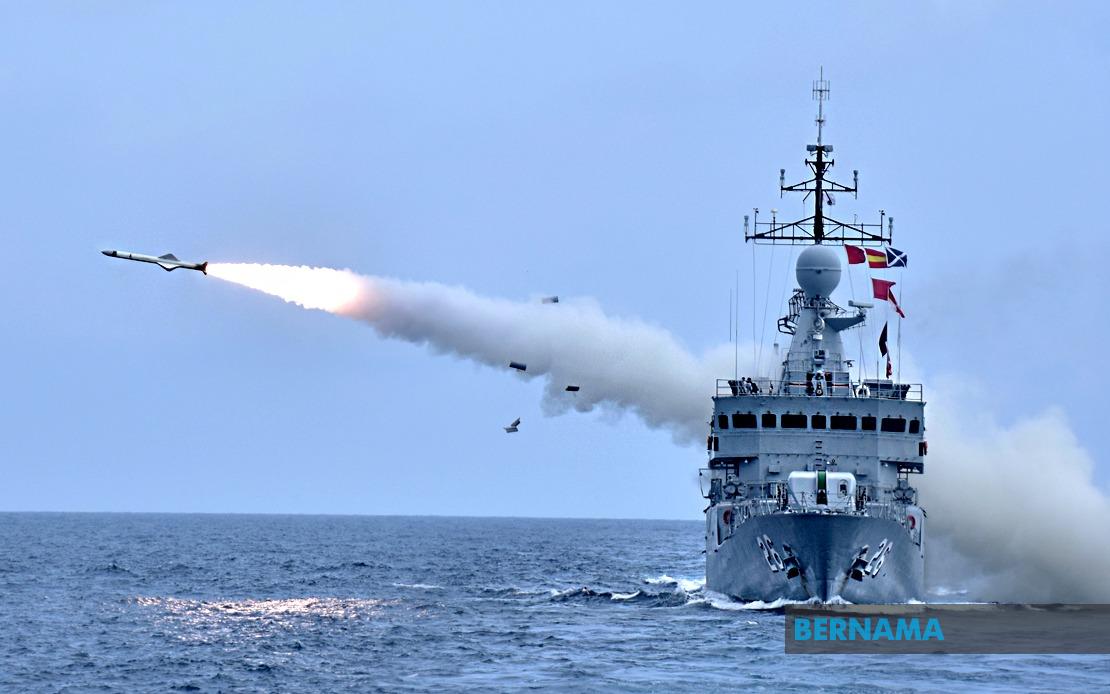
Malaysia's government is preparing to substantially increase defence expenditure in response to a security landscape transformed by far more than traditional regional dynamics, Defence Minister Datuk Seri Mohamed Khaled Nordin revealed on August 19. The announcement follows Prime Minister Datuk Seri Anwar Ibrahim's statement that Malaysia may need to inject hundreds of millions to several billion ringgit into defence capabilities to manage an increasingly intricate security environment. This reframing of Malaysia's defence posture suggests a fundamental shift in how Kuala Lumpur conceptualizes threats to national security in an era marked by rapid technological change and geopolitical fluidity.
While regional power competition certainly plays a role, Mohamed Khaled emphasized that Malaysia's strategic reassessment encompasses challenges that extend well beyond traditional military considerations. Cyber threats and electromagnetic vulnerabilities now rank among top concerns facing planners in the Ministry of Defence, alongside the sophisticated information warfare campaigns that have become hallmarks of contemporary great-power competition. These non-kinetic threats operate according to different logic than conventional military buildups, potentially causing damage to critical infrastructure, financial systems, and social cohesion without a single shot being fired. For a country as dependent on digital connectivity and financial services as Malaysia, such vulnerabilities represent genuine strategic exposure that cannot be addressed through conventional military procurement alone.
The Minister acknowledged that the regional security picture has become considerably more complex as major powers intensify their strategic competition throughout Southeast Asia. Major military actors have visibly increased their operational presence and capabilities across contested waters and airspace, creating what analysts term an action-reaction cycle that inevitably raises tension levels across the region. Malaysia finds itself navigating these currents without explicitly choosing alignment with any particular superpower, a balancing act that requires both credible defensive capabilities and diplomatic finesse. The accumulation of military assets within the confined geography of Southeast Asia naturally increases the probability that miscalculations, misunderstandings, or minor incidents could spiral into more serious confrontations affecting regional stability.
Recent developments in the southern Philippines, particularly areas proximate to Malaysian territory in Sabah, exemplify how regional incidents can create spillover implications for neighbouring nations. Mohamed Khaled noted that even when Malaysia is not directly involved in such episodes, escalatory dynamics in adjacent zones inevitably reverberate through the broader regional security architecture. The stability of contested maritime zones depends heavily on all parties maintaining communication channels and demonstrating restraint, yet the current geopolitical environment tests these principles constantly. Malaysia's position as a middle power with significant economic interests in these waters places it at particular risk should any localized conflict develop beyond current parameters.
Crucially, the Defence Minister stressed that Malaysia harbours no animosity toward any specific nation and does not view its defence preparations as directed against the Philippines, the United States, China, or any other country. This carefully calibrated messaging reflects Malaysia's genuine desire to avoid becoming entangled in great-power rivalries while simultaneously protecting its own interests. The Philippines, too, possesses legitimate security requirements that drive its own defence partnerships and arrangements, and Malaysia respects Manila's autonomy in these matters. Maintaining constructive bilateral relations with the Philippines remains essential, requiring that both nations preserve open communication channels to prevent misunderstandings from festering into genuine conflicts.
The government's determination to modernize the Malaysian Armed Forces and gradually increase defence spending to 1.5 per cent of Gross Domestic Product by 2030 should be understood within the framework of long-term national defence planning rather than as a reactive response to any immediate perceived threat. This multi-decade timeline signals that Malaysia views its security needs as structural rather than episodic, requiring sustained investment across multiple defence domains. Particular attention is being directed toward strategically significant locations such as Pulau Layang-Layang, where enhanced Malaysian presence and capabilities serve national interests rather than attempting to provoke or antagonize neighbouring powers. The deliberate modernization of maritime and air assets reflects Malaysia's recognition that sovereignty protection in an increasingly contested region demands credible deterrent capabilities.
Regarding broader regional stability, the Defence Minister emphasized Malaysia's commitment to ASEAN centrality and the regional approach emphasizing dialogue over confrontation. All parties operating in Southeast Asian waters must exercise restraint and avoid actions that could trigger uncontrolled escalation, as the consequences of miscalculation would be borne by entire populations and economies throughout the region. The Code of Conduct negotiations for the South China Sea remain vital to establishing a more predictable rules-based environment where commercial shipping, fishing, and legitimate maritime activities can proceed without constant risk of incident. Malaysia will continue advocating for this diplomatic pathway even as it strengthens its own defensive posture, recognizing that security and stability ultimately depend more on institutionalized norms than on military capabilities alone.
The dual-track approach outlined by Mohamed Khaled reflects sophisticated strategic thinking about how middle powers like Malaysia can navigate the current geopolitical era. On one track, Malaysia must develop sufficient military capabilities to protect its sovereignty, defend its maritime boundaries, and maintain its territorial integrity against potential challenges. On the second track, Malaysia must simultaneously champion regional stability mechanisms, support multilateral dialogue forums, and advocate for rules-based approaches to managing disputes. These tracks reinforce rather than contradict one another, as credible military capabilities enhance rather than diminish Malaysia's ability to participate as an influential voice in regional peace-building efforts. Nations perceived as weak invite coercion; nations with genuine defence capabilities can negotiate from positions of strength while advocating persuasively for cooperative solutions.
For Malaysian readers and policymakers, the implications are substantial. Defence spending increases of the magnitude being contemplated will require difficult budgetary trade-offs in an environment where competing demands for education, healthcare, and infrastructure modernization already press heavily on government finances. Yet the government's assessment that these investments are necessary reflects a sober judgment about the deteriorating strategic environment. Malaysia's geographic position, economic dependence on maritime trade, and lack of traditional alliance structures mean that self-reliance in defence matters remains paramount. The coming years will test whether Malaysia can simultaneously build stronger defence capabilities, maintain internal social cohesion amid information warfare challenges, and preserve its role as a stabilizing force within ASEAN.

