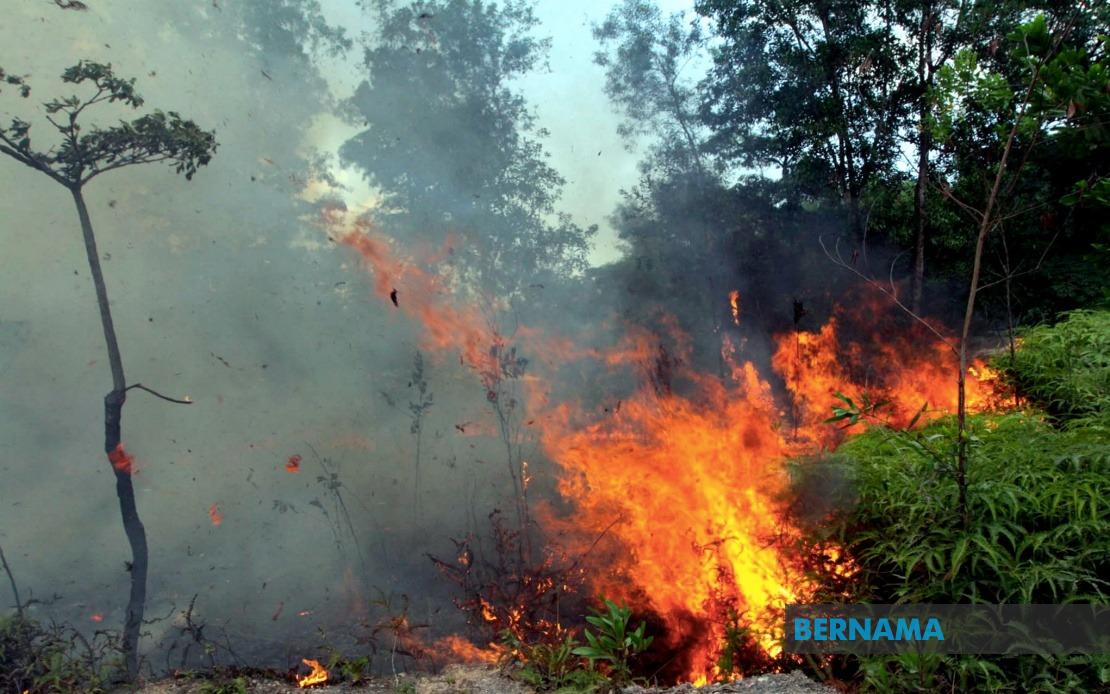
The Malaysian Fire and Rescue Department (JBPM) has sounded an alarm over a dramatic surge in open burning cases sweeping across the nation, revealing that nearly 18,500 incidents involving forests, shrubland and waste materials occurred between January and July this year—a troubling escalation that underscores mounting fire management challenges across the archipelago. The 18,432 recorded cases represent an 85 percent jump compared with the 9,941 incidents documented during the corresponding seven-month period in 2023, signalling a worsening trend that has prompted emergency management officials to activate enhanced surveillance and preparedness protocols nationwide.
Datuk Seri Nor Hisham Mohammad, the JBPM director-general, disclosed during a media briefing that the current trajectory also exceeds the 16,294 cases logged during the first seven months of 2024, further underlining the accelerating nature of the problem. This consecutive year-on-year increase reveals that seasonal and weather-related factors alone cannot fully account for the phenomenon, suggesting that combustible waste management practices, agricultural burning protocols, and inadequate enforcement mechanisms may be contributing substantially to the proliferation of uncontrolled fires across Malaysian territories.
In response to the escalating crisis, JBPM has intensified its geographical surveillance strategy by pinpointing 183 locations nationwide that demonstrate heightened vulnerability to open burning incidents based on historical data spanning the preceding five years. This evidence-based approach to fire risk assessment represents a shift toward predictive rather than purely reactive fire management, allowing authorities to concentrate resources and personnel in zones where ignition sources are most likely to emerge. The concentration of monitoring efforts reflects a recognition that open burning hotspots are not randomly distributed but cluster in specific regions where environmental, demographic and economic factors converge to create persistent fire hazards.
Acute concern centres on 62 of these monitored locations, which JBPM has classified as presenting exceptionally elevated risk due to their potential to generate large-scale conflagrations affecting areas exceeding 25 hectares. At this magnitude, wildfires transcend the capacity of conventional firefighting deployment, overwhelm response team mobility, and threaten to cascade beyond initial burn zones into populated areas and critical infrastructure. The challenge of containing fires of such scale lies not merely in suppressing flames but in coordinating multi-agency response, evacuating civilians, and managing downstream environmental consequences including air quality degradation and smoke-related health emergencies affecting neighbouring states and transnational zones.
The geographical distribution of fire incidents reveals distinct regional patterns demanding tailored intervention strategies. Sarawak currently experiences particularly acute problems, with large-scale burning incidents concentrated in districts including Sri Aman and Mukah, reflecting the state's substantial peat and forest holdings combined with agricultural land conversion pressures. Peninsula Malaysia, while recording greater frequency of incidents, tends to experience relatively smaller individual fires, suggesting different underlying causation patterns related to urban waste management and suburban land clearing activities. This differentiation carries significant implications for resource allocation, as suppressing numerous smaller fires across densely populated areas requires different tactical approaches than combating fewer but larger fires across remote forested terrain.
Sabah presents a particularly complex fire management scenario due to the interaction between its unique vegetation composition and mountainous topography, which collectively accelerate fire propagation and complicate containment efforts. The state's terrain features steep slopes and dense undergrowth that enable flames to spread rapidly across inaccessible zones, creating situations where crews cannot effectively position themselves to establish firebreaks or cut escape routes. Seven high-risk locations identified around Kota Kinabalu during 2024 now form part of the intensive monitoring roster, illustrating how previous fire hotspots frequently recur unless underlying causative factors receive systematic remediation through community engagement, regulatory enforcement, and alternative land management practices.
Meteorological conditions emerge as a principal accelerant of open burning proliferation, with Nor Hisham identifying elevated temperatures in specific regions as a primary driver of increased incident frequency. Hot weather conditions lower fuel moisture content, reduce the energy threshold required to initiate combustion, and accelerate flame propagation once ignition occurs. These atmospheric patterns interact with human behaviour to create dangerous synergies, as individuals may become more careless with fire sources during hot spells, assuming that moisture-depleted vegetation will not sustain flames when in fact the reverse occurs.
The fire crisis unfolds against the looming spectre of the Super El Niño phenomenon, which climatologists anticipate will manifest across the Pacific basin in November and subsequently influence Malaysian weather patterns beginning in the third or fourth week of January next year. JBPM's preparedness framework incorporates these forecasts, acknowledging that El Niño episodes systematically reduce precipitation across Southeast Asia whilst elevating temperatures, thereby prolonging dry seasons and intensifying fire susceptibility across all Malaysian territories. The department's early mobilisation of resources and stockpiling of equipment reflects institutional recognition that El Niño impacts will test response capacity to its maximum and may overwhelm conventional firefighting systems if incidents cluster temporally across multiple states.
The convergence of escalating open burning cases, expanding high-risk zones, geographical concentration in resource-rich but terrain-challenging states, and approaching climatic disturbances creates a complex adaptive challenge requiring coordination across multiple sectors beyond fire services alone. Local authorities responsible for waste management must upgrade collection and disposal infrastructure to reduce the incentive for uncontrolled burning. Agricultural departments must provide farmers with economically viable alternatives to slash-and-burn land preparation. Environmental enforcement agencies must intensify prosecution of deliberate burning whilst maintaining public communication about unintended consequences. Peat and palm oil producing regions require landscape-level fire prevention protocols incorporating community participation, early warning systems, and rapid-response capability.
For Malaysian policymakers and regional observers, the trajectory revealed by JBPM's data underscores that fire management represents not an isolated environmental issue but a systemic challenge intertwining land use policy, waste management infrastructure, agricultural practices, and climate adaptation. The identification of 62 particularly dangerous zones provides a concrete planning framework, yet addressing the underlying drivers of open burning—inadequate disposal alternatives, economic incentives for land clearing, insufficient enforcement resources, and rising temperatures—demands coordinated approaches transcending individual departmental mandates and political boundaries.
The Super El Niño scenario materialising in January creates both urgency and opportunity. In the immediate term, JBPM's heightened surveillance and resource positioning may forestall catastrophic fires if conditions align favourably. Over longer timeframes, the predictable recurrence of El Niño cycles and the documented escalation in baseline burning incidents signal that contemporary fire management frameworks require fundamental restructuring. Malaysian authorities and neighbouring governments sharing transnational smoke impacts must now translate the urgency telegraphed by these statistics into concrete policy reforms, investment commitments, and behavioural changes across communities, industries and agencies.

