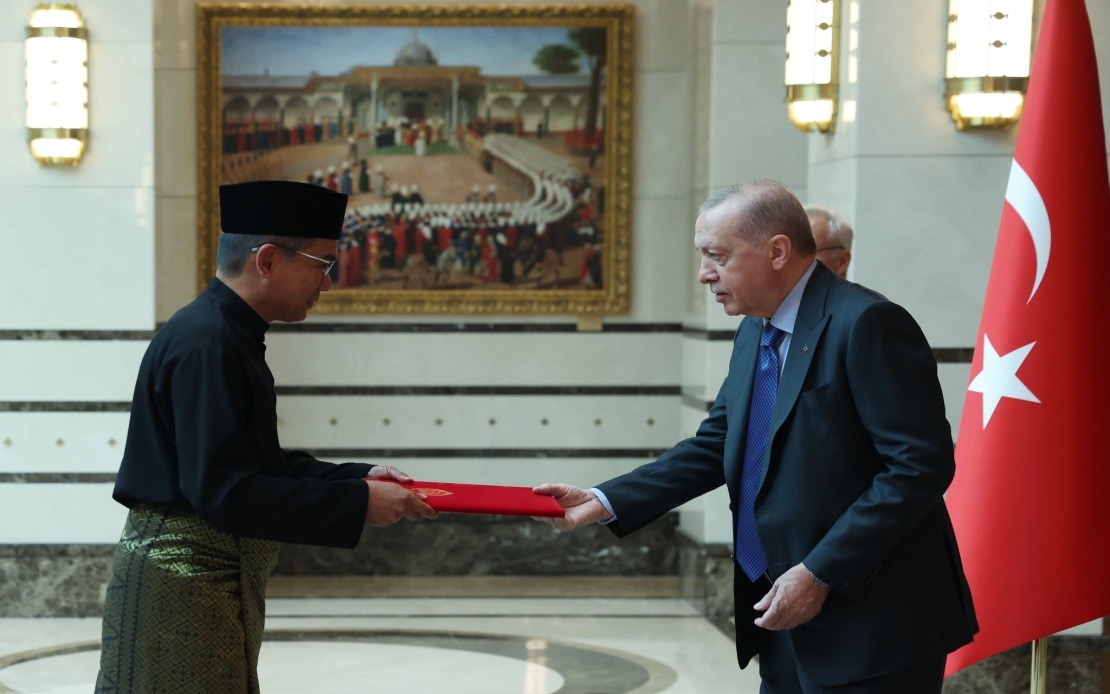
Malaysia has formally declared its backing for Türkiye's aspiration to secure Dialogue Partner status within ASEAN, marking another milestone in the two nations' expanding bilateral relationship. The endorsement was communicated through Malaysian Ambassador to Türkiye Adlan Mohd Shaffieq during his official presentation of credentials to Turkish President Recep Tayyip Erdoğan at the Presidential Complex on June 17, signalling Kuala Lumpur's commitment to strengthening ties with Ankara across multiple domains.
The timing of this diplomatic gesture reflects Malaysia's broader strategic outlook toward fostering deeper engagement with Turkey, a nation that has grown increasingly influential in global affairs spanning the Middle East, Central Asia, and the Mediterranean. By championing Türkiye's dialogue partner application, Malaysia positions itself as a bridge-builder within ASEAN, particularly given its own historic role in advancing the bloc's external partnerships. This move also underscores how Southeast Asian nations are actively cultivating relationships with non-regional powers to enhance their geopolitical leverage and economic opportunities.
Ambassador Shaffieq's presentation emphasised that Türkiye has emerged as a progressively vital partner for Southeast Asia through multifaceted channels. Beyond traditional diplomatic engagement, the ambassador highlighted Turkey's mounting economic investments in the region, its alignment with ASEAN's strategic interests, and the substantial people-to-people connections that have developed between Turkish and Southeast Asian communities. These interconnections have created a foundation for sustained cooperation that extends well beyond symbolic gestures, creating tangible benefits for both sides.
The Malaysian diplomat also conveyed cordial greetings from His Majesty Sultan Ibrahim, King of Malaysia, and Prime Minister Datuk Seri Anwar Ibrahim to the Turkish president, reflecting the highest levels of state protocol and the personal investment Malaysia's leadership places in this partnership. Such ceremonial elements carry substantial diplomatic weight, signalling that Malaysia views its relationship with Türkiye not as transactional but as rooted in genuine mutual respect and shared values. The gesture demonstrates how ceremonial diplomacy remains an effective tool for reinforcing bilateral bonds in contemporary international relations.
Malaysia has consistently underscored its commitment to deepening the longstanding friendship and strategic partnership with Türkiye, a relationship that has been nurtured through regular high-level visits and expanding cooperation in several key sectors. Education stands as one pillar, with growing numbers of Malaysian students pursuing higher education in Turkish universities, while Turkish educational institutions increasingly attract Southeast Asian scholars. Defence cooperation represents another critical area, reflecting shared security concerns and the value both nations place on regional stability. Perhaps most distinctly, the halal industry has emerged as a unique nexus for collaboration, leveraging Malaysia's position as a global halal hub and Türkiye's significant Muslim-majority population and growing halal certification capabilities.
The relationship between Malaysia and Türkiye rests upon foundations of mutual trust and respect, complemented by a shared vision for advancing peace, prosperity, and sustainable development. Both nations have demonstrated their commitment to these principles through concrete actions rather than mere rhetorical flourishes. This alignment becomes particularly significant given the geopolitical complexities facing Southeast Asia and the Eastern Mediterranean, where shared interests in regional stability and economic growth create natural convergence points for cooperation.
Crucially, Ambassador Shaffieq highlighted the personal rapport established between President Erdoğan and Prime Minister Anwar Ibrahim as a catalyst for deeper collaboration. When senior political leaders develop genuine working relationships, such connections often translate into accelerated policy coordination and expanded bilateral initiatives across multiple sectors. The ambassador called for leveraging this personal chemistry to unlock untapped potential in mutual cooperation, suggesting that both leaders are energised by the prospect of elevating the relationship to new heights. This emphasis on personal diplomacy reflects a broader trend in Southeast Asian foreign policy, where individual leaders' commitments often determine the trajectory of bilateral relationships.
Türkey's strategic location spanning Europe and Asia, combined with its growing economic influence and diplomatic activism, makes it an attractive partner for ASEAN nations seeking to diversify their international alignments and reduce dependency on any single power. For Malaysia specifically, Türkiye offers opportunities to strengthen ties within the Organisation of Islamic Cooperation, an important forum for Malaysian foreign policy, while simultaneously accessing Turkish expertise and investments in areas ranging from technology to infrastructure development. The mutual benefits of this partnership extend beyond bilateral relations to shape Malaysia's positioning within broader regional and global architecture.
President Erdoğan's response to the ambassador's presentation reflected Turkish enthusiasm for strengthening commercial relations with Malaysia and the broader ASEAN region. Erdoğan expressed confidence that bilateral trade would continue its upward trajectory, with both nations targeting the ambitious figure of US$10 billion in total trade volume. This specific numerical target demonstrates both countries' seriousness about economic deepening and provides a concrete benchmark against which progress can be measured. Achieving such targets requires not merely political will but sustained effort in reducing trade barriers, facilitating business connections, and addressing practical obstacles that hinder commercial exchange.
The pursuit of Dialogue Partner status within ASEAN would grant Türkiye more structured access to the bloc's decision-making processes and allow it to participate in select ASEAN forums. While this status remains below that of full membership or even some higher-tier partnerships, it provides meaningful entry points for Turkish diplomatic and commercial engagement. For ASEAN, embracing Türkiye as a dialogue partner would deepen the bloc's connections to the Muslim world and Eastern Mediterranean regions, areas of growing strategic importance to Southeast Asia. Malaysia's vocal support for this application carries particular weight given its respected position within ASEAN and its track record as a constructive voice promoting the bloc's engagement with the wider world.
Looking forward, Malaysia's endorsement of Türkiye's dialogue partner aspiration signals broader patterns in Southeast Asian foreign policy characterised by strategic autonomy and active engagement with diverse international partners. Rather than constraining itself within rigid alignments, Malaysia and its ASEAN partners are carefully cultivating relationships with nations that offer concrete benefits across economic, security, and cultural dimensions. Türkiye's case exemplifies how nations outside the traditional Asian power blocs can establish meaningful partnerships with Southeast Asia, provided they demonstrate genuine commitment to respecting regional agency and contributing positively to shared objectives.