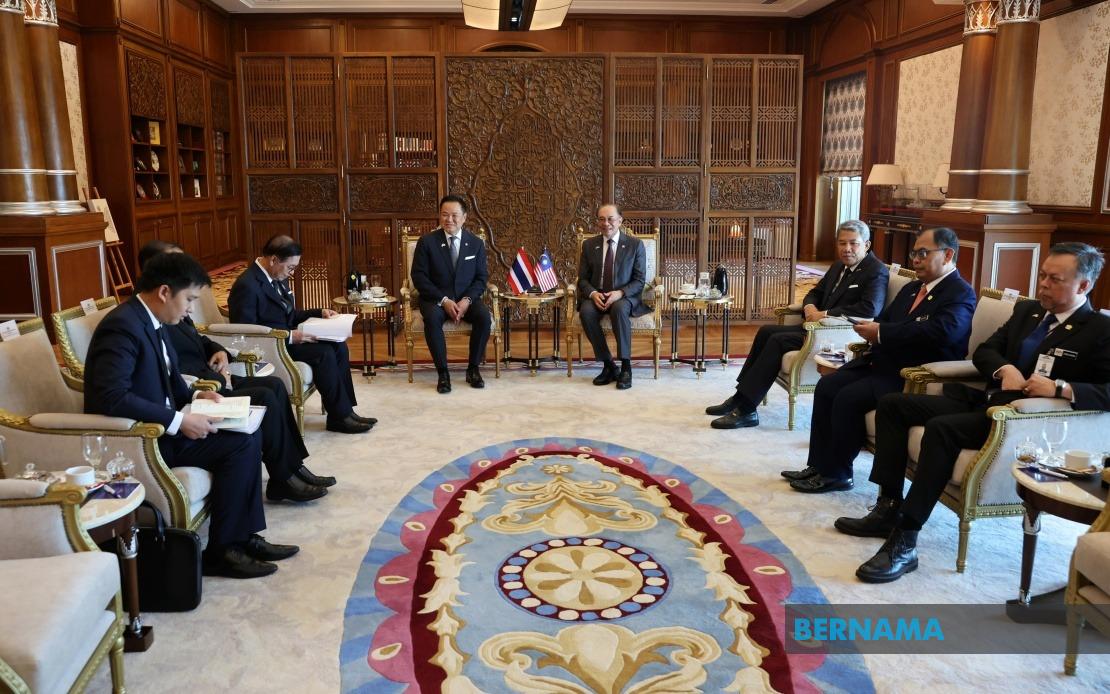
Malaysia has reiterated its diplomatic stance on the protracted Myanmar conflict, with Prime Minister Datuk Seri Anwar Ibrahim emphasising that constructive dialogue remains the most viable pathway towards stability in the troubled nation. Speaking during bilateral discussions with Thai Prime Minister Anutin Charnvirakul on Thursday in Putrajaya, Anwar underscored Malaysia's belief that Myanmar's future must ultimately rest with its own people, while acknowledging Thailand's unique capacity to advance mediation efforts given its direct territorial proximity and historical ties to the country.
The Myanmar crisis has occupied central ground in ASEAN's regional agenda since the February 2021 military coup disrupted the nation's fragile democratic transition. Over three years later, the situation remains volatile, with ongoing violence, humanitarian deterioration, and fracturing state institutions creating instability that threatens the broader Southeast Asian region. Malaysia's positioning as a voice for dialogue reflects the broader ASEAN consensus, embodied in the Five-Point Consensus adopted by the bloc, which calls for immediate cessation of violence, dialogue among all parties, provision of humanitarian assistance, and engagement of a special envoy from ASEAN.
Anwar's comments during the press conference revealed Malaysia's conviction that coercive approaches or external pressure have limited effectiveness in addressing Myanmar's internal complexities. Instead, the Malaysian government favours patient engagement that respects Myanmar's sovereignty while creating diplomatic space for local stakeholders to negotiate their differences. This position aligns with ASEAN's foundational principle of non-interference, though it has occasionally drawn criticism from rights organisations concerned about the region's reluctance to impose stronger accountability measures against the Myanmar military junta.
Thailand's role in any Myanmar resolution carries considerable weight given Bangkok's position as the neighbouring country with the deepest economic and cultural integration with Myanmar. The border regions shared between the two nations host significant refugee and displaced populations, and Thai provinces depend on cross-border trade networks that have deteriorated since the coup. Anwar's recognition of Anutin's perspective on the crisis suggests Malaysia views Thailand as a natural intermediary, capable of leveraging both diplomatic channels and practical incentives to encourage Myanmar's leadership towards negotiation rather than entrenchment.
The bilateral visit itself represented a significant diplomatic moment, marking Anutin's first formal visit to Malaysia since his reappointment as Thai Prime Minister in March 2026. The timing underscores the importance both governments place on coordination within ASEAN on key regional issues. Beyond Myanmar, the discussions encompassed Thailand's ongoing border dispute with Cambodia—a matter where Malaysia expressed its confidence in peaceful resolution and appreciation for Thailand's commitment to maintaining regional stability through dialogue rather than confrontation.
Separately, Anwar acknowledged the collaborative approach Thailand has adopted regarding its sensitive border issues, a stance that Malaysia values as contributing to the broader architecture of ASEAN peace. By publicly endorsing Thailand's measured approach, Malaysia simultaneously reinforced the bloc's collective preference for mediation and established itself as a supportive partner capable of facilitating confidence-building measures among regional states. This diplomatic language carries practical implications for the region, as it signals to other ASEAN members that major stakeholders remain committed to dispute resolution through institutional channels.
The two leaders announced plans to jointly officiate the opening of critical cross-border infrastructure on Friday at Bukit Kayu Hitam in Kedah. The opening ceremony for the Immigration, Customs, Quarantine and Security Complex on the Malaysian side and its corresponding Customs, Immigration and Quarantine facility in Thailand's Sadao district represents tangible progress in deepening bilateral integration and facilitating legitimate trade and people movement. Such infrastructure projects carry symbolic importance in Southeast Asia, demonstrating that despite regional tensions, countries can advance mutual prosperity through cooperation.
Malaysia's approach to Myanmar differs subtly but significantly from positions adopted by some developed nations advocating for tougher sanctions against Myanmar's military establishment. While Malaysia maintains its rhetoric supporting Myanmar's people and their right to self-determination, it does so within a framework that prioritises regional stability and sovereign dialogue rather than external intervention. This positioning reflects Malaysia's own historical sensitivities regarding sovereignty and its recognition that neighbouring states like Myanmar are best motivated by incentives rather than penalties.
The Five-Point Consensus, though modest in scope, remains ASEAN's official framework for Myanmar engagement. It emphasises immediate cessation of violence, constructive dialogue among Myanmar's political actors, humanitarian assistance provision, peaceful mediation through ASEAN, and appointment of a special envoy. However, the consensus has faced criticism for its lack of enforcement mechanisms and for failing to address the military's apparent unwillingness to facilitate genuine political dialogue. Malaysia's continued advocacy for this approach suggests the country believes persistence and patient diplomacy will eventually create openings where more confrontational strategies might entrench positions further.
Thailand's geographic proximity and economic interdependence with Myanmar make it a crucial actor in any resolution scenario. Thai security officials have long expressed concerns about armed groups operating across the border, refugee flows, and the narcotics trade intensifying due to state collapse in Myanmar. By positioning Thailand as a bridge-builder, Anwar's comments reflect Malaysia's understanding that Bangkok has compelling national interests in seeing Myanmar stabilise, making Thailand a naturally motivated mediator rather than an external actor.
Anwar's statements also implicitly acknowledge the limitations of ASEAN collective action, given the bloc's consensus-based decision-making and the reluctance of some members to criticise Myanmar's military leadership. By elevating Thailand's bilateral role, Malaysia may be suggesting that progress on Myanmar might advance more effectively through intensive bilateral engagement between concerned states rather than broad multilateral forums. This tactical approach allows Malaysia to maintain its public commitment to ASEAN principles while recognising practical realities of regional diplomacy.
Looking forward, Malaysia's continued emphasis on dialogue and engagement will likely shape its approach to Myanmar throughout Anwar's tenure. The country's economic ties to Myanmar, though disrupted by the political crisis, remain significant, and Malaysia's business community retains interests in eventual stabilisation. Malaysia's position as a respected ASEAN voice positions it to facilitate discussions and encourage compromise among regional stakeholders seeking to move the Myanmar situation forward without abandoning principles of non-interference and respect for sovereignty.

