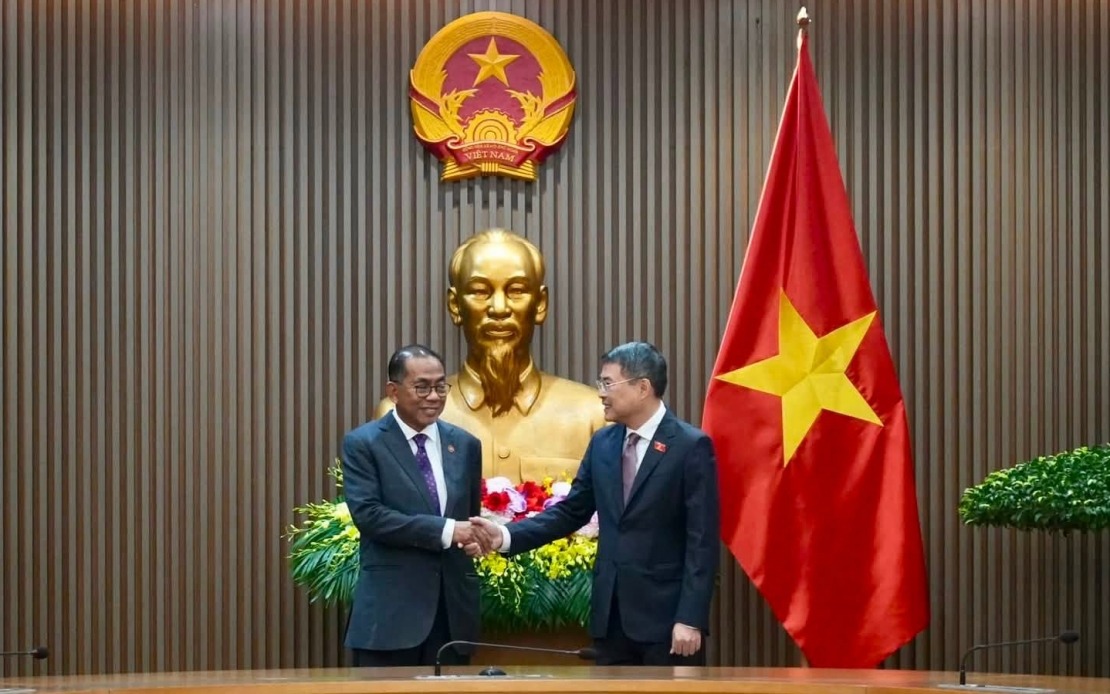
Malaysia and Vietnam have pledged to intensify their defence collaboration, with both nations identifying maritime security, technological advancement and defence industrial cooperation as priority areas for growth. The commitment emerged from discussions between Defence Minister Datuk Seri Mohamed Khaled Nordin and Vietnamese Prime Minister Lê Minh Hưng during an official visit to Hanoi, signalling renewed momentum in a partnership that has been steadily deepening over recent years.
The two countries regard each other as dependable strategic partners within Southeast Asia's evolving security landscape. Mohamed Khaled characterised the relationship as built on shared values and mutual respect for the principles that underpin ASEAN's approach to regional engagement. Both nations have consistently advocated for dialogue-driven solutions to disputes and view diplomacy as the cornerstone of sustained peace and stability across the region. This alignment of perspectives positions Malaysia and Vietnam as natural collaborators on a range of security concerns that transcend bilateral boundaries.
A key institutional framework guiding the partnership is the Memorandum of Understanding on Defence Cooperation signed in 2023. This accord provides a structured pathway for both governments to coordinate efforts across multiple domains, from traditional military ties to emerging areas of mutual concern. The MoU reflects a recognition that modern security threats require sustained, coordinated responses that transcend conventional military engagement. Rather than operating in isolation, the two nations are building mechanisms that allow for continuous dialogue and joint planning at multiple institutional levels.
Maritime security represents a particularly significant focus area for Malaysia-Vietnam cooperation. Both countries have substantial maritime interests and vulnerabilities, with extensive coastlines and exclusive economic zones that require monitoring and protection. The region has experienced increasing incidents involving grey zone activities—assertive but ostensibly non-military actions that blur the lines between peacetime and conflict. Enhanced maritime cooperation allows both nations to share intelligence, coordinate patrols and develop common protocols for responding to incidents that might otherwise escalate tensions or create misunderstandings. For Malaysia, deepening maritime coordination with Vietnam provides additional capacity to monitor the South China Sea and the Straits of Malacca, critical waterways for regional commerce and stability.
Technology transfer and capability development form another pillar of the expanded partnership. As both nations modernise their defence forces, identifying opportunities to collaborate on procurement, training and knowledge-sharing can reduce costs while accelerating capability improvements. This extends to emerging technologies such as artificial intelligence and advanced surveillance systems that are increasingly central to contemporary defence planning. By coordinating technology adoption strategies, Malaysia and Vietnam can avoid redundancy and establish interoperability standards that facilitate seamless cooperation in joint operations or crisis response scenarios.
The defence industrial dimension of the partnership carries particular significance for Malaysia's broader economic objectives. Vietnam's growing defence manufacturing capacity and Malaysia's strategic geographic position create opportunities for industrial collaboration and supply chain integration. Joint ventures in defence production could generate employment, transfer technical expertise and strengthen supply chain resilience—a concern that both nations have highlighted as increasingly urgent given global economic fragmentation and geopolitical tensions.
The security environment facing both countries has become markedly more complex in recent years. Great power competition, particularly involving major external actors, creates pressures and uncertainties that affect regional dynamics. Grey zone tactics—such as aggressive rhetoric, military posturing without formal conflict, and maritime incursions—have become normalised features of regional interaction. Cyber threats pose growing risks to critical infrastructure and military systems alike. Cognitive warfare, involving disinformation campaigns and attempts to manipulate public opinion across borders, represents a relatively new but increasingly consequential threat. Supply chain disruptions, exemplified by pandemic-related shocks and geopolitical tensions, have exposed vulnerabilities in regional economic and defence-industrial networks.
ASEAN's collective response to these multifaceted challenges depends on member states like Malaysia and Vietnam enhancing internal resilience while strengthening cooperative mechanisms. The association's traditional emphasis on non-interference and consensus-based decision-making creates constraints on rapid, coordinated action. However, bilateral and minilateral partnerships that operate within the ASEAN framework allow for more flexible, dynamic responses to emerging threats. The Malaysia-Vietnam engagement exemplifies how individual member states can pursue deeper cooperation while remaining committed to ASEAN principles and consensus processes.
For Malaysian readers, the significance of this partnership extends beyond defence matters narrowly conceived. A stable, secure Southeast Asia underpins conditions for economic development, trade growth and regional prosperity. Vietnam's pivotal geographic position in mainland Southeast Asia makes the country's security posture consequential for Malaysia's overall strategic environment. By cultivating a strong, multifaceted partnership with Vietnam, Malaysia is investing in regional stability and creating frameworks within which bilateral disputes can be managed through dialogue rather than confrontation.
The timing of these discussions also reflects broader regional dynamics. The United States and China continue competing for influence across Southeast Asia, with both powers seeking partnerships with individual nations and collective arrangements through ASEAN and other forums. Malaysia and Vietnam, as significant but non-hegemonic regional players, have incentives to develop strong partnerships with each other as a counterbalance to external pressures and as a means of enhancing their collective voice in regional affairs. Deepened bilateral defence cooperation strengthens each nation's position while demonstrating ASEAN's capacity for internal cohesion and coordinated action.
Looking forward, the implementation of expanded maritime security cooperation and technological collaboration will require sustained commitment from both governments. Defence partnerships often languish when high-level political attention wanes or when practical obstacles emerge during implementation phases. However, the existence of the 2023 MoU and the demonstrated willingness of senior political figures to invest time in these discussions suggest genuine commitment to translating aspirations into concrete cooperative arrangements. For Malaysia and the broader Southeast Asian region, such partnerships represent essential responses to an increasingly challenging security environment.

