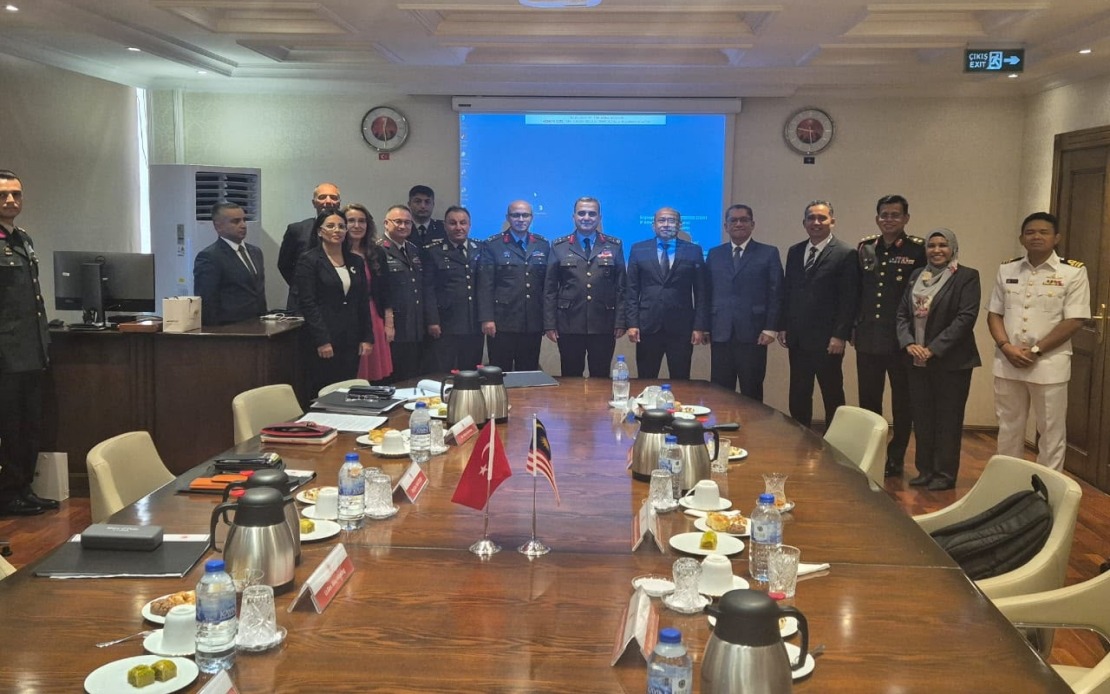
Malaysia and Türkiye have taken a significant step in formalising their defence relationship through an inaugural policy dialogue held at Türkiye's Ministry of National Defence headquarters in Ankara on Monday. The meeting represents a deliberate effort to deepen institutional ties between the two nations and create structured channels for ongoing military and strategic engagement at the policy level.
The Malaysian delegation was led by Datuk Yani Daud, deputy secretary-general of policy at Malaysia's Ministry of Defence, while Türkiye's side was represented by Lt Gen Ilkay Altindag, director-general of defence and security at the Ministry of National Defence. The presence of senior officials from both sides underscores the importance both governments attach to elevating their defence partnership beyond ad hoc cooperation.
The talks encompassed a broad agenda reflective of shared regional concerns. Participants examined defence policy frameworks and long-term strategic planning, discussed pressing geopolitical security challenges affecting both nations and the wider region, and engaged in reciprocal information sharing designed to enhance mutual understanding. A particular focus emerged on the imperative to sustain peace and stability across their respective regions—a theme that resonates deeply with Malaysia's diplomatic priorities in Southeast Asia and Türkiye's strategic interests spanning the Mediterranean, Middle East, and Central Asia.
Malaysia's defence ministry highlighted Ankara's stabilising role in West Asia, specifically commending Türkiye's involvement in the Makkah Pact, a recent diplomatic initiative aimed at de-escalating tensions in the Middle East. This acknowledgment signals Malaysia's appreciation for Türkiye's efforts as a bridge-builder between different spheres of influence and suggests potential alignment on conflict resolution approaches. For Malaysian policymakers, Türkiye's track record as a regional mediator offers valuable lessons applicable to Southeast Asian disputes.
A concrete outcome of the meeting was the agreement to establish Terms of Reference governing the Malaysia-Türkiye Policy Talk framework. This formalisation is significant because it moves the dialogue beyond one-off discussions into an institutionalised mechanism. The TOR will provide clear parameters for examining defence cooperation instruments and identifying potential collaborative programmes, whether in military training, technological exchange, maritime security, or counter-terrorism efforts. Such frameworks are essential for sustaining momentum and ensuring continuity as personnel and administrations change.
The Malaysian delegation extended a formal invitation to Türkiye to participate in the second Policy Talk, which will convene in Kuala Lumpur during 2025. This reciprocal arrangement underscores the bilateral nature of the engagement and demonstrates Malaysia's commitment to hosting substantive discussions on home soil. The shift of venue also carries symbolic weight, signalling that the partnership encompasses genuine two-way interaction rather than one nation deferring to another.
From the perspective of Malaysia's strategic posture, strengthening defence ties with Türkiye aligns with broader objectives outlined in the Defence White Paper's Mid-Term Review. Malaysia has been expanding its defence footprint beyond traditional European and American partners, cultivating relationships with diverse nations across different regions. Türkiye, straddling Europe and Asia, offers Malaysia access to different military technologies, strategic perspectives, and operational approaches that could enhance national defence capabilities.
For Southeast Asia, the Malaysia-Türkiye defence dialogue carries implications for regional security architecture. As Malaysia deepens partnerships with non-traditional defence partners, it contributes to a more multipolar security environment in the region. This diversification reduces over-reliance on any single alliance or security framework and creates opportunities for triangulation in diplomacy. Türkiye's engagement in Southeast Asian affairs, though historically limited compared to Western powers or China, brings a fresh perspective to regional challenges.
The emphasis on regional stability and peace maintenance reflects shared vulnerabilities both nations face. Malaysia confronts maritime security concerns in the Straits of Malacca and South China Sea, while Türkiye navigates complex geopolitical tensions spanning the Eastern Mediterranean, Aegean, and Middle East. Both nations benefit from institutional dialogues that allow candid exchanges on threats, strategies, and potential areas where defence cooperation yields mutual advantage.
The timing of this inaugural dialogue, coming amid global realignments and shifting defence partnerships, suggests Malaysia is proactively shaping its security relationships rather than remaining passive to external currents. By formalising defence policy talks with Türkiye, Malaysia positions itself within a network of nations engaged in constructive security dialogue, strengthening its diplomatic hand in regional and international forums.
Looking ahead, the success of this framework will depend on translating agreements into tangible cooperation—whether through military exchanges, joint training exercises, technology sharing, or collaborative research initiatives. The commitment to hold subsequent talks in Kuala Lumpur indicates both parties view this as a beginning rather than an isolated diplomatic gesture. For Malaysian defence planners and policymakers, the Poland-Türkiye partnership model offers instructive parallels on how institutionalised dialogue can evolve into substantive operational cooperation that enhances national security objectives.

