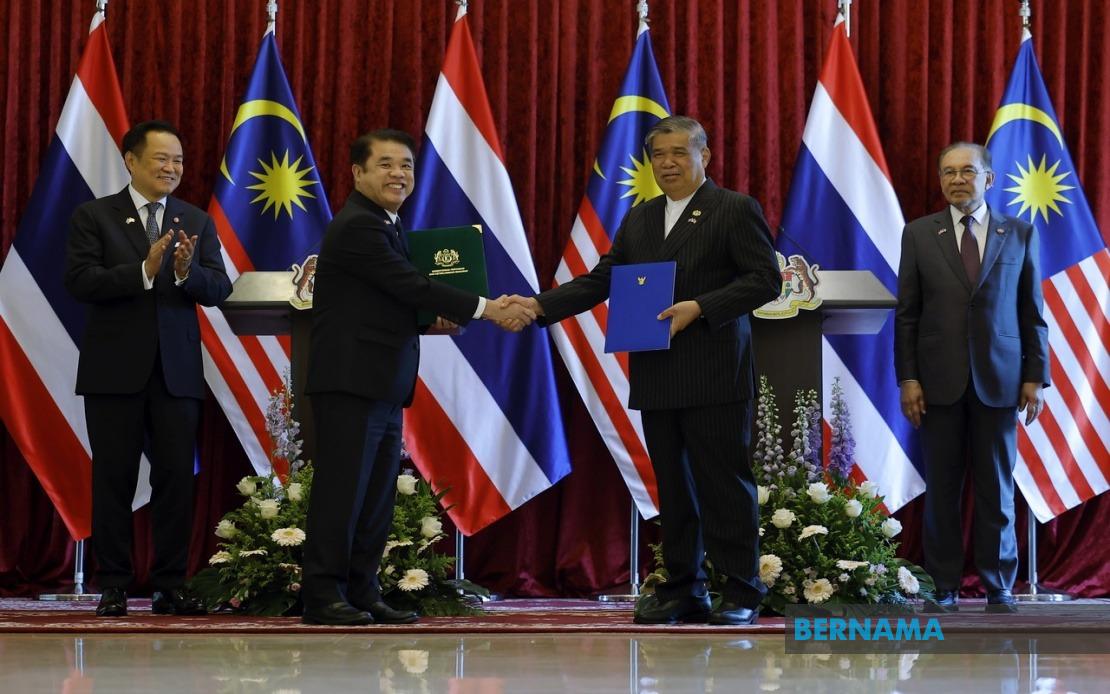
Malaysia and Thailand have moved swiftly to settle long-standing disagreements over fisheries market access and accelerate implementation of a bilateral agricultural cooperation framework, marking a significant diplomatic breakthrough during Thai Prime Minister Anutin Charnvirakul's inaugural official visit to the country. The announcement came during a joint press conference in Putrajaya on July 9, where Malaysian Prime Minister Datuk Seri Anwar Ibrahim and Anutin presided over the exchange of the Memorandum of Understanding on Agricultural Cooperation between Agriculture and Food Security Minister Datuk Seri Mohamad Sabu and Thai Agriculture Minister Suriya Juangroongruangkit.
The resolution of fisheries tensions represents a notable achievement in bilateral negotiations, particularly given the trade frictions that have characterised the relationship in recent months. In early June, Malaysia had implemented stricter import controls on Thai seafood products, requiring Certificates of Analysis for barramundi shipments and imposing temporary restrictions on five specific shrimp species. These measures reflected growing concerns about product quality and compliance standards, but they risked escalating tensions between the neighbouring economies at a time when both nations were seeking to deepen regional cooperation.
Anwar stressed the significance of the agreement by highlighting the substantial acceleration in implementation timelines. Thai negotiators had originally sought a one-and-a-half-month window before the MoU would take legal effect, but Malaysian officials persuaded them to compress this period to just seven days. This compressed timeline underscores Kuala Lumpur's determination to capitalise on the momentum generated by the high-level visit and move rapidly toward tangible cooperative outcomes that can benefit both agricultural sectors.
The agricultural cooperation framework represents a comprehensive institutional arrangement designed to facilitate broader economic integration. The MoU establishes a structured mechanism for collaboration spanning multiple strategic sectors including crop production, livestock management, fisheries development, and agri-food marketing. Beyond these immediate sectors, the agreement encompasses research and development initiatives, technical capacity building programmes, biosecurity protocols, and the harmonisation of sanitary and phytosanitary standards—the regulatory frameworks that frequently create friction points in cross-border agricultural trade.
Thai Prime Minister Anutin characterised food security as a paramount concern in the bilateral relationship, reflecting broader Southeast Asian anxieties about self-sufficiency and supply chain resilience. His emphasis on reaching "amicable solutions" to outstanding market access disputes signals Bangkok's recognition that collaborative approaches yield superior outcomes to protectionist measures. The framework provides both nations with formal institutional channels to address contentious issues before they escalate into trade barriers, establishing what the Malaysian Agriculture Ministry described as a "structured, transparent and continuous mechanism" for resolving disputes.
The bilateral agricultural and agri-food trade relationship has demonstrated robust growth momentum, reaching RM20.33 billion across the calendar year 2025. This substantial figure reflects deep economic interdependency, with Malaysian exporters heavily reliant on Thai markets for premium products including coffee, cocoa, tea, and specialised spices. Conversely, Thai agricultural producers have established significant market share in Malaysia, particularly in meat and processed meat products, creating mutual vulnerability to trade disruptions that makes cooperation economically rational for both parties.
The fisheries sector holds particular significance for this relationship given its contribution to food security and rural livelihoods on both sides of the border. Malaysian restrictions on Thai shrimp and barramundi imports, while justified on quality and safety grounds, threatened to disrupt supply chains that Malaysian importers and downstream processors had developed over years. The rapid resolution achieved during this visit suggests both governments recognised that regulatory concerns could be addressed through transparency and certification rather than import bans, a more constructive approach that maintains trade flows while protecting consumer interests.
From Malaysia's perspective, the swift implementation timeline carries strategic implications. By bringing the MoU into force within days rather than weeks, Kuala Lumpur signals to regional partners that it prioritises pragmatic economic cooperation and is willing to move decisively when agreements are reached. This approach contrasts with the slower institutional pace that sometimes characterises multilateral negotiations, potentially positioning Malaysia as an efficient partner for bilateral economic arrangements across Southeast Asia.
The framework's focus on research and development cooperation also suggests both nations recognise that long-term agricultural competitiveness depends on technological advancement and innovation. Joint R&D initiatives can help both countries develop climate-resilient crop varieties, improve livestock productivity, and enhance aquaculture techniques—investments that yield returns extending far beyond immediate bilateral trade considerations. This developmental orientation indicates the MoU was designed with medium-to-long-term strategic thinking rather than short-term commercial advantage.
Anwar's emphasis on the agreement reflecting "commitment to strengthening food security and expanding bilateral trade" captures the dual logic driving the cooperation framework. Food security remains a pressing concern across Southeast Asia as climate change intensifies agricultural pressures and global supply chains remain vulnerable to disruption. By establishing coordinated mechanisms for agricultural production, trade facilitation, and market access, Malaysia and Thailand are essentially creating a more resilient regional food system that can better absorb shocks to either economy.
The timing of the MoU's advancement also reflects Thailand's diplomatic initiative in strengthening ties with Malaysia, particularly under Anutin's leadership. Bangkok appears interested in deepening engagement across multiple sectors, not merely agricultural cooperation. This visit and its productive outcomes suggest Bangkok is recalibrating its regional diplomacy to emphasise practical partnership with major neighbours, potentially signalling broader shifts in Thai foreign policy priorities.
Looking forward, the agricultural cooperation framework establishes institutional foundations that can be expanded to address emerging challenges such as labour mobility in seasonal agricultural work, climate adaptation strategies, and sustainable farming practices. The success of this MoU will likely influence how Malaysia and Thailand approach cooperation in other sectors, potentially serving as a template for bilateral arrangements that emphasise rapid implementation and structured dispute resolution mechanisms rather than protectionist responses to trade tensions.

