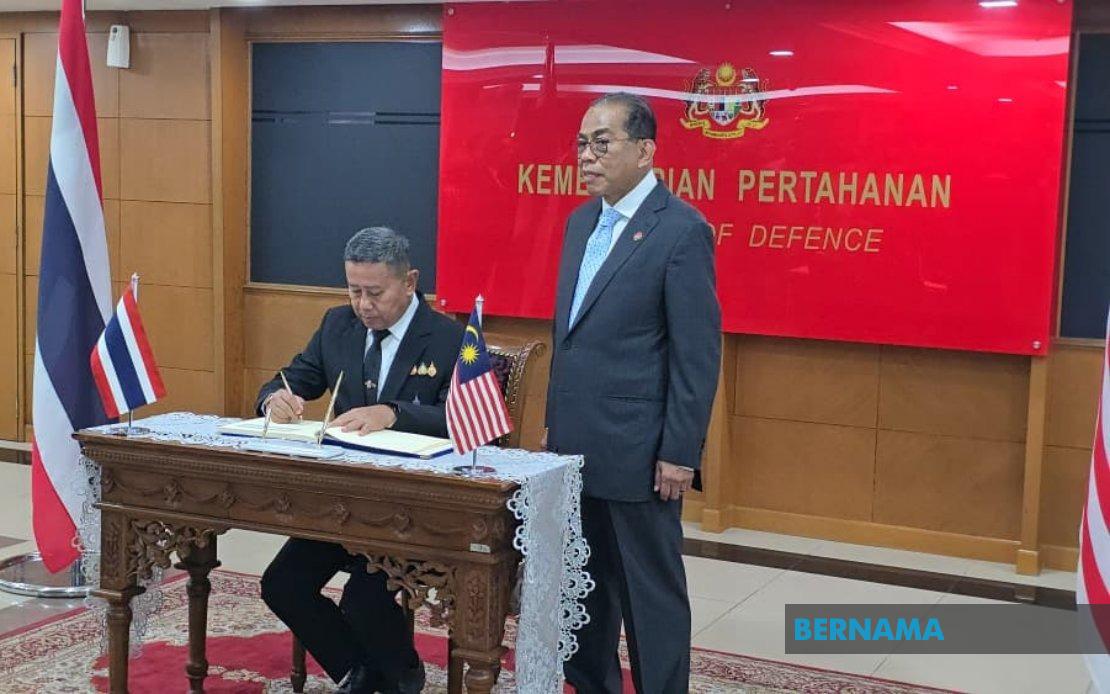
Malaysia and Thailand have pledged to intensify their defence and security collaboration, marking a significant step in fortifying bilateral relations between the two Southeast Asian neighbours. The commitment emerged during substantive discussions between Malaysian Defence Minister Datuk Seri Mohamed Khaled Nordin and his Thai counterpart, Lieutenant General Adul Boonthumjaroen, in Kuala Lumpur. The engagement underscores the strategic importance both nations place on coordinating their military and security postures to address emerging threats and maintain stability across the region.
Lieutenant General Adul's visit to Malaysia, which concluded today, served as an inaugural engagement following his recent appointment as Thailand's Defence Minister. The occasion provided an opportunity for the two defence chiefs to establish rapport and set the trajectory for future cooperation. Mohamed Khaled extended congratulations to Adul on assuming office and voiced optimism regarding Thailand's defence trajectory under the political leadership of Prime Minister Anutin Charnvirakul. Such ceremonial acknowledgements, while diplomatic in nature, signal mutual respect and a desire to work constructively on shared security interests.
The discussions centred on advancing peace and stability across Southeast Asia, a priority that resonates beyond bilateral relations. Both nations recognise that contemporary security challenges—ranging from transnational crime and maritime piracy to cyber threats—require coordinated responses. Malaysia and Thailand, as major regional actors within ASEAN, bear particular responsibility in fostering an environment conducive to prosperity and tranquillity. Their renewed commitment reflects an understanding that unilateral approaches prove insufficient; collective engagement mechanisms strengthen the overall security architecture of the region.
Thailand specifically acknowledged Malaysia's diplomatic efforts in addressing the protracted border tensions between Thailand and Cambodia. This recognition is noteworthy, as it validates Malaysia's role as a neutral facilitator and constructive interlocutor in regional disputes. Malaysia's proactive engagement in encouraging dialogue between conflicting parties demonstrates the country's commitment to conflict prevention and resolution, principles that underpin ASEAN's foundational ethos. By supporting Malaysia's mediation initiatives, Thailand signals acceptance of multilateral problem-solving approaches and reinforces the norm of peaceful settlement of disputes.
The inclusion of a facility visit to the National Aerospace and Defence Industries Group of Companies in Adul's itinerary indicates that bilateral defence cooperation extends beyond diplomatic exchanges into practical, technological, and industrial dimensions. Such visits facilitate knowledge-sharing and enable both nations to identify complementary strengths and potential partnerships. The aerospace and defence sector represents a strategic domain where technological advancement and industrial capacity directly influence national security capabilities. Collaborative opportunities in this sector could yield mutual benefits, from joint research initiatives to supplier relationships and capacity building.
The delegation's exploration of future cooperation avenues during the NADI visit suggests both nations are considering expanded partnerships. Defence industry collaboration can range from equipment procurement and maintenance arrangements to joint training programmes and technology transfer agreements. For Malaysia, such partnerships strengthen indigenous defence capabilities whilst providing opportunities to develop a more robust aerospace and defence industrial base. Thailand benefits similarly from access to expertise and technological innovations that enhance its military modernisation efforts.
The timing of this engagement carries strategic significance within the broader Southeast Asian context. The region faces evolving security pressures, including territorial disputes, maritime challenges, and transnational security threats. Malaysia-Thailand defence cooperation serves as a stabilising force, demonstrating that established ASEAN members can maintain constructive relations whilst addressing shared concerns. This cooperation model could serve as a template for enhanced coordination among other regional states facing similar challenges.
The visit also reflects confidence in Malaysia's defence establishment and diplomatic standing. Thailand's choice to conduct its Defence Minister's initial overseas visit to Malaysia underscores the weight Kuala Lumpur carries in the regional security calculus. It signals that Malaysia remains a preferred partner for substantive defence engagement and continues to exercise influence in shaping regional security narratives and cooperation frameworks. For Malaysian policymakers, this recognition validates existing diplomatic strategies and encourages continued investment in multilateral security architecture.
Looking ahead, the trajectory of Malaysia-Thailand defence cooperation will likely influence broader patterns of regional security engagement. Successful collaboration between these two nations can demonstrate the viability of deepening defence ties within ASEAN frameworks, potentially encouraging similar initiatives among other member states. The emphasis on peaceful resolution of disputes and promotion of regional stability positions both countries as architects of a more secure, prosperous Southeast Asia.
The substantive nature of the discussions, coupled with institutional visits and exploration of industrial partnerships, indicates that this engagement transcends ceremonial diplomacy. Both defence ministers have signalled serious intent to operationalise their commitment through concrete mechanisms and collaborative projects. Whether through joint exercises, training exchanges, or technology partnerships, the coming months will reveal the depth and sustainability of this renewed cooperation. As regional security challenges intensify, the Malaysia-Thailand partnership assumes increasing importance in maintaining equilibrium and advancing collective interests across Southeast Asia.

