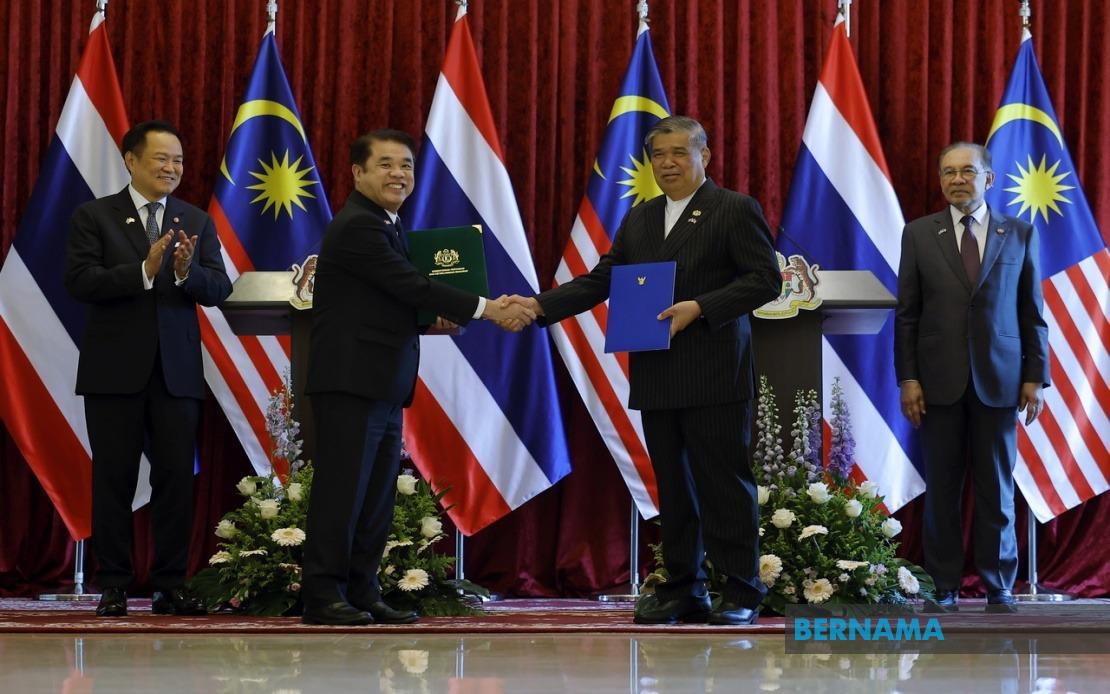
Thailand and Malaysia have moved to substantially deepen their agricultural partnership through a comprehensive framework addressing food security challenges, technology advancement, and workforce capability development. The agreement emerged from high-level bilateral discussions held in Putrajaya between Thai Prime Minister Anutin Charnvirakul and his Malaysian counterpart Datuk Seri Anwar Ibrahim, marking a significant diplomatic engagement that extends well beyond farming into broader regional economic cooperation.
The memorandum of understanding negotiated during the talks encompasses multiple agricultural dimensions critical to both nations' food production systems. The accord specifically targets collaboration across crop cultivation, animal husbandry, commercial fishing, scientific research initiatives, technological knowledge sharing, skilled personnel development, and food supply chain resilience. For Southeast Asia's agricultural sector—where cross-border trade flows and shared water resources create natural interdependencies—such structured cooperation frameworks represent essential infrastructure for managing complex production and distribution challenges.
A particularly significant outcome involved resolving longstanding commercial disputes that had constrained bilateral agricultural trade. Outstanding disagreements regarding market access for shrimp and barramundi seafood products have been settled, opening pathways for expanded exports between the two countries. These specific commodities carry substantial economic weight for both fishing industries and farming communities, particularly in Thailand's coastal provinces and Malaysia's Sabah and Sarawak regions. The resolution reflects recognition by both governments that trade barriers, however historically justified, ultimately disadvantage their respective farming sectors and consumers seeking stable seafood supplies.
The two leaders tasked their agriculture ministers with accelerating implementation of these agreements while prioritizing farmer concerns in both jurisdictions. This ministerial-level accountability mechanism ensures that diplomatic agreements translate into practical outcomes affecting rural livelihoods rather than remaining purely bureaucratic exercises. The emphasis on addressing farmer perspectives underscores how agricultural cooperation operates at ground level, where smallholders and commercial producers depend on predictable market conditions and reasonable export pathways to maintain viable operations and household incomes.
The agricultural compact sits within a substantially broader strategic framework that the two governments have constructed. Thailand and Malaysia simultaneously agreed to intensify cooperation spanning trade flows, foreign investment attraction, tourism development, physical infrastructure connections, and security collaboration. This holistic approach recognizes that agricultural advancement cannot occur in isolation but requires supporting environments across multiple policy domains. Transportation networks, financial systems, security stability, and tourism partnerships all influence how effectively agricultural products flow from producers to consumers across borders.
Both nations have committed to achieving a bilateral trade volume reaching US$30 billion in the coming years, with particular emphasis on supply chain cooperation within food security, energy resources, and sophisticated technology sectors. This ambitious target positions agricultural trade as a central pillar of Malaysia-Thailand economic integration rather than a peripheral concern. Supply chain deepening in food production offers resilience advantages for both populations, reducing vulnerability to external market shocks and creating more stable employment in rural areas where alternative economic opportunities remain limited.
Prime Minister Anutin's visit represented his inaugural bilateral mission to Malaysia since resuming office in March 2026, signaling that agricultural and broader economic cooperation with Malaysia ranks among Thailand's regional priorities. The timing and formality of such high-level engagement communicate to private sector actors and civil society in both nations that government commitment exists at the highest levels. Bilateral relationships at this scale of ambition require sustained political backing, particularly when negotiations involve resolving complex technical issues in agricultural standards, food safety certifications, and tariff classifications.
Both governments have set 2027 as a pivotal moment for their relationship, marking the 70th anniversary of established diplomatic relations between Thailand and Malaysia. This milestone provides a target date for concluding outstanding bilateral agreements and formally launching several cooperative initiatives. The commemoration itself carries symbolic weight in a region where historical continuity and formal acknowledgment of shared journeys hold diplomatic significance, potentially catalyzing public interest in cross-border cooperation and encouraging civil society participation in agricultural exchange programs.
The tangible expression of these commitments will materialize on July 10 when Prime Ministers Anwar and Anutin jointly inaugurate a critical infrastructure project connecting Malaysia's Bukit Kayu Hitam region in Kedah with Thailand's Sadao district. The newly opened thoroughfare links the Immigration, Customs, Quarantine and Security facility on the Malaysian side with its Thai counterpart, a critical connection that directly accelerates agricultural product movement across the border. Physical infrastructure of this nature often represents the most consequential driver of actual trade growth, as it reduces transit times, transportation costs, and administrative friction that disproportionately affect perishable agricultural commodities like seafood products that formed the basis of recent trade dispute resolutions.
For Malaysian agricultural interests, this cooperation framework provides strategic advantages worth careful monitoring. Malaysia's agribusiness sector, particularly in palm oil, rubber, aquaculture, and livestock production, operates in increasingly competitive global markets where regional partnerships offer cost efficiencies and market stability. Access to Thai agricultural technology, research capacity, and market channels strengthens Malaysian producers' competitive positioning. Conversely, Thai farmers benefit from Malaysian market expansion and potential investment flows, creating mutual incentives for sustained cooperation that transcends typical bilateral relationship volatility.
The resolution of shrimp and barramundi trade restrictions carries particular salience for Southeast Asia's fishing communities, who have faced mounting pressure from climate change, overfishing, and market access constraints. Reopening these trade channels acknowledges that commercial fishing represents a crucial livelihood for millions across the region and that nationalist protectionism often inflicts greater damage on fishing communities than international cooperation. The agreements signal recognition that food security in Southeast Asia improves when neighboring countries work collaboratively rather than competitively.
Looking forward, the framework's emphasis on technology transfer and human resource development suggests Malaysia and Thailand envision agricultural modernization as a joint enterprise rather than competition. Research sharing, training programs, and knowledge exchange regarding sustainable production methods, pest management, and climate adaptation will benefit smallholders and commercial operators across both nations. As climate pressures intensify—affecting monsoon patterns, water availability, and crop viability across the region—binational scientific cooperation becomes increasingly valuable for developing resilient farming systems suited to emerging environmental realities.

