Malaysia and South Korea are deepening their defence partnership following a Memorandum of Understanding signed at the Association of South-East Asian Nations (Asean) Summit last October. The agreement goes beyond equipment procurement to encompass technology transfer and industrial development, according to Malaysian Defence Minister Datuk Seri Mohamed Khaled Nordin. Malaysia aims to benefit from South Korea's expertise in aerospace, surveillance systems, cyber security, and advanced manufacturing capabilities.
South Korea's Defence Acquisition Program Administration (DAPA), the government agency overseeing defence manufacturing and acquisitions, has prioritised developing domestic technologies while pursuing international partnerships. Kim Youngdo, a digital communications officer with DAPA, emphasised that such collaborations allow countries to acquire capabilities in areas where they lack expertise. South Korea has already demonstrated this approach through joint ventures, notably the KF-21 multirole fighter jet developed with Indonesia, which began mass production in late March.
Korea Aerospace Industries (KAI) is positioned to expand ties with Malaysia following the delivery of four FA-50M light multirole fighter jets to the Royal Malaysian Air Force scheduled for October. A KAI official highlighted opportunities for Maintenance, Repair, and Overhaul (MRO) programmes that would enable Malaysia to develop local maintenance capabilities over time. Such collaboration could extend beyond military applications to encompass civilian aircraft, aerospace software, artificial intelligence systems, and unmanned aerial vehicles, alongside training and education initiatives.
South Korea is advancing AI applications in defence through its Defence Innovation 4.0 initiative and Future Challenge Defence Technology Project. KAI is developing KAILOT, an AI pilot system for autonomous unmanned aircraft that can operate alongside manned jets in coordinated missions. The company is also creating metaverse-based training platforms and advanced diagnostics systems for aircraft maintenance that comprehensively monitor aircraft components and conditions.
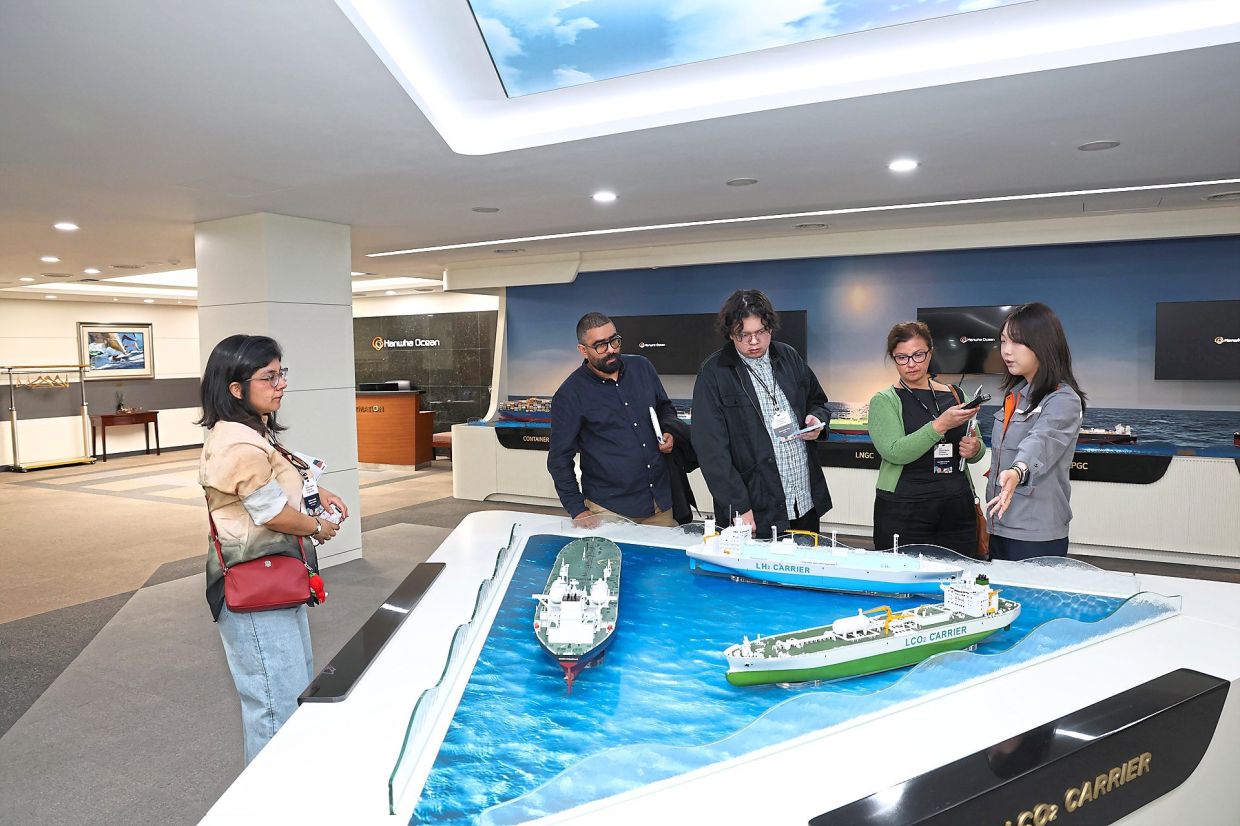
Shipbuilder Hanwha Ocean has integrated cutting-edge technology into its manufacturing processes and workforce development. The company opened a virtual reality simulator centre at its Geoje shipyard in South Korea last year to train personnel in spray painting, blasting, and grinding operations. Trainees progress through customised eight-week VR modules that simulate real-world conditions including equipment specifications, work surface dimensions, and environmental factors, while reducing exposure to hazardous dust and fumes.
Hanwha Ocean also operates a smart shipyard where approximately 90 percent of welding is automated using in-house developed robots, with robotic welding proving four times faster than manual methods. A single operator can manage up to 10 robots simultaneously. The company's KS-III Dosan Ahn Changho submarine programme incorporates diesel-electric propulsion combined with lithium-ion battery technology, enabling underwater operations exceeding three weeks per mission.