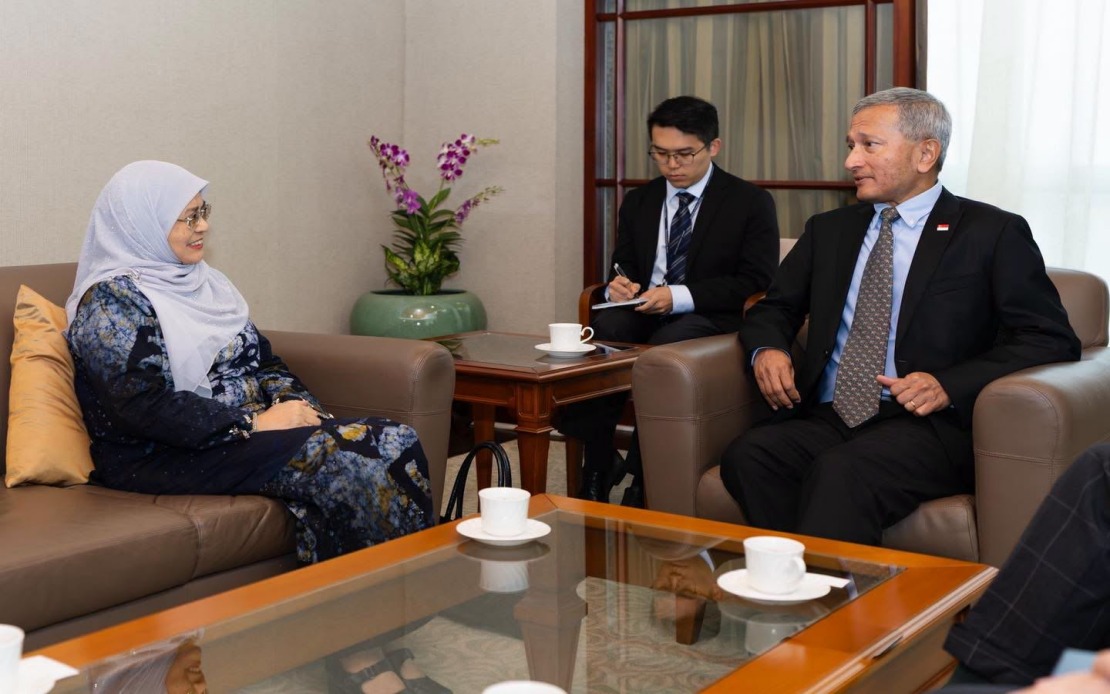
The governments of Malaysia and Singapore have jointly emphasized their dedication to maintaining momentum in their established bilateral relationship and expanding collaboration across multiple economic and social fields. This reaffirmation came during a formal meeting between Singapore's Foreign Minister Dr Vivian Balakrishnan and Datin Paduka Anizan Siti Hajjar Adnin, the newly appointed Malaysian High Commissioner to Singapore, underscoring the continued priority both nations place on their interconnected partnership.
Datin Paduka Anizan commenced her official duties as High Commissioner on July 2, 2026, arriving in Singapore with extensive diplomatic experience accumulated throughout a lengthy career in international relations. Her appointment marks a transition in Malaysia's diplomatic representation on the island nation, with her credentials and track record positioning her to continue the work established by her predecessors in nurturing the complex relationship between these two neighbors.
During their courtesy call, both officials discussed the ongoing importance of bilateral engagement and explored avenues through which cooperation could be expanded to benefit ordinary residents in both countries. This discussion reflected a pragmatic recognition that Malaysia-Singapore ties extend far beyond governmental interactions—they encompass the daily lives of families, workers, entrepreneurs, and communities who maintain livelihoods, employment arrangements, and business operations that span the shared border. Such cross-border dimensions of bilateral relations require consistent attention and policy coordination to function smoothly.
Foreign Minister Balakrishnan characterized the Malaysia-Singapore relationship as fundamentally special, rooted in their shared historical trajectory and reinforced by deep people-to-people connections that have developed over decades. These cultural and human dimensions provide resilience to the partnership, ensuring that bilateral cooperation transcends narrowly defined governmental interests and reflects broader societal interconnectedness. The strength of such grassroots ties distinguishes the Malaysia-Singapore dynamic from many international relationships, creating natural constituencies on both sides that favor continued cooperation.
In his public remarks, Balakrishnan expressed confidence that High Commissioner Anizan would build upon the foundation laid by her predecessors, leveraging her accumulated diplomatic expertise to advance bilateral interests. This language reflects an institutional continuity in Singapore's approach to Malaysia relations—a commitment to sustained engagement rather than episodic crisis management. The emphasis on building upon previous work suggests that Malaysia-Singapore cooperation operates along established pathways that successive representatives refine and develop rather than fundamentally reimagine.
The bilateral relationship encompasses cooperation across diverse sectors including trade, transportation, tourism, environmental management, and security. Both nations benefit from robust economic integration, with significant Singaporean investment in Malaysia and Malaysian workers contributing to Singapore's economy. Regular high-level meetings and consultations through established mechanisms help both governments address emerging challenges and identify new opportunities for mutual benefit.
For Malaysian readers, the significance of stable Singapore relations extends beyond diplomatic protocol. Singapore functions as a critical economic partner and regional financial hub, and maintaining smooth bilateral ties facilitates commerce, employment opportunities, and regional stability. Many Malaysians work in Singapore or maintain business interests there, making the health of bilateral relations directly relevant to household economic welfare and career prospects.
The emphasis during this meeting on exploring ways to improve lives of cross-border residents indicates recognition that practical cooperation matters more than symbolic gestures. Issues such as transport infrastructure, business registration processes, immigration procedures, and regulatory harmonization directly affect individuals navigating both jurisdictions. Governments must continuously work to streamline these interactions, reducing friction and creating environments where commerce and family connections can flourish without unnecessary bureaucratic obstacles.
From a Southeast Asian perspective, Malaysia-Singapore cooperation represents an important stabilizing force in the region. Both nations play significant roles in ASEAN frameworks, and their bilateral relationship sets a tone for regional engagement. Smooth Malaysia-Singapore ties facilitate broader Southeast Asian cooperation, while tensions between them can complicate regional initiatives and create diplomatic complications for other ASEAN members attempting to maintain balanced relationships.
High Commissioner Anizan's appointment also reflects Malaysia's strategic positioning within regional diplomacy. Singapore, despite its small geographic footprint, punches above its weight in international affairs and serves as a crucial node in regional and global networks. Malaysia's diplomatic representation in Singapore therefore carries weight extending beyond bilateral matters, positioning High Commissioners to advance Malaysian interests across multiple regional and international forums where Singapore maintains influence.
The Malaysian High Commission's Facebook announcement of this meeting demonstrates how contemporary diplomatic engagement increasingly incorporates digital communication channels to reach broader audiences beyond traditional media. This approach makes bilateral relations more transparent and helps publics in both nations understand the commitment their governments maintain toward each other, potentially building support for cooperative policies requiring domestic implementation.
Looking forward, the reaffirmation of commitment to bilateral cooperation suggests both governments anticipate continued engagement on existing collaborative frameworks while remaining open to new areas of partnership. As regional economic integration deepens and new challenges—including those related to climate change, digital transformation, and pandemic preparedness—emerge, Malaysia and Singapore will likely identify additional cooperation opportunities that leverage their complementary strengths and geographic proximity for mutual advantage.

