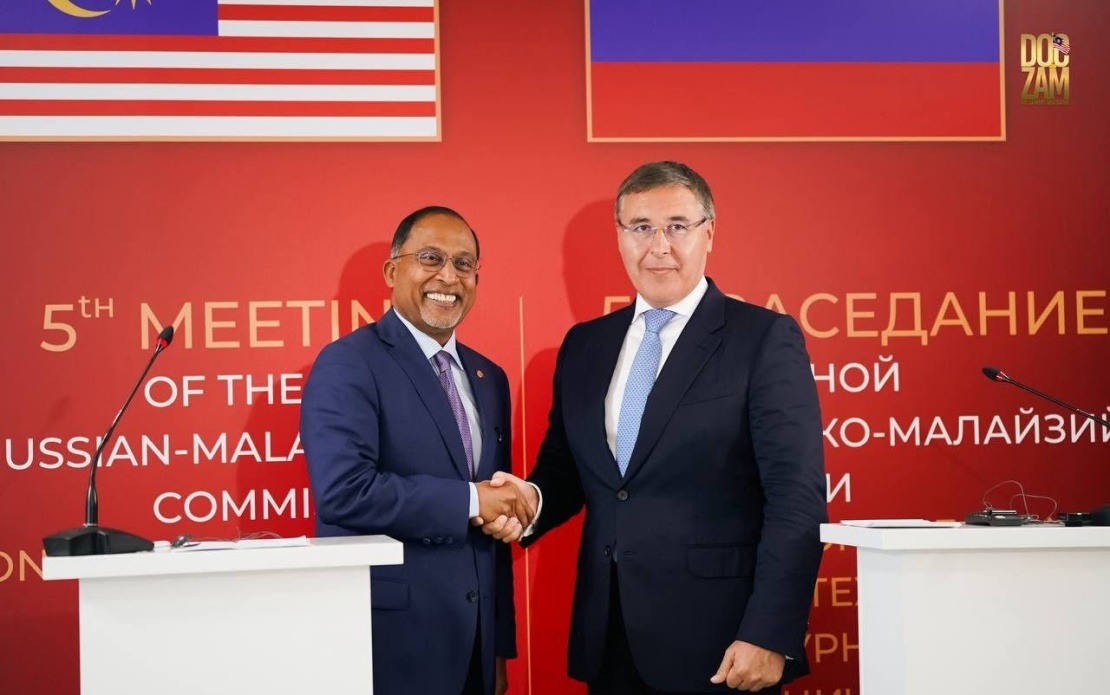
Malaysia and Russia have pledged to finalise a comprehensive 2027 Joint Action Plan by the end of 2024, establishing a roadmap for more structured and results-oriented bilateral cooperation between the two nations. The commitment emerged from the Fifth Meeting of the Malaysia-Russia Joint Commission for Economic, Scientific, Technical and Cultural Cooperation, held in Vladivostok and co-chaired by Malaysian Higher Education Minister Datuk Seri Dr Zambry Abd Kadir and Russian Minister of Science and Higher Education Valery Falkov. The move reflects momentum generated by high-level diplomatic engagement, including interactions between His Majesty Sultan Ibrahim, King of Malaysia, Russian President Vladimir Putin, and Prime Minister Datuk Seri Anwar Ibrahim.
The bilateral framework operates within a broader strategic partnership that both countries are seeking to deepen across multiple sectors. By establishing a formal action plan, Malaysia and Russia signal their intent to move beyond ceremonial exchanges and translate political goodwill into tangible developmental outcomes. For Malaysia, this structured approach offers opportunities to diversify international partnerships while maintaining strategic balance in the region. The timing is significant, as Southeast Asia continues to navigate complex geopolitical dynamics, and Malaysia's engagement with Russia provides an alternative avenue for cooperation independent of Western-dominated frameworks.
In higher education, a cornerstone of Malaysia-Russia relations, Russia will continue allocating 40 government scholarships annually to Malaysian students. This sustained commitment underscores Russia's interest in cultivating human capital networks with Malaysia, fostering long-term people-to-people connections that extend beyond immediate commercial interests. For Malaysian students, these scholarships provide access to world-class institutions in science, technology and engineering disciplines where Russian universities maintain considerable expertise. The educational dimension carries particular weight given Malaysia's emphasis on upskilling its workforce and developing specialised technical capabilities across various sectors.
Both nations have embraced several ambitious academic initiatives designed to broaden collaborative networks among researchers, academics and students. These include the establishment of a Malaysia-Russia Rectors' Forum scheduled for 2027, expansion of the existing MAI-UniKL Russian Aerospace Programme, and creation of a Russia-Malaysia Youth Leadership Summer Camp. Additionally, a Russia-Malaysia Raw Materials Dialogue has been proposed to facilitate knowledge exchange on resource management and industrial applications. Such programmes establish institutional mechanisms for sustained engagement beyond individual bilateral meetings, enabling continuous dialogue and research partnerships that can yield innovations benefiting both nations.
Trade and agricultural cooperation represents another significant pillar of the revitalised partnership. Both countries discussed strategies to expand market access and strengthen commercial linkages, with particular emphasis on fertiliser supply chains including urea imports. For Malaysia, securing reliable and diversified sources of fertilisers is strategically important for maintaining agricultural productivity and supporting national food security objectives. Russia's willingness to engage in this domain offers Malaysian agricultural stakeholders alternative suppliers, reducing dependence on traditional sources and potentially moderating input costs that directly affect domestic farming competitiveness and consumer prices.
Strategic sector cooperation has widened considerably, spanning artificial intelligence, digital technology, smart cities, information security, telecommunications, renewable energy, and liquefied natural gas and liquefied petroleum gas markets. Both countries have also commenced preliminary discussions on peaceful nuclear energy applications, contingent upon compliance with respective legal and regulatory frameworks. This diversification demonstrates that Malaysia-Russia engagement extends beyond traditional areas into emerging technology domains where both nations recognise mutual benefit. For Malaysia, Russian expertise in nuclear science and advanced digitalisation could support the country's broader transformation agenda and long-term energy security planning.
Financial cooperation has progressed through coordination between Bank Negara Malaysia and the Bank of Russia, with discussions encompassing Labuan's potential role as an international financial hub serving ASEAN economies. Islamic finance and digital asset cooperation have also been identified as growth areas where Malaysian expertise in Shariah-compliant financial instruments could complement Russian financial sector development. Such arrangements position Malaysia as a gateway between ASEAN and Russian financial markets while leveraging Labuan's established infrastructure and regulatory environment to facilitate cross-border transactions and investment flows.
Three cooperation agreements were formalised during the meeting, establishing institutional partnerships between Malaysian and Russian universities. These include collaborations between Universiti Teknologi MARA and National Research University Moscow Power Engineering Institute, between UiTM and the Institute of Experimental Medicine, and between Universiti Tun Hussein Onn Malaysia and the State University of Land Use Planning. These agreements create formal channels for academic exchanges, joint research projects and capacity building initiatives that can produce practical outcomes in engineering, medical sciences and urban planning disciplines relevant to both nations' developmental priorities.
Cooperation frameworks have additionally encompassed industrial development, healthcare services, transport infrastructure, green technology applications, climate change mitigation, creative economy initiatives and space sector activities. This expansive approach reflects recognition that contemporary challenges and opportunities transcend traditional sectoral boundaries, requiring integrated solutions drawing on complementary national strengths. Malaysia's position as a Southeast Asian technology hub and Russia's scientific capabilities create synergies particularly valuable in addressing regional climate challenges, advancing sustainable urban development and fostering innovation ecosystems.
Malaysia will host the sixth Malaysia-Russia Joint Commission meeting in 2027, coinciding with the 60th anniversary of diplomatic relations between the countries. This milestone provides symbolic significance and practical opportunity for both nations to assess progress achieved through the 2027 Joint Action Plan, adjust strategies if necessary, and establish frameworks extending cooperation into subsequent decades. The six-decade diplomatic relationship, though not always highly visible in Malaysian media, represents a foundation of consistent engagement that both governments appear determined to strengthen through concrete institutional mechanisms and substantive cooperation across multiple domains.
For regional observers, the deepening Malaysia-Russia partnership reflects broader Southeast Asian positioning to maintain engagement with diverse global powers while advancing national interests. Malaysia's approach demonstrates how smaller nations can leverage multiple partnerships strategically, securing benefits from cooperation with Russia whilst maintaining relationships with other major powers. As the region experiences increasing geopolitical competition, Malaysia's calibrated engagement strategy—combining commitments to ASEAN centrality with bilateral partnerships including Russia—offers a template for balanced international relations that maximises opportunities whilst managing risks inherent in contemporary global dynamics.

