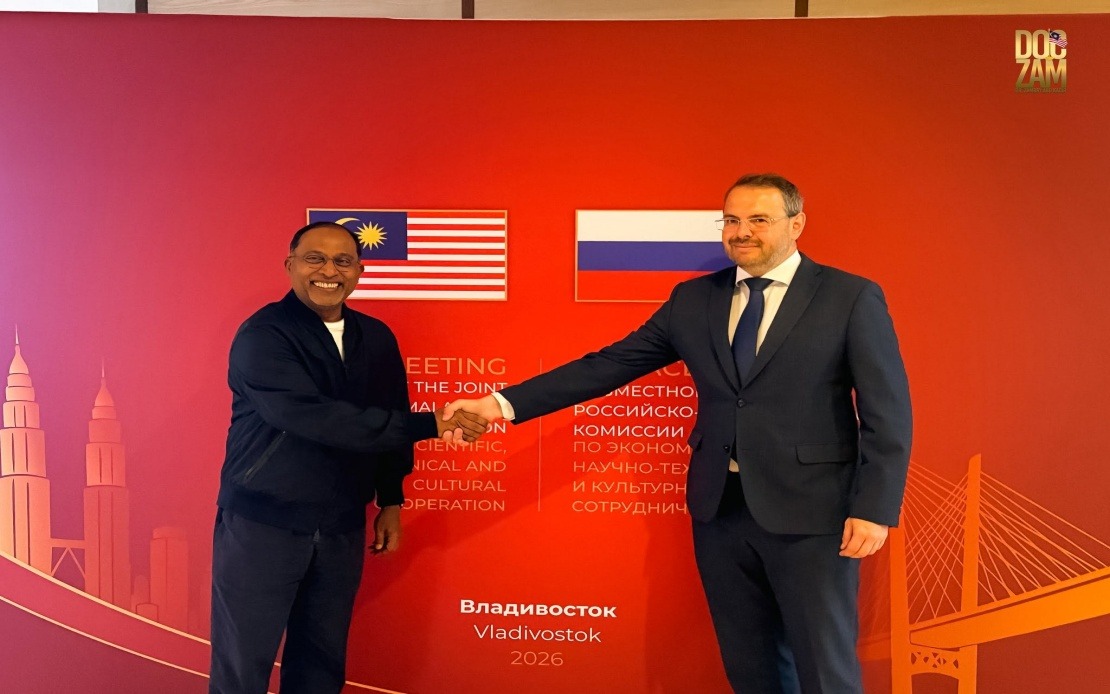
Malaysia's Higher Education Minister Datuk Seri Dr Zambry Abd Kadir is leading a comprehensive delegation to Vladivostok this week for the Fifth Malaysia-Russia JC-ESTC Meeting, signalling both nations' commitment to translating diplomatic relations into tangible economic and academic outcomes. The gathering brings together representatives from 17 Malaysian ministries and agencies, underscoring the breadth of bilateral engagement spanning sectors from energy and agriculture to science and cultural affairs.
The meeting agenda reflects a deliberate shift toward results-driven cooperation. Rather than reaffirming existing ties, Malaysian officials seek to identify fresh opportunities and advance pending initiatives. Zambry emphasised that Malaysia envisions the JC-ESTC—established in 2015—as a platform delivering concrete benefits to ordinary citizens and national economies, transcending ceremonial exchanges of goodwill. This pragmatic approach resonates with regional sentiment that bilateral forums must justify their existence through measurable progress.
Higher education constitutes a cornerstone of the five-day engagement. Malaysia intends to expand student mobility programs, foster direct university partnerships, and establish joint research initiatives spanning science, technology, and emerging fields. Such academic exchange strengthens human capital development and creates pathways for knowledge transfer between institutions in Kuala Lumpur and Moscow. For Malaysian students and researchers, Russian expertise in aerospace, mathematics, and energy sectors presents valuable learning opportunities, while Malaysian strengths in tropical agriculture and digital innovation interest Russian counterparts.
Trade and investment expansion forms another critical discussion point. Both economies recognise complementary capabilities—Russia's energy resources, advanced manufacturing base, and scientific infrastructure align with Malaysia's position as a Southeast Asian economic hub and gateway to ASEAN markets. Deepening commercial ties could unlock opportunities for Malaysian companies in Russian markets while attracting Russian investment into Malaysian renewable energy, technology, and agricultural ventures.
The delegation's composition—involving finance, trade, energy, and science agencies—indicates serious intent to advance sector-specific collaboration beyond government-to-government rhetoric. Specific sectoral working groups can expedite negotiations on joint ventures, technology licensing, and research partnerships that historically move slowly through traditional diplomatic channels. This compartmentalised approach enables faster decision-making and reduces bureaucratic friction.
Zambry's reception by Russian Deputy Minister of Science and Higher Education Konstantin Mogilevsky and scheduled co-chairmanship with Minister Valery Falkov demonstrates equivalent Russian engagement at senior ministerial level. Such parity suggests both governments view this iteration of talks as consequential rather than routine, potentially yielding substantive agreements rather than general statements of intent.
From a Malaysian perspective, strengthening Russian ties addresses strategic diversification in foreign relations. As geopolitical complexities reshape Southeast Asia, Malaysia benefits from maintaining robust partnerships across multiple great powers. Russia offers technological expertise, energy security cooperation, and a counterbalance to competing regional influences. Conversely, Russian engagement with ASEAN's largest Muslim-majority nation signals Moscow's intent to sustain presence in Southeast Asian affairs despite global tensions elsewhere.
The emphasis on identifying "new priority areas for joint implementation" suggests both nations recognise that post-pandemic bilateral relations require recalibration. Previous cooperative frameworks may require updating to reflect evolving technological landscapes, climate imperatives, and economic realities. Areas such as artificial intelligence, renewable energy transitions, and digital economy governance represent frontier topics where Malaysia and Russia might collaborate.
However, translating ambitious meeting outcomes into sustained implementation remains a perennial challenge. Historical bilateral agreements sometimes languish due to competing priorities, financing constraints, or bureaucratic inertia. The JC-ESTC's effectiveness ultimately depends on dedicated follow-up mechanisms, clear accountability for deliverables, and sufficient financial resources allocated by both governments. Malaysian stakeholders should monitor whether post-meeting commitments translate into enrolled students, funded research projects, and operational joint ventures within realistic timeframes.
The Fifth JC-ESTC Meeting arrives during a period of broader regional recalibration. ASEAN nations increasingly seek partnerships with diverse powers rather than gravitating exclusively toward Western or Chinese spheres. Malaysia's engagement with Russia demonstrates this balancing approach while signalling that Southeast Asian nations pursue independent foreign policies calibrated to national interests. For Malaysian businesses, the meeting potentially unlocks access to Russian markets and Russian technology firms seeking Asian expansion.
Looking forward, success hinges on whether this week's discussions yield concrete sectoral partnerships rather than aspirational declarations. Specific initiatives—such as named research collaborations, student scholarship programs with enrollment targets, or joint venture frameworks—would distinguish this meeting from previous iterations. Malaysian officials' explicit focus on outcomes-orientation suggests they recognise such expectations and intend to demand measurable deliverables from Russian counterparts.

