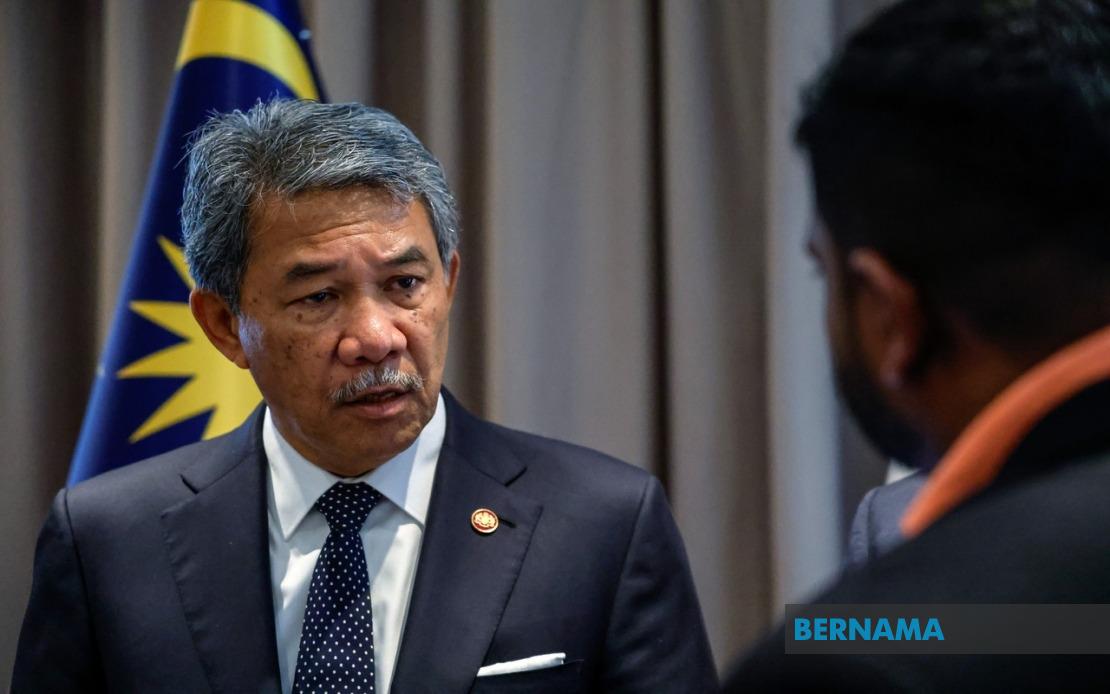
Malaysia and the Philippines have pledged to expedite the homeward movement of more than 5,000 undocumented Philippine migrants currently held in four immigration detention facilities across Sabah, according to discussions held during high-level bilateral meetings in Manila this week. The commitment emerged from talks between Malaysian Foreign Minister Datuk Seri Mohamad Hasan and Philippine Secretary of Foreign Affairs Ma. Theresa P. Lazaro during the 9th Malaysia-Philippines Joint Commission Meeting, highlighting the growing urgency of addressing a humanitarian and administrative challenge that has strained detention capacity on the Malaysian side.
The Philippine Embassy in Kuala Lumpur has already completed initial screening procedures that identified more than 1,000 individuals among the detained population as candidates for immediate repatriation. This preliminary assessment suggests that a substantial portion of the detainees could be returned within a relatively short timeframe, provided the Philippine government mobilises the necessary logistics and transport arrangements. Mohamad emphasised that Malaysia is seeking swift action from Manila to retrieve its nationals through established sea routes or alternative viable methods, underscoring the practical constraints that have made detention centre management increasingly difficult.
The overcrowding situation at these four depots has reached critical levels, making the acceleration of repatriation not merely a matter of diplomatic courtesy but an operational necessity for Malaysian immigration authorities. The detention centres were not designed to accommodate such sustained population pressures, and prolonged stays have created conditions that strain both resources and management capacity. By pressing for faster processing and departure, Malaysia is attempting to relieve immediate logistical bottlenecks while signalling to the Philippines that the situation demands prioritised attention from their side.
Beyond the immediate repatriation challenge, the two nations also explored educational provisions for children of undocumented migrants currently residing in Sabah. Malaysia has agreed to examine whether continued schooling opportunities should be made available to these children prior to their families' return home, acknowledging that children caught in migration situations face particular vulnerabilities. This represents a humanitarian consideration layered atop what might otherwise be purely administrative deportation procedures.
Crucially, any educational framework would need to operate under direct Philippine government management and supervision, ensuring transparency and preventing the emergence of unregulated private institutions that could operate beyond proper oversight mechanisms. Mohamad was explicit in stating Malaysia's opposition to ad-hoc schooling arrangements without formal monitoring structures, reflecting concerns about quality standards and accountability in education provision to migrant populations. This insistence on institutional accountability reflects broader regional anxieties about the management of vulnerable migrant communities.
During the same bilateral engagement, the question of Sabah's sovereignty arose, though Mohamad clarified that it was not formally debated during the Joint Commission Meeting itself. He reiterated Malaysia's established position that Sabah's status as part of Malaysian territory remains internationally recognised and legally settled, specifically referencing the United Nations commission that affirmed Malaysian sovereignty over the territory. This reference to UN validation underscores the depth of institutional support backing Malaysia's territorial claims.
The mention of Sabah's status reflected broader sensitivities triggered by recent statements from Philippine Senator Robin Padilla, who had publicly called upon President Ferdinand Marcos Jr to revive his country's historical claim to Sabah. In response to those provocative remarks, Malaysia had previously indicated its intention to lodge a formal diplomatic note with the Philippines, signalling that such claims were viewed as problematic and contrary to established international law and recognition. The timing of Mohamad's emphasis on these points during the joint commission meeting suggested that while differences exist, both nations continue to engage through established diplomatic channels.
The 9th Malaysia-Philippines Joint Commission Meeting itself serves as a institutionalised mechanism for managing bilateral issues across a spectrum of concerns, from migration and labour matters to security cooperation and territorial recognition. These regular high-level engagements provide both countries with opportunities to address friction points before they escalate into broader diplomatic crises. The willingness of both sides to participate actively in these structured dialogues, even while disagreements persist on certain fundamental questions, demonstrates a commitment to maintaining functional bilateral relations.
For Malaysia, the migration challenge in Sabah represents a long-standing administrative and humanitarian concern that intersects with broader questions about border security, labour market management, and social cohesion. The presence of large undocumented migrant populations affects not only Sabah but also perceptions of stability and governance in the state, making swift repatriation important for local confidence. From the Philippine perspective, accepting the return of its nationals presents both budgetary and administrative challenges, particularly given the scale of numbers involved and the need to reintegrate returning migrants into home communities.
The agreement to accelerate repatriation while simultaneously addressing the educational needs of affected children demonstrates an attempt by both governments to balance efficiency with humanitarian considerations. Rather than pursuing purely punitive approaches to undocumented migration, the two nations appear to be recognising that managed, coordinated returns prove more sustainable than disorganised or contentious deportation procedures. This pragmatic approach may offer lessons for other Southeast Asian nations grappling with similar cross-border migration pressures.
The broader context of Malaysia-Philippines relations includes ongoing cooperation on regional security matters, maritime issues, and people-to-people exchanges, alongside these migration management challenges. While sovereignty disputes and historical claims periodically surface in public discourse, the maintained functionality of bilateral institutions suggests that both governments prioritise practical cooperation over rhetorical confrontation. The acceleration of migrant repatriation, therefore, should be understood not in isolation but as part of a larger framework of bilateral engagement.
Moving forward, the success of accelerated repatriation efforts will largely depend on the Philippine government's ability to marshal resources and coordinate logistics at pace. Malaysia's role will centre on facilitating screening processes, maintaining detention facility operations, and ensuring that agreed-upon arrangements regarding children's education are properly implemented. The coming months will test whether both governments can translate their expressed commitments during the Joint Commission Meeting into tangible improvements in processing speed and humanitarian outcomes for the affected migrants and their families.

