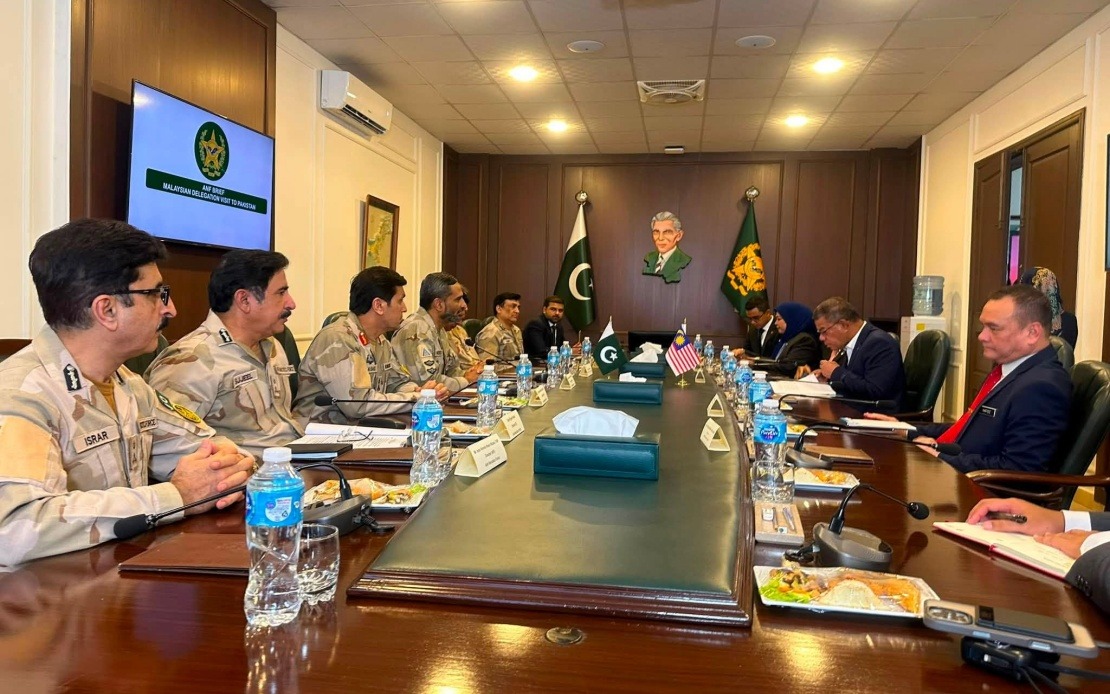
Malaysia and Pakistan are moving to cement their drug-fighting partnership through a structured framework that acknowledges the escalating complexity of international narcotics trafficking. Home Minister Datuk Seri Saifuddin Nasution Ismail outlined the proposed Memorandum of Understanding during a recent visit to Islamabad, signalling both countries' recognition that traditional enforcement approaches alone cannot stem the flow of illicit substances across South and Southeast Asia.
The initiative takes on particular urgency given Pakistan's geographic position astride drug trafficking corridors emanating from Afghanistan. As a transit point for narcotics destined for global markets, Pakistan faces relentless pressure from supply chains that have expanded beyond traditional opium-based products to encompass increasingly potent synthetic alternatives. For Malaysia, which sits at the receiving end of some of these routes, the partnership offers a crucial opportunity to intercept drugs before they saturate domestic markets and feed addiction crises in the region.
During discussions at the Anti-Narcotics Force headquarters in Islamabad with Director-General Major General Abdul Moeed, Saifuddin Nasution emphasised that contemporary drug threats demand responses transcending national boundaries and regional frameworks. The emergence of methamphetamine and other lab-synthesised drugs has fundamentally altered enforcement landscapes, creating criminal enterprises that operate with sophisticated logistics, financial networks, and distribution systems. These organisations exploit geographic distances and regulatory gaps, making unilateral action by any single nation inadequate.
Historical precedent demonstrates the viability of bilateral engagement between the two countries. Between 2012 and 2018, Malaysian and Pakistani authorities jointly coordinated over 28 cases, establishing operational protocols and mutual trust that form the bedrock for expanded collaboration. This track record suggests that formalising cooperation through an MoU can significantly amplify enforcement impact by institutionalising what has previously occurred on an ad-hoc basis.
The proposed framework addresses several operational deficiencies in current arrangements. Most critically, it mandates systematic intelligence sharing rather than episodic information exchanges. Intelligence-led operations require real-time data flows about trafficking movements, manufacturing facilities, financial transactions, and key operatives. By establishing dedicated liaison mechanisms and standardised protocols, both nations can respond more rapidly to emerging threats. The MoU also contemplates coordinated operations where enforcement agencies work in tandem across borders, disrupting supply chains before drugs enter Malaysian territory.
Capacity building forms another pillar of the renewed partnership. Training exchanges between narcotics agencies will expose Malaysian officers to Pakistani expertise in managing the Afghanistan-Pakistan border dynamics, whilst Pakistani counterparts can learn from Malaysia's digital systems and port security innovations. Such knowledge transfer has tangible operational value, as officers gain practical insights into adversary tactics, interdiction techniques, and investigative methodologies refined through experience in different geographic contexts.
The visit also generated broader cooperative outcomes beyond narcotics enforcement. Saifuddin Nasution's discussions with Pakistan's Deputy Prime Minister and Foreign Minister Mohammad Ishaq Dar touched on economic dimensions of the relationship, including trade, investment, and food security arrangements. These conversations highlight how drug-fighting partnerships often intertwine with wider diplomatic engagements. Pakistan's potential as a rice and meat supplier addresses Malaysian food security concerns whilst expanding bilateral trade relationships that strengthen overall bilateral ties.
A significant institutional development emerged from meetings with Pakistan's Interior and Narcotics Control Minister Syed Mohsin Raza Naqvi: the establishment of a Joint Working Group encompassing security, narcotics control, and police training. This multi-dimensional coordination body signals commitment to integrated approaches rather than siloed enforcement efforts. The simultaneous signing of the International Transfer of Prisoners Agreement reflects recognition that transnational criminal networks often involve offenders from multiple jurisdictions, necessitating mechanisms for managing custody and legal proceedings across borders.
The Malaysian delegation's visit to Pakistan's National Database and Registration Authority headquarters introduced digital identity solutions with direct relevance to narcotics enforcement. NADRA's biometric systems, identity databases, and border management technologies offer benchmarking opportunities for Malaysia's Home Ministry. As the MADANI Government pursues digital transformation of public sector services, integrating identity management innovations can enhance law enforcement capacity to track suspicious individuals, verify credentials at border crossings, and coordinate information across agencies. Enhanced digital infrastructure strengthens both security and administrative efficiency.
For Malaysia specifically, this partnership addresses a critical vulnerability in Southeast Asia's drug enforcement landscape. The region remains heavily targeted by trafficking organisations because of perceived regulatory gaps and competing enforcement priorities. By aligning with Pakistan—a frontline state in global narcotics battles—Malaysia signals sophistication in recognising that comprehensive drug control requires engagement with source and transit countries. This approach differs markedly from purely domestically-focused strategies that inevitably prove insufficient against internationally-organised crime.
The timing of this initiative reflects evolving threats in the regional environment. Methamphetamine production in clandestine laboratories has proliferated across Asia, with Myanmar, Thailand, and other locations serving as manufacturing hubs. These drugs penetrate Malaysia through multiple routes, and consumption rates among youth populations have generated public health concerns. Pakistani intelligence regarding source countries, precursor chemical flows, and trafficking networks provides actionable intelligence for Malaysian enforcement agencies seeking to disrupt distribution chains.
Looking forward, the success of this partnership will depend on implementation rigour. Memoranda of understanding often remain aspirational documents without sustained institutional commitment and resource allocation. Both nations must ensure liaison officers maintain regular contact, joint task forces conduct operations with clear mandates, and training exchanges occur systematically. Political support from senior leadership is essential, as is adequate budgeting for coordination mechanisms.
Ultimately, Malaysia's deepening engagement with Pakistan on narcotics reflects a mature understanding that regional security challenges demand multilateral responses. Drug trafficking threatens social stability, fuels violence, and generates organised crime revenue that destabilises governance. By formalising cooperation with a strategic partner confronting similar pressures, Malaysia positions itself within a broader network of nations committed to disrupting transnational criminal enterprises before their products reach vulnerable populations.

