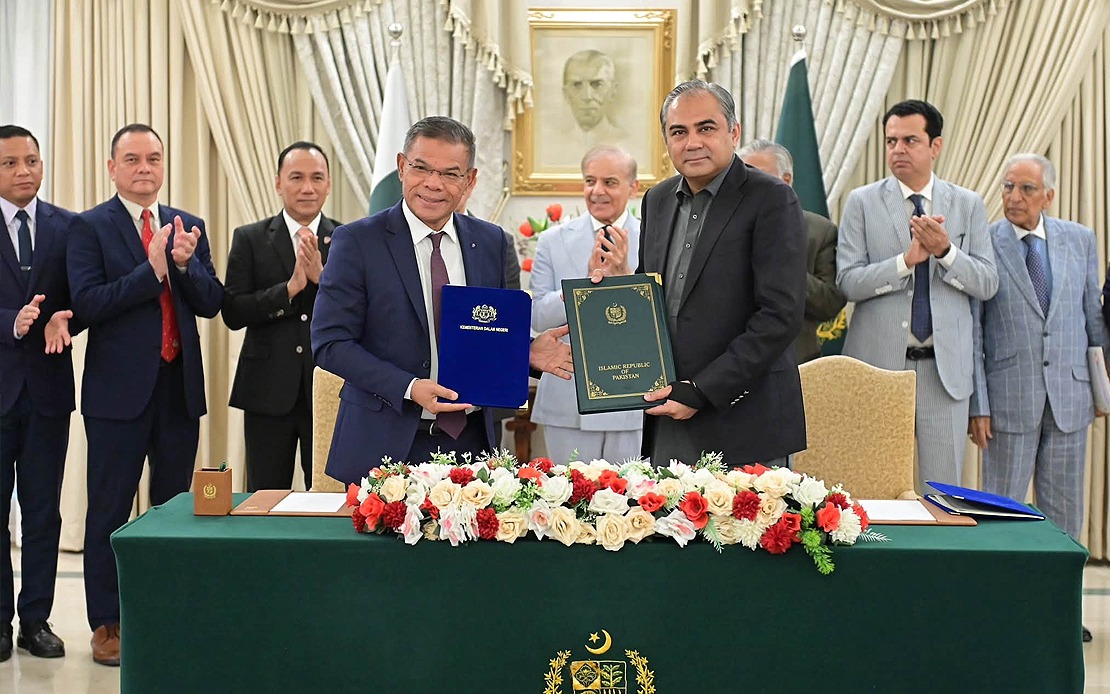
Malaysia and Pakistan have formalized a landmark agreement to facilitate the transfer of prisoners between the two countries, marking a significant expansion of their security and legal cooperation framework. Home Minister Datuk Seri Saifuddin Nasution Ismail and Pakistan's Interior and Narcotics Control Minister Syed Mohsin Raza Naqvi signed the International Transfer of Prisoners (ITOP) Treaty at Pakistan's Prime Minister's Office, with Prime Minister Muhammad Shehbaz Sharif in attendance, underscoring the diplomatic importance both nations attach to the accord.
The treaty represents the culmination of five consecutive rounds of negotiations commenced in September 2025, involving extensive coordination among Malaysia's Home Ministry, Foreign Ministry, Attorney General's Chambers, Malaysian Prisons Department, and Royal Malaysia Police. This intensive negotiation process reflects the complexity of aligning two nations' legal systems, custodial practices, and rehabilitation philosophies to create a mutually beneficial framework. The Malaysian Cabinet had previously granted its endorsement on May 13, clearing the path for the formal signing ceremony.
Under the treaty's provisions, Malaysian nationals currently detained in Pakistani correctional facilities may seek repatriation to complete their remaining sentences within Malaysia's prison system. Simultaneously, Pakistani citizens serving time in Malaysian prisons gain the option to transfer back to Pakistan to fulfill the remainder of their sentences in their country of origin. This reciprocal arrangement addresses a long-standing concern for both governments regarding the welfare and reintegration prospects of their imprisoned citizens abroad.
A central rationale underpinning the agreement is the opportunity for prisoners to undergo rehabilitation and reformation programmes tailored to their cultural contexts and social environments. Saifuddin Nasution emphasized that completing sentences in one's home country creates a more conducive setting for rehabilitation, acknowledging that custodial reform is most effective when aligned with a detainee's cultural framework and familial support systems. This reflects modern penological thinking that prioritizes reintegration and social rehabilitation over purely punitive approaches to incarceration.
For Malaysia, the treaty carries particular significance given the country's existing relationship with Pakistan as a fellow Muslim-majority nation and longstanding diplomatic partner in South Asia. The accord complements Malaysia's broader engagement strategy in the region, reinforcing institutional connections that extend beyond trade and investment into crucial domains of law enforcement and justice administration. It positions Malaysia as a progressive actor willing to adopt international best practices in prisoner management and bilateral cooperation.
The timing of this agreement also reflects both governments' recognition that transnational crime and cross-border legal challenges require modern, cooperative solutions. As populations become increasingly mobile and crime increasingly international in character, bilateral mechanisms for managing imprisoned nationals have become essential components of contemporary state-to-state relations. Malaysia's approach mirrors similar arrangements established with other key partners, expanding a network of legal cooperation agreements that facilitate coordinated responses to security challenges.
From a practical perspective, the treaty addresses humanitarian concerns surrounding foreign prisoners. Individuals detained far from their families face severe psychological and social hardships that can complicate their rehabilitation prospects. By enabling transfer to home countries, both Malaysia and Pakistan demonstrate commitment to humane treatment principles while simultaneously reducing the administrative and financial burden of housing foreign nationals in their respective prison systems. Malaysian prisons, which face significant overcrowding in certain facilities, may experience marginal relief through the repatriation of Pakistani prisoners.
The agreement also strengthens Malaysia's diplomatic footprint in South Asia at a time when regional dynamics are increasingly complex. Pakistan, as the second-largest Muslim-majority nation globally and a critical player in South Asian geopolitics, represents an important counterpart for Malaysia's foreign policy objectives. Expanding cooperation across security and justice administration reinforces the bilateral relationship and creates additional channels for dialogue on matters of mutual concern, from counterterrorism to transnational organized crime.
Saifuddin Nasution characterized the treaty as another important milestone in Malaysia-Pakistan relations, emphasizing both countries' mutual commitment to deepening cooperation benefiting their respective populations. This positioning reflects a broader diplomatic narrative wherein such legal instruments are portrayed not merely as procedural arrangements but as expressions of goodwill and shared values. The language used in official statements underscores how bilateral agreements increasingly serve as symbols of partnership extending beyond immediate practical benefits.
For Southeast Asian observers, Malaysia's proactive approach to establishing prisoner transfer agreements demonstrates the region's gradual adoption of international norms and best practices in criminal justice cooperation. As ASEAN nations continue developing institutional capacity and refining bilateral relationships, such agreements exemplify the type of practical legal cooperation that underpins regional stability and deepens institutional integration. The treaty also signals to other potential partners that Malaysia is actively building a comprehensive framework of bilateral legal cooperation agreements.
Looking ahead, the treaty's implementation will require careful coordination between Malaysian and Pakistani authorities to ensure seamless prisoner transfers, appropriate documentation, and respect for each nation's legal procedures. The agreement's success will likely influence future similar arrangements and serve as a template for other bilateral partnerships. Both countries have now established a precedent for cooperation in this sensitive domain, potentially paving the way for expanded collaboration in adjacent areas such as extradition procedures or mutual legal assistance in criminal investigations.

