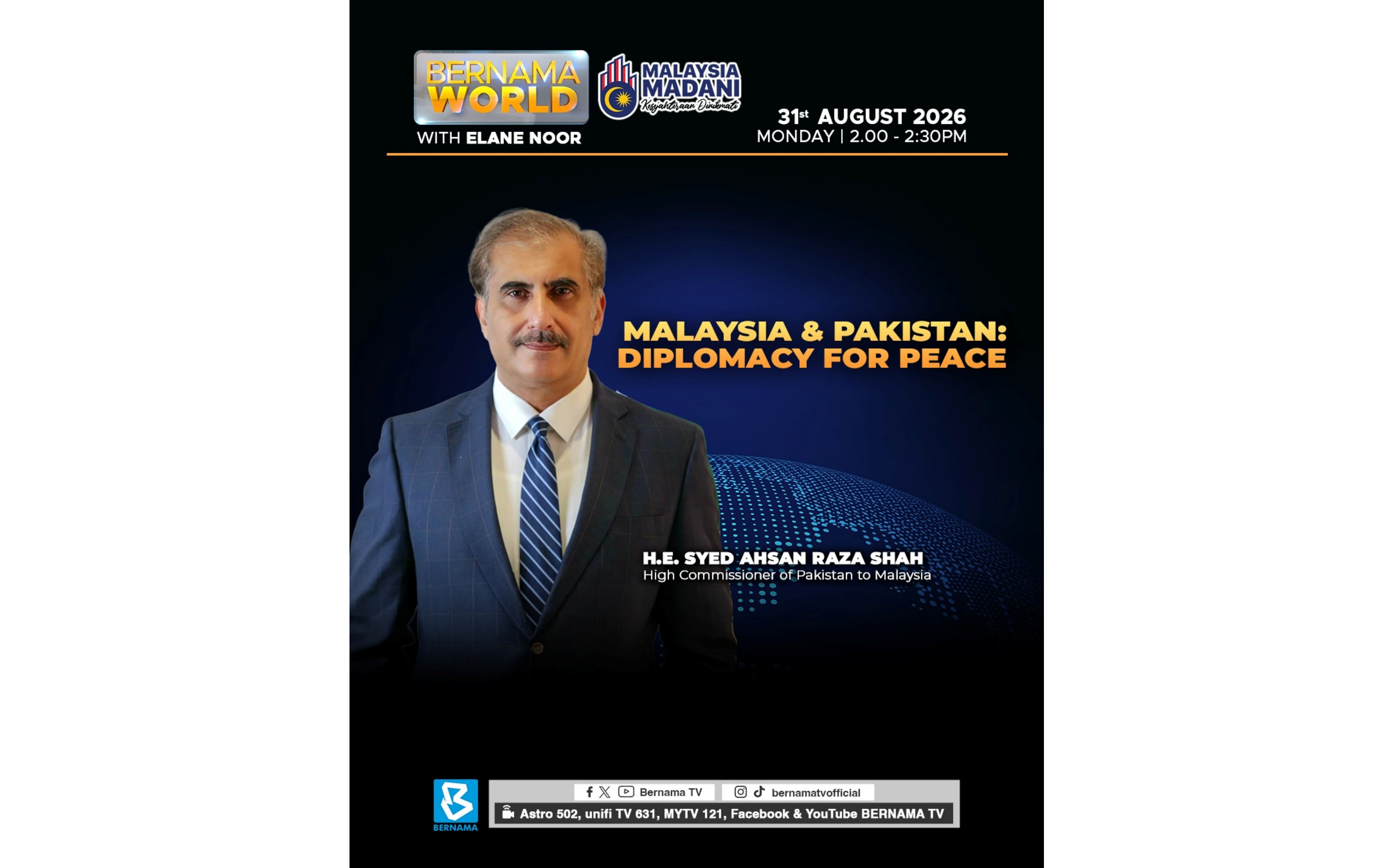
As tensions simmer across multiple flashpoints globally, Pakistan's High Commissioner to Malaysia Syed Ahsan Raza Shah has made a compelling case for deeper collaboration between the two countries on conflict resolution and diplomatic mediation. Speaking during an interview, he characterised such cooperation not merely as a courtesy between allies but as a "strategic necessity" in an increasingly fractious international landscape where geopolitical rivalries threaten both regional and global peace.
The High Commissioner's comments underscore a growing recognition in diplomatic circles that countries positioned at critical junctures of international affairs must leverage their unique vantage points and accumulated experience. Both Malaysia and Pakistan occupy pivotal geopolitical locations—Malaysia straddling key sea lanes and ASEAN's strategic deliberations, Pakistan sitting at the crossroads of South Asian, Middle Eastern, and Central Asian interests—making their combined diplomatic toolkit particularly valuable. This positioning has historically afforded both nations influence disproportionate to their size, an advantage that becomes more pronounced when deployed in concert rather than isolation.
Syed Ahsan highlighted concrete examples of this mediation prowess. He pointed to Malaysia's intervention in the Thailand-Cambodia border dispute, where Prime Minister Datuk Seri Anwar Ibrahim's measured approach during heightened military tensions helped prevent escalation at a time when ASEAN's institutional mechanisms faced considerable strain. The subsequent Kuala Lumpur pact represented a diplomatic success that demonstrated Malaysia's capacity to facilitate compromise among contentious neighbours. Simultaneously, he referenced Pakistan's facilitation between the United States and Iran, two nations whose mutual suspicion and ideological opposition had rendered direct communication nearly impossible. Pakistan's unique position—as a neighbour to Iran with deep historical bonds while maintaining a substantial strategic relationship with Washington—enabled Islamabad to bridge a gap that few other countries could credibly navigate. The High Commissioner expressed evident pride in what he termed the "Islamabad accord", viewing it as validation of Pakistan's mediation capabilities.
The fundamental challenge facing contemporary diplomacy, according to Syed Ahsan, lies in adapting methodologies to what Prime Minister Anwar has characterised as "post-normal times." This phrase captures an era where traditional diplomatic frameworks struggle to address novel configurations of conflict, where state and non-state actors blur boundaries, and where economic interdependence paradoxically coexists with ideological polarisation. The High Commissioner argued that conflict resolution, diplomacy, and mediation operate through distinct logics requiring different skill sets. Rather than approaching each situation with a standardised toolkit, mediators must demonstrate flexibility and willingness to learn from their peers' experiences.
Central to effective mediation, Syed Ahsan emphasised, is the cultivation and maintenance of trust among all disputants. No mediator, regardless of resources or diplomatic acumen, can facilitate progress if the parties involved question their impartiality or doubt their genuine commitment to equitable resolution. This principle takes on particular importance in contexts where historical grievances run deep and suspicion between rivals remains entrenched. A mediator perceived as harbouring hidden agendas or favouring one party inevitably becomes a liability rather than an asset to negotiations. Malaysia and Pakistan, having operated in different regional contexts and with distinct sets of interlocutors, have each developed nuanced understandings of how to build and preserve this essential trust.
Equally important is the recognition that conflict resolution unfolds through incremental progress rather than dramatic breakthroughs. Syed Ahsan cautioned against the temptation to seek wholesale resolution through single grand meetings or negotiations. Instead, he advocated for patience, persistence, and a willingness to absorb rhetorical provocations without allowing them to derail the underlying diplomatic process. This gradualist approach contradicts the media's preference for dramatic turning points, yet decades of successful mediation efforts demonstrate its efficacy. Small concessions, confidence-building measures, and incremental steps toward understanding often prove more durable than sweeping agreements reached under pressure.
The High Commissioner also spotlighted a crucial but often underappreciated dimension of diplomatic success: the personal rapport that senior leaders establish with their international counterparts. Prime Minister Anwar Ibrahim, in Syed Ahsan's assessment, possesses an exceptional ability to forge genuine connections with foreign leaders across ideological divides and cultural boundaries. This interpersonal skill cannot be manufactured through protocol or bureaucratic procedures; it reflects authentic engagement and mutual respect. Such relationships fundamentally alter the tenor of negotiations, creating space for compromise that rigid institutional channels might never permit. When leaders trust one another personally, they prove more willing to take risks for peace, knowing their counterparts will honour commitments made in confidence.
Beyond bilateral concerns, Syed Ahsan raised a sobering warning about the interconnected nature of contemporary conflicts. No dispute, however geographically distant, remains truly localised in its consequences. A conflict erupting in one region invariably generates economic, strategic, and security reverberations elsewhere, creating cascading effects that eventually reach Malaysia and other Southeast Asian nations. The disruption of trade routes stemming from regional instability, the displacement of populations seeking refuge, the diversion of diplomatic attention from Southeast Asian concerns—all demonstrate how foreign conflicts impose costs on countries far removed from the original dispute. This reality makes investment in global conflict prevention and mediation capacity a form of rational self-interest for countries like Malaysia, not merely an expression of humanitarian concern.
The High Commissioner's broader argument suggests that Malaysia and Pakistan occupy a shared interest in stabilising the international order precisely because destabilisation imposes disproportionate costs on mid-sized powers lacking the resources to insulate themselves from global disruptions. Conversely, their combined diplomatic efforts, informed by hard-won experience and deployed with strategic coordination, could help prevent escalation in emerging hotspots. The question facing both governments is whether they possess the institutional will and political commitment to translate this theoretical possibility into concrete mechanisms for ongoing consultation, knowledge-sharing, and coordinated mediation efforts. The international environment of the coming decade will likely test this resolve repeatedly.

