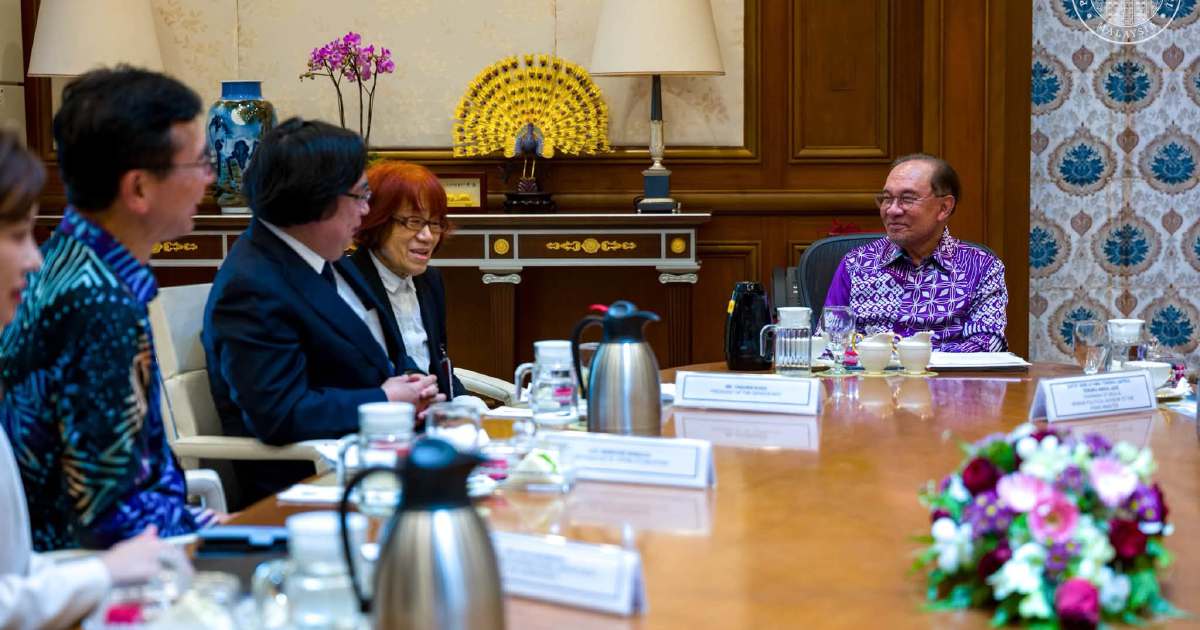
Prime Minister Datuk Seri Anwar Ibrahim has received a courtesy visit from Yasushi Kudo, president of Genron NPO, a Japanese think tank focused on policy research and international dialogue. The meeting in Kuala Lumpur centred on avenues for reinforcing the strategic partnership between Malaysia and Japan, reflecting ongoing efforts to expand cooperation across multiple sectors.
Genron NPO, formally known as the Japan Policy Research Institute, plays a significant role in Japanese public policy advocacy and international relations. The organization brings together political leaders, intellectuals, and business figures to deliberate on critical national and global issues. Kudo's visit to Malaysia underscores Japan's continued interest in deepening its engagement with Southeast Asia's third-largest economy and a key partner within ASEAN.
The timing of this engagement carries particular weight given Malaysia's strategic location and role in regional stability. As a maritime nation controlling crucial shipping routes and home to one of Asia's most dynamic economies, Malaysia occupies an important position in Japanese foreign policy calculations. Enhanced bilateral dialogue between think tanks and government representatives can facilitate better mutual understanding and create pathways for addressing shared challenges.
During the meeting, both parties likely examined opportunities for broadening Malaysia-Japan cooperation beyond traditional trade and investment frameworks. Think tanks such as Genron NPO often serve as channels through which governments can explore sensitive diplomatic issues and test policy approaches before formal implementation. Their involvement signals that Malaysia and Japan view their relationship as multifaceted, encompassing not only economic and diplomatic dimensions but also intellectual and cultural exchanges.
Malaysia and Japan have long maintained cordial relations rooted in post-war bilateral agreements and deepening economic interdependence. Japanese investment in Malaysian manufacturing, particularly in the automotive and electronics sectors, has been substantial. Japanese companies have established significant presence in Malaysia's industrial zones and have contributed meaningfully to the country's export-oriented economy. These economic ties provide a solid foundation upon which political and strategic cooperation can be built.
The emphasis on strengthening strategic dialogue suggests both nations recognize the importance of regular, high-level communication to navigate the complexities of regional geopolitics. Southeast Asia faces evolving challenges including maritime security concerns, climate change adaptation, and economic resilience in uncertain global conditions. Japan, as a leading regional stakeholder, has invested significantly in ASEAN through aid programmes, infrastructure projects, and security partnerships. Malaysia's proactive engagement with Japanese policy think tanks demonstrates commitment to informed decision-making.
From Malaysia's perspective, closer ties with Japan offer multiple benefits. Japan ranks among the world's most advanced economies with cutting-edge technology and management expertise that could benefit Malaysian industries. Additionally, Japan's emphasis on rules-based international order and peaceful resolution of disputes aligns with Malaysia's ASEAN-centric foreign policy approach. Strengthening dialogue with Japanese institutions helps Malaysia better understand regional dynamics and coordinate responses to common challenges.
Genron NPO's engagement also reflects broader Japanese efforts to strengthen what Tokyo terms its "free and open Indo-Pacific" strategy. This framework emphasizes partnership with like-minded nations to maintain stability and prosperity in Asia. Malaysia, with its ASEAN presidency and non-aligned foreign policy tradition, represents an important bridge between established powers and the broader developing world. Through organizations like Genron NPO, Japan can build consensus and strengthen intellectual ties with regional partners.
The courtesy call format employed indicates respect for established diplomatic protocols while creating informal space for substantive discussion. Such engagements often prove valuable for establishing personal relationships between key figures, which can facilitate smoother official interactions subsequently. Think tank leaders frequently maintain influence over policy formation and public opinion in their home countries, making their international engagement strategically important.
Moving forward, this meeting may lay groundwork for expanded cooperation between Malaysian and Japanese institutions. Enhanced academic exchanges, joint research initiatives, and regular dialogue forums could emerge from this engagement. Such frameworks would position both nations to collectively address regional issues while strengthening their bilateral relationship.
The emphasis on strengthening Malaysia-Japan ties reflects recognition that Southeast Asian stability depends significantly on constructive engagement between ASEAN members and major external partners. As regional dynamics continue evolving, the intellectual contributions from think tanks like Genron NPO will remain valuable in shaping informed, nuanced approaches to complex geopolitical questions. Malaysia's openness to such engagement demonstrates its commitment to pragmatic diplomacy and evidence-based policymaking in an increasingly interconnected world.

