Malaysia and Japan are taking concrete steps to deepen their strategic partnership across critical economic and environmental sectors, with high-level officials from both nations meeting this week to accelerate cooperation on rare earth elements, critical minerals, and climate initiatives. The engagement reflects the growing importance of these domains to regional stability and economic competitiveness in Southeast Asia and beyond.
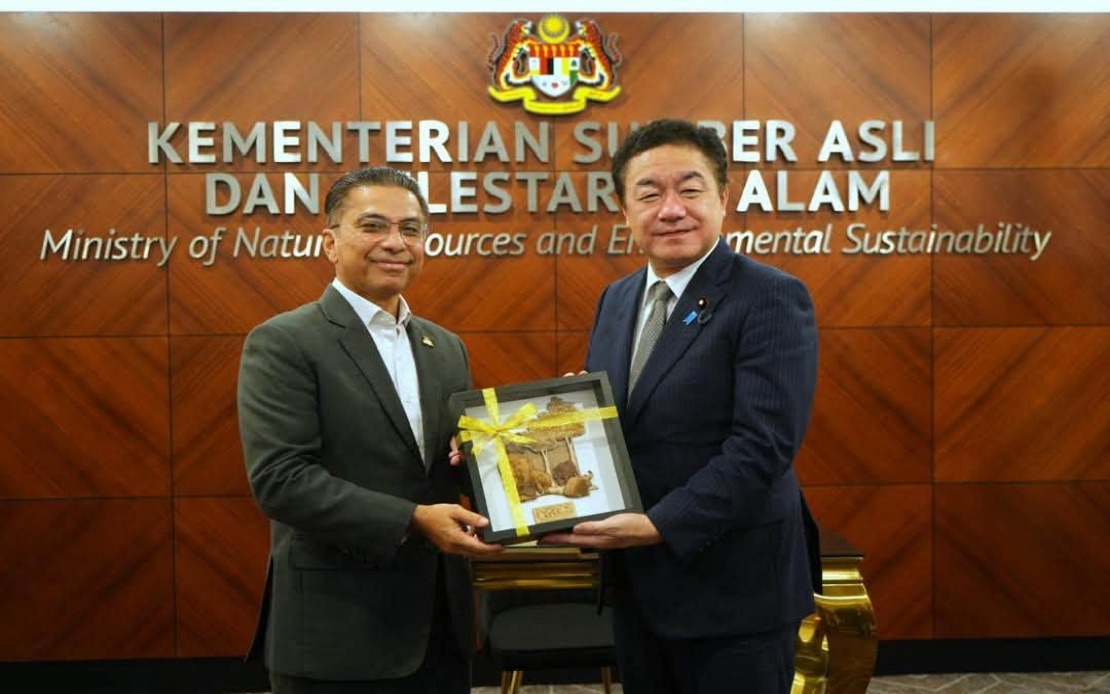
Japan's Parliamentary Vice-Minister of Economy, Trade and Industry Komori Takuo visited the Ministry of Natural Resources and Environmental Sustainability in Putrajaya recently, where discussions centred on advancing the Malaysia-Japan Comprehensive Strategic Partnership established during a bilateral summit in June. The visit underscores the momentum both countries are building to translate high-level political commitments into tangible collaborative frameworks and technology partnerships.
Deputy Natural Resources and Environmental Sustainability Minister Syed Ibrahim Syed Noh led Malaysia's delegation, emphasising the country's appreciation for Japan's technical expertise and technology transfer initiatives channelled through the Japan International Cooperation Agency (JICA) and the Japan Organisation for Metals and Energy Security (JOGMEC). These institutions have become crucial conduits for knowledge sharing in Malaysia's efforts to develop a competitive rare earth and critical minerals sector, particularly as global demand for these materials accelerates amid the renewable energy transition.
At the heart of Malaysia's strategic positioning on rare earths lies a deliberate policy choice to retain processing capacity and value-added activities within the country. During the meeting, Malaysian officials reaffirmed their commitment to a moratorium on exporting raw rare earth element materials, a stance that reflects broader regional and global trends toward keeping supply chain advantage close to home. This approach contrasts sharply with earlier decades when Malaysia exported unprocessed materials, and signals confidence that domestic capability can now handle increasingly complex downstream operations.
Beyond minerals, both countries have made significant headway on climate cooperation through negotiations on a draft Memorandum of Cooperation focused on the Joint Crediting Mechanism (JCM). This framework operates under Article 6.2 of the Paris Agreement, providing a pathway for countries to cooperate on greenhouse gas mitigation while generating tradeable carbon credits. For Malaysia, this mechanism represents a practical tool to attract investment in low-carbon technologies while simultaneously advancing its energy transition and fulfilling commitments under its Nationally Determined Contribution (NDC) to the United Nations Framework Convention on Climate Change.
The carbon market cooperation carries particular relevance for Southeast Asia, where rapid industrialisation and energy demand growth create urgent pressure to decouple economic expansion from emissions growth. By finalising the JCM memorandum by year's end, Malaysia and Japan aim to unlock capital flows toward green projects—whether in renewable energy, energy efficiency, or sustainable industrial processes—that might otherwise struggle to find financing at competitive rates. This is especially critical for middle-income economies seeking to upgrade their industrial base without locking in carbon-intensive infrastructure for decades.
Japan's role as a technology provider and source of green investment capital positions it as an ideal partner for Malaysia's sustainability ambitions. The country has accumulated decades of experience in energy-efficient manufacturing, advanced battery technologies, and renewable energy deployment, knowledge that can accelerate Malaysia's own green economy development. Combining Japan's technological prowess with Malaysia's substantial renewable resources—from solar potential to biomass—creates complementary capabilities that both nations can leverage for competitive advantage in global green markets.
The Malaysian delegation included senior officials from the Natural Resources Ministry alongside representatives from the Foreign Ministry, ensuring that diplomatic and technical dimensions received equal attention. Japan's participation included Ambassador Shikata Noriyuki and senior officials from METI, reflecting the economic and political weight Tokyo attaches to these bilateral relations. This high-level composition signals that both governments view rare earth security and climate cooperation not as peripheral policy matters but as central to their economic and strategic futures.
For Malaysian readers, the significance extends beyond bilateral relations. Malaysia's commitment to rare earth processing leadership within Southeast Asia positions the country as a potential hub for critical mineral value chains serving not only Japan but the entire East Asian region. Similarly, successful carbon market cooperation with Japan could establish templates and institutional foundations that other Southeast Asian nations might adopt, gradually creating a more integrated regional approach to climate finance and emissions reduction.
The advancement of these partnerships also reflects shifting global dynamics around resource security and decarbonisation. As Western nations increasingly scrutinise supply chain vulnerabilities for critical materials and as climate targets become more ambitious, partnerships between resource-rich developing nations and technology-advanced economies like Japan become more valuable. Malaysia stands to benefit from positioning itself as a reliable, transparent, and technologically sophisticated processor of critical materials while simultaneously building credentials as a serious climate actor.
Looking ahead, the successful finalisation of the JCM memorandum by year's end will be a key milestone. Beyond the document itself lies the challenge of implementation—ensuring that the mechanism actually mobilises capital at scale, that projects are designed with genuine emissions impact, and that benefits flow to Malaysian communities and businesses. The technical cooperation with JICA and JOGMEC will similarly need to translate into concrete capacity building and technological advancement within Malaysia's rare earth and processing industries.
The Malaysia-Japan partnership also carries implications for regional geopolitics. As major powers compete for influence in Southeast Asia, deepening cooperation between Malaysia and Japan—a G7 democracy and advanced economy—demonstrates that Malaysia pursues strategic autonomy through pragmatic diversification rather than alignment with any single bloc. This approach has proven effective for Malaysia historically and continues to serve national interests while maintaining room for partnerships across ideological and strategic divides.

