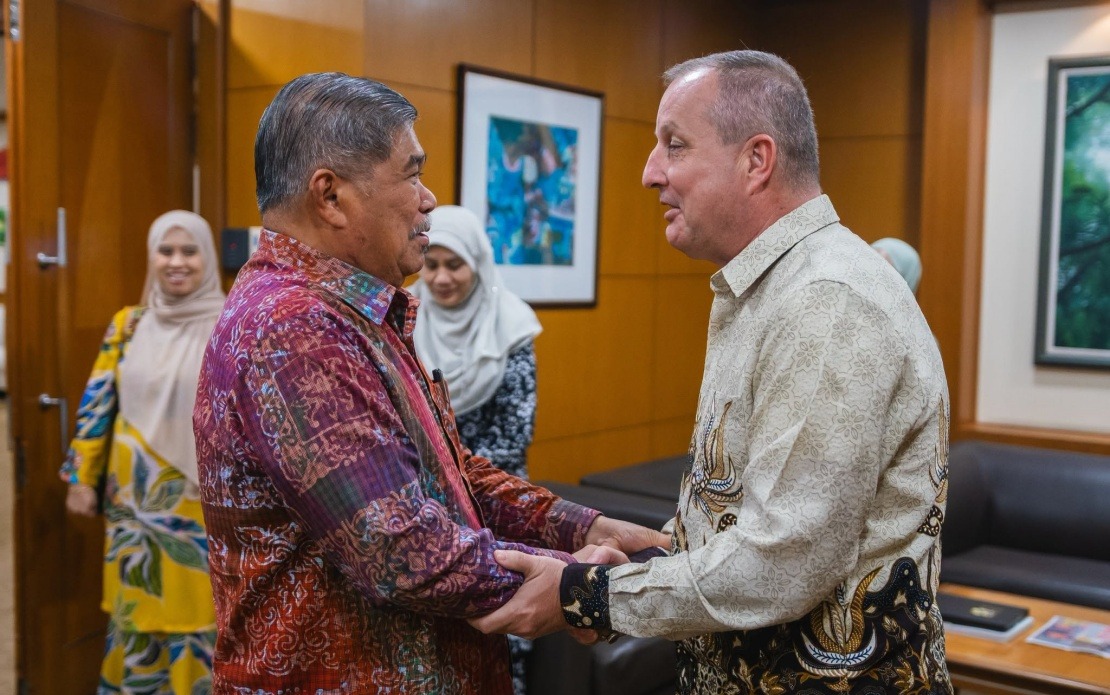
Malaysia and Hungary are moving to solidify their partnership in agriculture and food security, with discussions now underway to deepen technical collaboration between the two nations' research institutions and farming sectors. Agriculture and Food Security Minister Datuk Seri Mohamad Sabu outlined the expanding bilateral engagement following talks with Hungarian Ambassador to Malaysia Dr. Sándor Sipos, signalling a strategic focus on how Central European expertise can complement Malaysia's agricultural development goals.
The partnership carries particular relevance for Southeast Asia at a time when regional food security remains a pressing concern. Hungary, known for its advanced agricultural practices and research capabilities, brings technologies and methodologies that could help Malaysian producers enhance productivity and crop resilience. Conversely, Malaysia's tropical agricultural expertise and established agri-food networks position it as a valuable partner for Hungary seeking to expand its footprint in Asian markets.
A cornerstone of the deepened cooperation lies in institutional collaboration between Malaysia's Agricultural Research and Development Institute (MARDI) and Hungary's University of Agriculture and Life Sciences (MATE). The two research bodies have already begun joint initiatives that span genetics research, breeding technology advancement, and the development of premium livestock products. This academic partnership creates a sustained channel for knowledge transfer that benefits agricultural practitioners across both nations.
The Erasmus+ Researcher exchange programme represents a tangible mechanism through which scientists and agricultural specialists from both countries can spend extended periods working within each partner's research ecosystem. Such programmes historically yield innovative approaches to longstanding farming challenges, whether addressing pest management, soil conservation, or crop adaptation to changing climate conditions. For Malaysian researchers, exposure to Central European agricultural science offers methodologies developed in temperate zones that, with appropriate adaptation, could benefit tropical and subtropical farming operations.
Hungary's confirmed participation in the Malaysian Agriculture, Horticulture and Agrotourism Exhibition (MAHA) 2026 will provide a public-facing platform for bilateral engagement. The exhibition, one of Malaysia's premier agricultural showcases, attracts buyers, investors, policymakers, and farmers from across the region. Hungarian participation signals serious intent to establish commercial relationships, explore joint ventures, and identify market entry points for Hungarian agricultural products and services in Malaysia and the broader Southeast Asian market.
The establishment of the first Malaysia-Hungary Joint Working Group (JWG) meeting creates formal institutional structures to coordinate agricultural cooperation across multiple sectors. Such mechanisms enable both governments to align policies, identify priority areas for collaboration, and resolve technical barriers to trade. The JWG framework also provides a channel for discussing standards harmonisation, particularly important in agri-food trade where food safety protocols and product certification requirements often differ between nations.
Expanding trade and investment opportunities in the agri-food sector represents a mutual economic interest. Hungary possesses established expertise in producing high-value agricultural products, from specialty crops to premium dairy and meat products, many of which command significant market demand among affluent consumer segments in Malaysia and the region. Meanwhile, Malaysian agricultural businesses and entrepreneurs, particularly those engaged in tropical fruit production, spice cultivation, and aquaculture, could benefit from Hungarian investment and technology partnerships to enhance product quality and export competitiveness.
The cooperation framework acknowledges the evolving role of agri-tourism and agri-education within the modern agricultural economy. Malaysia's emphasis on agrotourism as part of the MAHA exhibition reflects growing recognition that agricultural development extends beyond primary production into value-added activities, farm experiences, and agri-education initiatives. Hungarian experience in this domain, particularly in Central European agroecotourism ventures, offers instructive models that Malaysian entrepreneurs might adapt to their contexts.
Food security considerations underpinning these initiatives hold significance for Malaysia's broader policy objectives. As a country with limited arable land and substantial food import dependence, Malaysia benefits from international partnerships that enhance domestic production capacity and introduce productivity-boosting technologies. Hungary's participation in strengthening Malaysia's agricultural sector contributes incrementally to national self-sufficiency goals, reducing vulnerability to global supply chain disruptions or price volatility in commodity markets.
The emphasis on expertise sharing across farming communities demonstrates recognition that agricultural development requires engagement beyond government ministries and research institutes. Farmers, breeders, and agri-food entrepreneurs in both nations benefit when technical knowledge, breeding improvements, and operational innovations circulate through professional networks and direct business relationships. Such grassroots-level collaboration often generates practical solutions that formal institutional channels might overlook.
Regionally, the Malaysia-Hungary agricultural partnership contributes to Southeast Asia's broader engagement with Central European expertise and investment. As European nations expand their diplomatic and economic footprint in Asia, agricultural cooperation represents a relatively non-contentious avenue for deepened relations. For ASEAN economies seeking to enhance agricultural productivity and food security, European partnerships offer access to developed-world research capabilities and proven farming methodologies without the geopolitical complications sometimes surrounding other forms of international engagement.
Looking forward, the trajectory of Malaysia-Hungary agricultural cooperation will likely depend on translating these initial agreements into tangible outcomes. The success of MARDI-MATE research collaboration, the commercial uptake of products and services showcased at MAHA 2026, and the concrete results emerging from JWG deliberations will collectively determine whether this partnership evolves into a substantive long-term relationship or remains primarily symbolic. For Malaysian stakeholders in agriculture and agri-business, maintaining momentum and pursuing concrete commercial opportunities will be essential to realizing the partnership's potential benefits.

