Malaysia and the European Union are making steady progress on their landmark free trade agreement, having wrapped up negotiations on five separate chapters and setting their sights on finalising the comprehensive pact by 2027. The pace of advancement signals growing momentum on both sides to unlock deeper economic integration between Southeast Asia's largest economy and the world's largest single market, a development that could reshape regional trade dynamics and investment flows across multiple sectors.
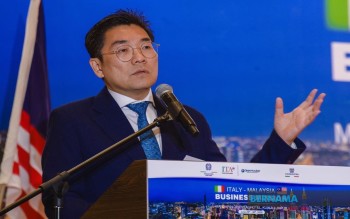
Deputy Minister of Investment, Trade and Industry Sim Tze Tzin outlined the trajectory at the Italy-Malaysia Business Mission in Kuala Lumpur, revealing that the fourth negotiating round, completed this month from June 8 to 12, yielded three completed chapters covering Customs and Trade Facilitation, Trade Remedies, and Good Regulatory Practices. Two additional chapters—Transparency and Small and Medium Enterprises—were concluded in earlier rounds, demonstrating a methodical approach to resolving complex commercial issues across both jurisdictions. The next phase of talks will convene in Brussels starting September 21, keeping discussions on an accelerated timeline that reflects both parties' commitment to reaching a binding agreement within the next two years.
The Malaysia-European Union Free Trade Agreement carries substantial strategic weight beyond routine bilateral commerce. Sim characterised the pact as a transformative accord that would anchor Malaysia more firmly within European supply chains while creating avenues for Malaysian companies to access premium markets in advanced manufacturing, renewable energy, and digital services. For Malaysia specifically, the agreement represents a counterbalance to existing trade relationships and an opportunity to diversify partnerships beyond traditional Asian counterparts. The European market, with its 450 million consumers and stringent quality standards, demands that Malaysian exporters upgrade their product sophistication and compliance frameworks—a dynamic that naturally drives industrial modernisation.
Bilateral trade between Malaysia and Italy exemplifies the commercial potential underlying these negotiations. Malaysian trade with Italy surged 14.2 percent year-on-year to approximately RM17 billion in 2025, propelling Italy into Malaysia's fifth-largest European trading partner slot. This expansion reflects deeper engagement across multiple product categories. Malaysian exports to Italy climbed 12.7 percent annually to RM7.6 billion, predominantly comprising palm oil derivatives, ferrous metals, electrical and electronic goods, and industrial machinery. Italian imports into Malaysia centre on capital equipment, precision instruments, chemicals, and high-end manufactured products—a composition underscoring Italy's specialisation in advanced manufacturing and Malaysia's role as a regional production hub for multinational supply chains.
Italian investment commitments in Malaysia underscore European confidence in the country's industrial foundation. Over 80 Italian manufacturing ventures capitalised at USD 442 million have taken root across food processing, petrochemicals, machinery fabrication, and aerospace sectors. Italian manufacturers cite Malaysia's comprehensive industrial ecosystem, mature supply chain infrastructure, and strategic geography as decisive advantages when deciding whether to establish regional production bases. For Italian firms seeking to serve Southeast Asian and broader Indo-Pacific markets, Malaysia offers established logistics networks, skilled labour availability, and government incentives that reduce market entry friction compared to alternative locations.
Sim articulated a particular synergy between Malaysian and Italian capabilities in electronics and machinery manufacturing. Both nations possess vertically integrated production ecosystems capable of delivering complete solutions to complex manufacturing challenges. Italy's renown in precision machinery design and engineering combines naturally with Malaysia's strengths in semiconductor assembly, electrical component fabrication, and industrial automation. Rather than competing directly, the two economies can position themselves as complementary partners within European and Asian supply networks—a dynamic the MEUFTA framework is designed to facilitate through tariff elimination and regulatory harmonisation.
Malaysia's ambitions in higher-value semiconductor manufacturing feature prominently in the government's economic modernisation agenda. The recently implemented New Investment Incentive Framework, operational since March, prioritises fiscal incentives for companies engaging in advanced manufacturing, front-end semiconductor processing, and integrated circuit design. Notably, Sim emphasised that these incentives extend equally to foreign investors and Malaysian enterprises, contradicting a widespread perception that government support flows predominantly to international firms. The actual policy aims to catalyse Malaysian companies' ascent along the value chain, enabling domestic manufacturers to escape dependency on low-margin assembly operations and compete in design-intensive and high-technology domains where margins and intellectual property returns substantially exceed traditional manufacturing.
The timing of MEUFTA negotiations coincides with Malaysia's broader reorientation toward high-technology and green economy initiatives. European Union trade policy increasingly emphasises sustainability, digital governance, and environmental compliance—standards that Malaysian policymakers recognise as inevitable. By negotiating these frameworks now, Malaysia positions its industries to meet European market entry requirements before they become mandatory, avoiding costly retroactive compliance expenditures. Companies investing in sustainable manufacturing practices and digital-enabled supply chains today gain competitive advantages when the agreement takes effect, assuming the 2027 completion target materialises.
Prime Minister Datuk Seri Anwar Ibrahim's July 2024 working visit to Italy and invitation from Italian Premier Giorgia Meloni catalysed the formalised trade mission framework. Political engagement at this level typically signals serious government commitment beyond routine diplomatic courtesies. The Italy-Malaysia Business Mission apparatus facilitates structured business-to-business networking, allowing Malaysian and Italian chambers of commerce, industry associations, and individual enterprises to identify collaboration opportunities in real time. Such initiatives prove particularly valuable when bilateral trade agreements remain under negotiation, as businesspeople can communicate priorities and requirements directly to government negotiators, ensuring commercial realities shape final agreement language.
Regional implications extend beyond bilateral Malaysia-Europe relations. A successful MEUFTA could catalyse similar EU negotiations with other Southeast Asian nations, establishing precedent for European engagement with the economically dynamic region. Malaysia's willingness to navigate complex regulatory alignment discussions and adopt European-style governance frameworks might demonstrate feasibility to sceptical counterparts in Thailand, Indonesia, and Vietnam. Conversely, should negotiations stall or conclude unfavourably, European credibility in the region would suffer, potentially delaying Brussels' Indo-Pacific economic strategy by years. The commercial stakes and geopolitical dimensions thus intertwine more intricately than headline figures suggest.
The 2027 completion target, while ambitious, remains achievable if both sides maintain negotiating momentum and resolve outstanding chapters—particularly those addressing intellectual property, digital commerce, and labour standards, which historically generate friction in EU trade agreements. Malaysia's demonstrated willingness to conclude five chapters within roughly 18 months indicates serious engagement rather than mere procedural compliance. Whether the agreement ultimately enhances Malaysia's economic competitiveness depends substantially on implementation—how efficiently Malaysian customs authorities adopt new procedures, how effectively businesses adjust supply chains to leverage tariff elimination, and whether government support mechanisms adequately assist smaller enterprises navigating European market complexities.

