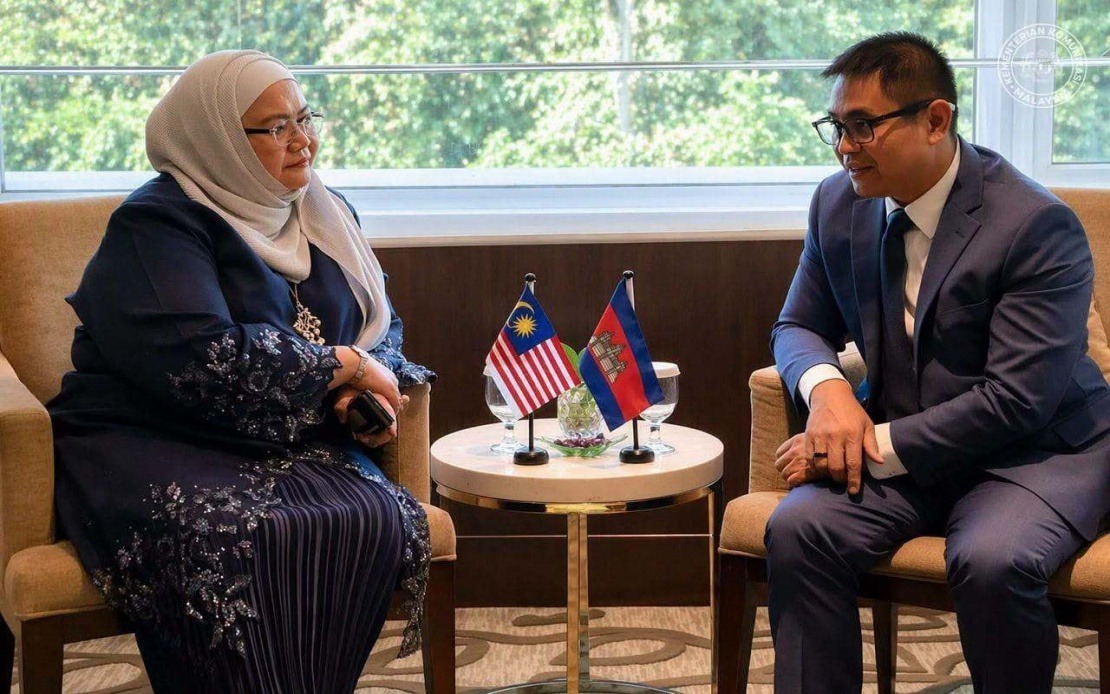
Malaysia and Cambodia have intensified their bilateral engagement on media and information cooperation, with high-level officials meeting in Brunei to chart the course for implementing a freshly minted Memorandum of Understanding signed between the two Southeast Asian neighbours. The discussion, held on the margins of a regional communications forum, underscores the growing importance both nations place on aligning their media frameworks within an increasingly digital landscape.
The bilateral engagement took place during the 23rd ASEAN Senior Officials Responsible for Information (SOMRI) Meeting in Bandar Seri Begawan, where representatives from across the region converge to discuss communications policy and information management strategies. Malaysia fielded its delegation under Datuk Bahria Mohd Tamil, Deputy Secretary-General for Strategic Communications and Creative Industry at the Ministry of Communications, while Cambodia was represented by Prak Thaveak Amida, Secretary of State of the Ministry of Information. This level of representation reflects the substantive nature of the discussions, signalling that both governments view this partnership as a cornerstone initiative rather than merely a ceremonial gesture.
The MoU between the two countries was formally signed on June 20, providing the operational foundation for the dialogue now underway. Communications Minister Datuk Fahmi Fadzil inked the agreement ad referendum on Malaysia's behalf, while Amida signed for Cambodian Information Minister Neth Pheaktra. This arrangement, whereby officials sign on behalf of their ministers, is common in diplomatic practice when principals cannot attend ceremonies, though it underscores the commitment both capitals have made to moving forward expeditiously with implementation without waiting for formal ministerial presence.
The scope of cooperation outlined in the bilateral discussions extends across multiple dimensions of the information and media sectors, reflecting the complexity of modern communications governance. Digital transformation emerged as a prominent agenda item, acknowledging the reality that traditional media infrastructure and practices must evolve to remain relevant in an age of social platforms, streaming services, and instantaneous global information flows. Both Malaysia and Cambodia face similar challenges in this transition, making peer learning and coordinated approaches potentially valuable for both sides.
Enhancing information integrity has become equally central to the partnership, representing a direct response to the mounting challenges posed by misinformation, disinformation, and the weaponisation of information across the region. Southeast Asia has become a particular hotbed for false narratives and coordinated inauthentic behaviour on digital platforms, affecting everything from public health messaging to electoral processes. By establishing frameworks for information integrity cooperation, Malaysia and Cambodia signal their recognition that this challenge transcends borders and requires collaborative responses built on shared understanding of vulnerabilities and best practices.
The discussions also encompassed media development more broadly, encompassing capacity building, training initiatives, and institutional strengthening. For Cambodia, whose media environment has historically operated under significant constraints on press freedom, such cooperation with Malaysia—which maintains a larger, more commercially robust media sector—offers opportunities to learn from institutional structures and professional practices. Conversely, Malaysia benefits from understanding Cambodia's regulatory approaches and regional connectivity, particularly as ASEAN seeks greater internal media integration and cross-border collaboration.
Information exchange mechanisms formed another pillar of the bilateral conversation, addressing the practical mechanics of how both countries can share journalistic resources, story leads, and factual reporting to enrich the quality of coverage available to their respective populations. Enhanced information flow between neighbouring nations can reduce reliance on external news agencies and create a more regionally grounded information ecosystem, an objective that resonates across ASEAN as member states seek greater media self-sufficiency and regional voice.
The timing of this implementation discussion carries significance beyond the immediate bilateral relationship. It arrives amid broader ASEAN efforts to harmonise communications standards and develop coordinated responses to transnational information challenges. The 23rd SOMRI Meeting itself provides the regional platform through which individual bilateral initiatives gain traction and influence broader regional norms. Malaysia's proactive engagement with Cambodia on these issues positions it as a regional leader in thinking through how democratic nations can strengthen information systems without sliding toward authoritarian information control—a balance ASEAN continues to grapple with collectively.
For Malaysian stakeholders in media and communications, this partnership opens pathways for institutional linkages, professional exchanges, and potentially collaborative reporting projects that can strengthen the regional media landscape. News organisations, journalism schools, and media development organisations may find new opportunities for cross-border initiatives. The emphasis on digital transformation reflects an understanding that Malaysia's more advanced digital infrastructure and innovation ecosystem can be leveraged to support Cambodia's media modernisation efforts, creating mutual benefits through technology transfer and collaborative problem-solving.
The commitment expressed by Malaysian officials to deepen the friendship between the two nations through these information and media initiatives extends beyond bureaucratic cooperation into the realm of people-to-people connectivity. Journalists, media professionals, and communications specialists from both countries stand to benefit from expanded networking, training opportunities, and collaborative platforms. This human dimension of media cooperation often proves more durable and impactful than top-down policy frameworks, as it builds networks of professionals with shared professional standards and mutual understanding.
Looking forward, the successful implementation of this MoU will likely become a model for Malaysia's media partnerships with other ASEAN neighbours, particularly those undertaking media modernisation or facing similar information integrity challenges. The framework established with Cambodia can be refined and adapted for engagement with other regional partners, potentially contributing to a more cohesive ASEAN approach to information governance that respects national sovereignty while building collective capacity.
The bilateral discussions also implicitly acknowledge that information and media development cannot be pursued in isolation from broader geopolitical realities and regional dynamics. Both Malaysia and Cambodia have vested interests in ensuring their narratives reach regional and global audiences, and in maintaining informational autonomy in an era of great power competition for media and information dominance. By cooperating on these fronts, they collectively strengthen their capacity to shape the information environment in ways that reflect Southeast Asian perspectives and priorities rather than defaulting to external frameworks.

